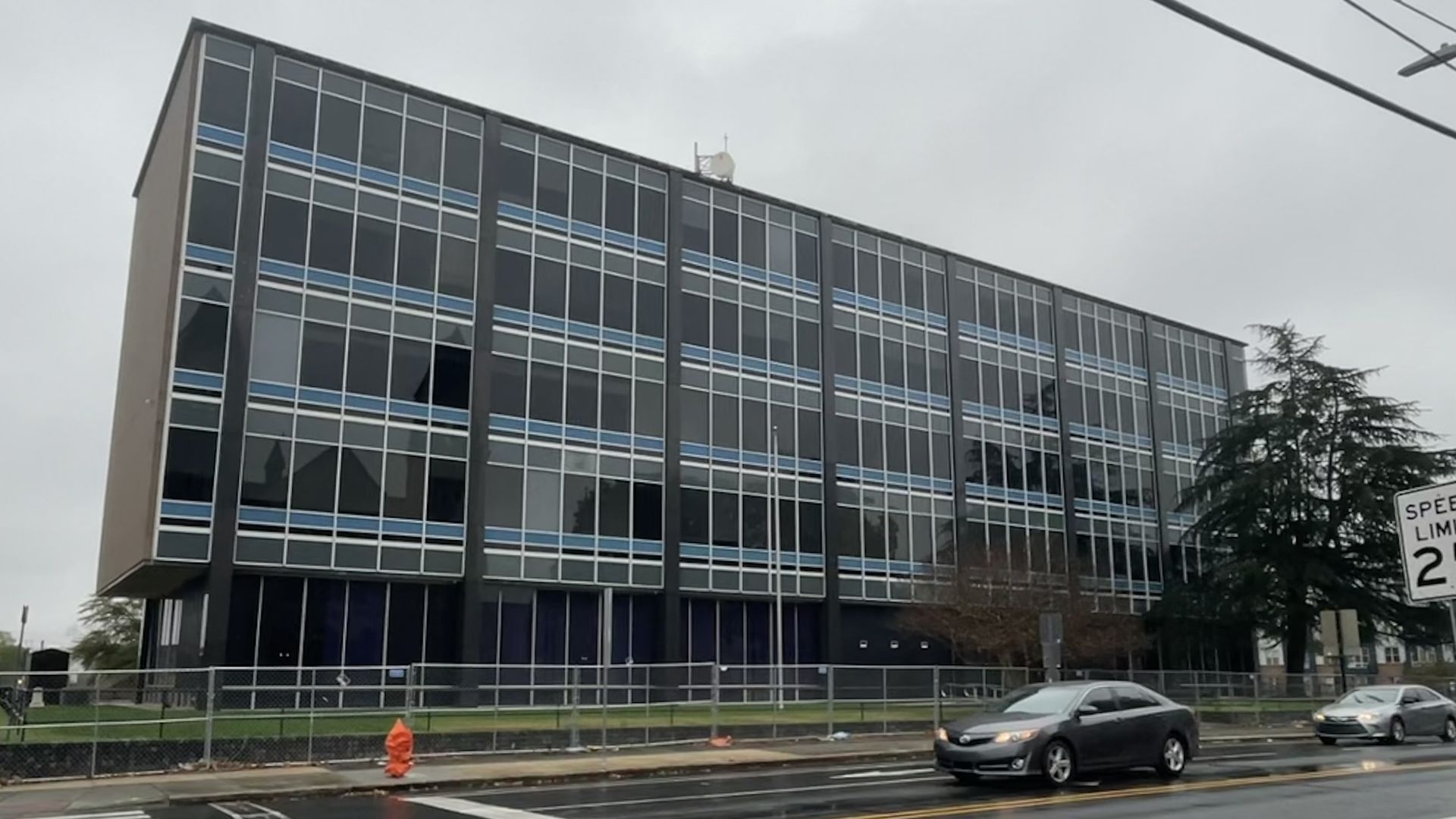
Affordable housing could finally come to former Durham Police HQ property

Add Axios as your preferred source to
see more of our stories on Google.
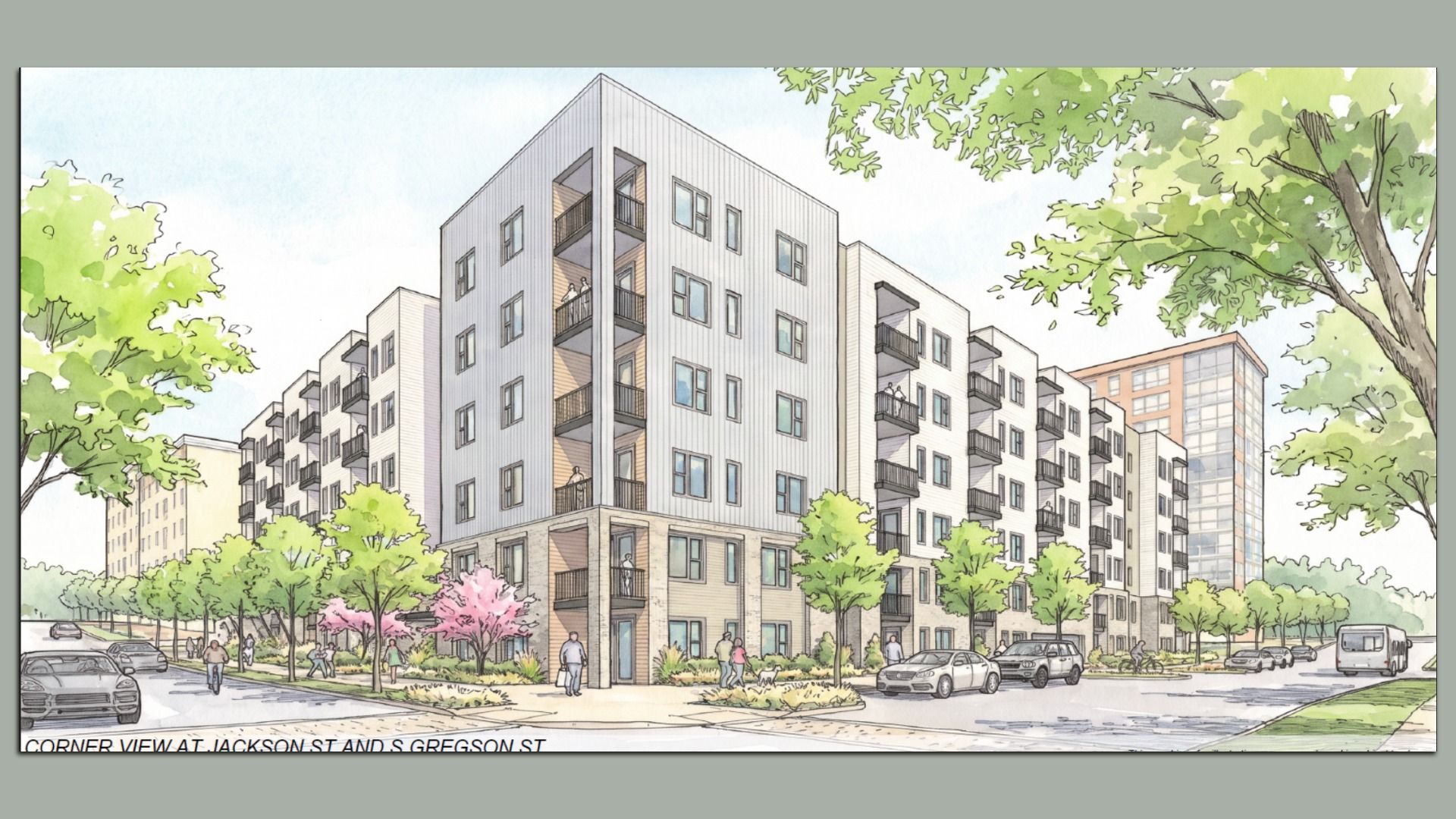
A rendering of what the Laurel Street affordable housing development could look like. Photo: City of Durham
The former Durham Police headquarters property could finally be in line for affordable housing under a new plan the Durham City Council is considering.
Why it matters: For eight years, the Durham City Council has tried to find a long-term solution for the 4-acre land it owns at 505 W. Chapel Hill St., which has fallen into disrepair after the Durham Police vacated it in 2019.
- It has seen two deals with developers fall through that would have added housing and preserved the historic Milton Small building that was home to the Durham Police for decades.
Driving the news: The Durham City Council will now consider approving a 99-year ground lease and more than $6 million in gap financing to Charlotte-based developer Laurel Street to build 80 affordable apartments on the property.
- The affordable housing is dependent on Laurel Street getting a low-income housing tax credit, but if it does, construction could begin as soon as 2028. Laurel Street has worked on three projects in Durham in recent years, including the Renegade apartments on Main Street.
Between the lines: The plan would also continue to give local groups time to save the Milton Small building from demolition.
- The proposed affordable housing would only be built on a quarter of the property.
- Preservation North Carolina would be given 12 months to find an interested buyer in the Milton Small building — perhaps a boutique hotel developer — before the Durham City Council brings back a sales agreement it had reached with the preservation group.
- The city said Preservation North Carolina has already talked with interested parties.
Zoom in: The proposed affordable apartments would be for a range of incomes.
- Twenty of the units would be for those making below 30% of the area median income, 12 for those earning below 50% and 48 for those making below 60%.
- Median family income in the Durham-Chapel Hill metro area is $129,900, according to the U.S. Department of Housing and Urban Development.
What's next: The Durham City Council will consider the agreement with Laurel Street at its Aug. 17 meeting.