How Raleigh's First Citizens grew from a regional bank to national player

Add Axios as your preferred source to
see more of our stories on Google.
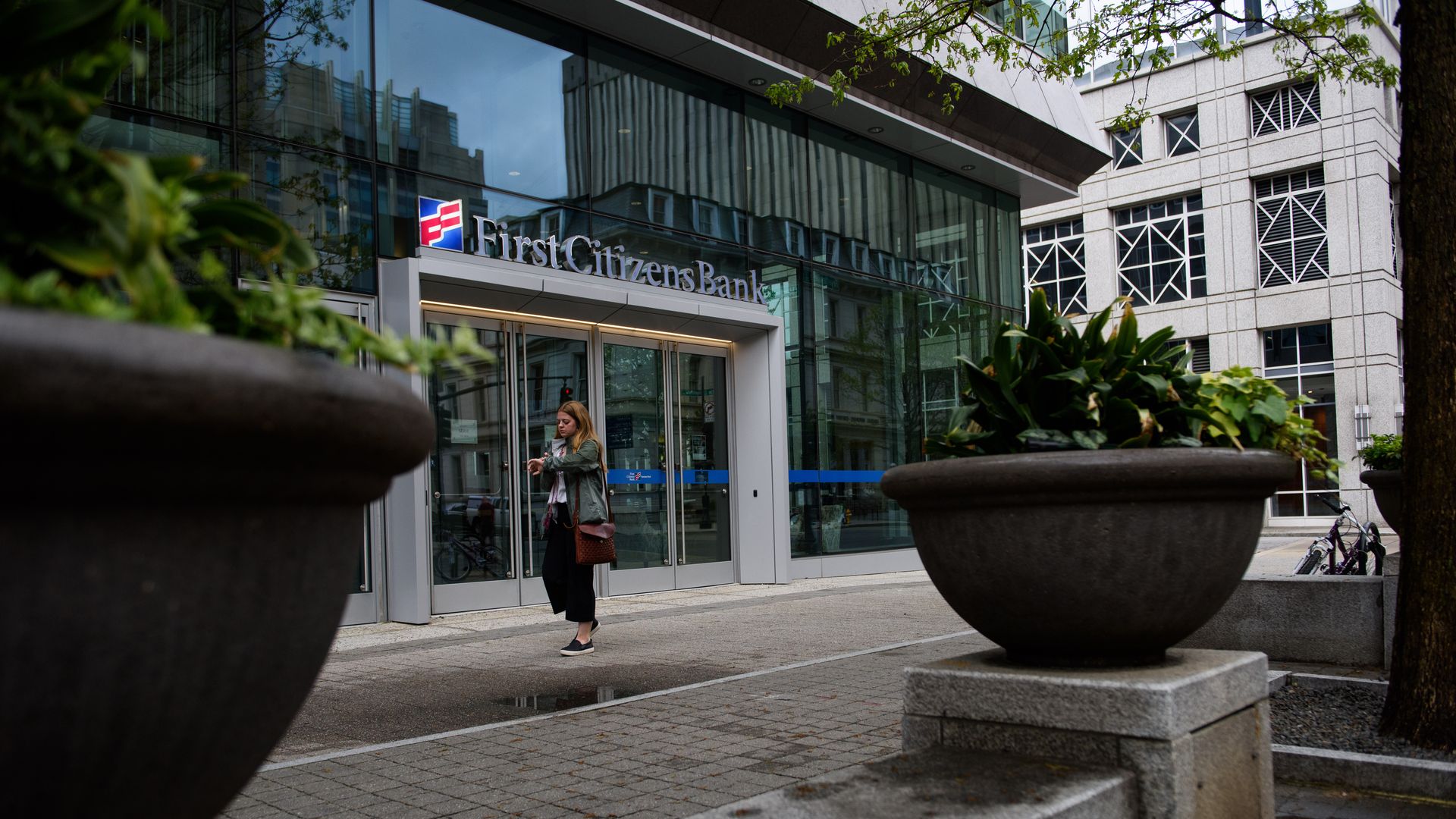
A First Citizens Bank branch in downtown Raleigh. Photo: Melissa Sue Gerrits/Getty Images
When Frank Holding Jr. took the helm at Raleigh's First Citizens Bank in 2008, the country was in the midst of a financial crisis, and First Citizens was still essentially a "large community bank," he said.
Why it matters: In the years since, First Citizens has transformed into a significant player on the national stage thanks to a series of acquisitions spearheaded by the Holding family, which has controlled the bank for generations.
- Holding Jr. is the third generation of the family to lead the bank, which was founded in Smithfield in 1898 and ranked as the nation's 16th-largest bank at the end of last year.
By the numbers: The company's assets have grown significantly over the past six years, jumping from $41.6 billion in the first quarter of 2020 to nearly $236 billion in the first quarter of this year, according to SEC filings.
- The bank employed more than 18,000 people at the end of 2025 across its offices and more than 500 branches in 22 states — up from 6,722 people in 2020, according to SEC filings.
- More than 2,000 of those employees work in Raleigh, a spokesperson for the bank said.
- And shares of the company traded at $2,112.87 on Wednesday, up 148% from its share price of around $852 five years ago.


What they're saying: The bank's current growth period can be traced back to the Great Recession. Holding told Axios that in 2008, he saw many of its peers begin making widespread layoffs and falling into distress.
- "We said that's a terrible thing to do, let's try to avoid that," he said from the ninth floor of the company's headquarters in North Hills.
- Instead, he said, First Citizens would acquire banks that were flailing and try to stabilize them, like Temecula Valley Bank in California and Sun American Bank in Florida.
Zoom in: First Citizens has become something of a distressed bank whisperer, making more than 20 acquisitions since 2009. "No one really had much experience doing that ... [but] we became one of the few banks that gained expertise in that space," Holding said.
- That strategy culminated in its biggest transaction to date: Silicon Valley Bank in 2023.
State of play: The acquisition of the failing Silicon Valley Bank thrust the bank into the national headlines, swelled its assets, and gave it a foothold in the influential tech industry.
- But with the sudden growth from Silicon Valley Bank and the acquisition of CIT Group in 2022, First Citizens has had to become more deliberate about defining its own culture, Holding said.
What they're saying: Holding said he believes this is where First Citizens' unique family-run structure can steer the company's future in a sustainable way.
- Internally, the bank has placed greater emphasis on long-term thinking, encouraging employees to focus on sustained growth rather than short-term wins.
- "It'd be hard for me not to appreciate the generation that came ahead of me," Holding said of the bank's long-term outlook. "Just like it was hard for [my father] not to appreciate the generation ahead of him."
- "It's not that we're not susceptible to change or that we can't take advantage of change," he added. "But we have the benefit of the appreciation of history and the continuity of culture over longer periods of time, and as banks consolidate and get larger, it's more unusual for them to be family controlled like we are."
What's next: Holding told Axios he is still focused on growing the Raleigh bank.
- A report from Bloomberg in February said the bank was considering another large acquisition to vault past $250 billion in assets, a threshold that comes with more regulatory requirements.
- While not commenting on that report, Holding said acquisitions remain part of the bank's overall strategy.
- "Scale does matter, and the way we describe our growth is this: We need to have organic growth and we need to do well on our own," he said. "And we augment that [growth] with acquisitions."