Whatley and Cooper both back congressional stock trading ban

Add Axios as your preferred source to
see more of our stories on Google.
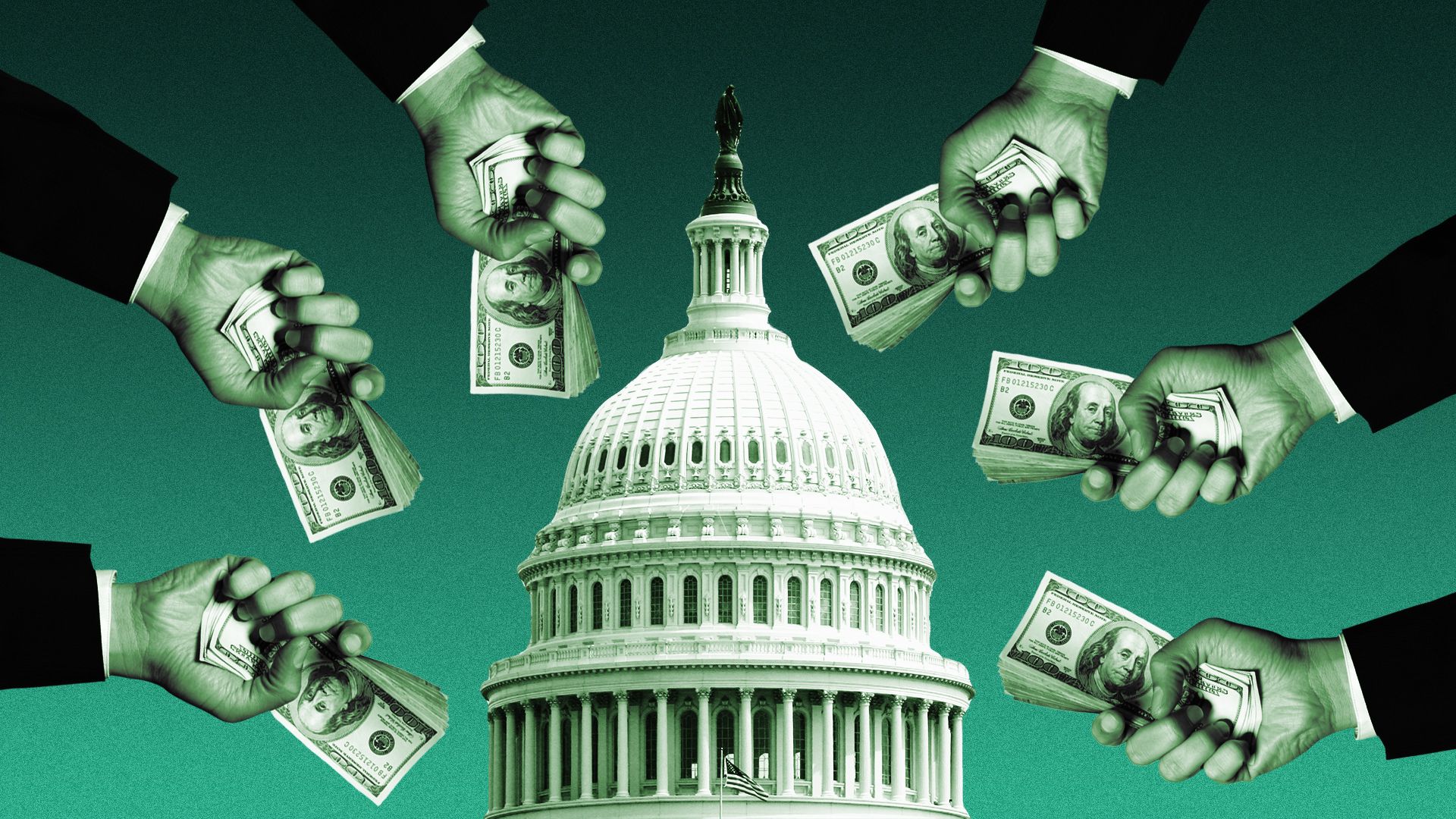
Illustration: Shoshana Gordon/Axios
Republican U.S. Senate candidate Michael Whatley's campaign tells Axios he would support making members of Congress divest from their individual stock ownership — including his own holdings like Duke Energy — if elected.
Why it matters: Democratic U.S. Senate candidate Roy Cooper's campaign has pushed for a ban on stock trading among members of Congress and has repeatedly pointed to Whatley's ties to Duke Energy, both as a lobbyist and as an owner of its stock, in its messaging against him.
- Congress passes laws that affect companies across many industries. Banning stock trading is extremely popular with voters, Axios reported last year. But no bills have passed yet.
Driving the news: Last week, Democratic state Sens. Natalie Murdock and Caleb Theodros sent a letter to the Whatley campaign asking him to divest his stock ownership in Duke Energy and denounce the company's rate increase application in North Carolina.
- "I think he should divest, and I think that is the best way to make North Carolinians believe he is not going to be biased toward this company," Murdock tells Axios. "That is very difficult to believe if you are still holding Duke Energy stock."
Context: The rate hike doesn't go through Congress. Approval is done by the North Carolina Utilities Commission, whose members are appointed by the governor, the General Assembly and the state treasurer.
- Congress does, however, have broad authority to shape energy policy.
State of play: The Cooper campaign has said that it doesn't think Duke Energy's rate increase request should be approved and that Whatley stands to benefit personally from a rate increase through his stock in the company.
- The Whatley campaign did not give a stance to Axios on the Duke Energy rate proposal.
- For its part, Duke Energy says the rate increase is needed due to major investments the company has made into strengthening and improving the state's energy grid.
What they're saying: "Michael Whatley supports commonsense reforms to either not own stocks or to place their assets in qualified blind trusts, meaning the Elected Official does not control how those assets are invested," DJ Griffin, a spokesperson for the Whatley campaign, said in a statement.
Between the lines: Whatley's family owns somewhere between $163,000 and $445,000 worth of Duke Energy stock, according to financial disclosures, among a long list of individual stocks.
- Cooper doesn't own any individual stocks. His investments are all in mutual funds and index funds.
- The Whatley campaign, however, has pointed to the Cooper family's ownership of a solar farm in Nash County as being a conflict of interest when weighing in on energy policy.
- Cooper co-owned a company with his brother that leased land to Strata Solar until 2014, when he sold his stake in the company. A 2019 investigation started by Republicans also found that Cooper did not personally benefit from energy policies he negotiated.
Editor's Note: This story has been updated to clarify Cooper doesn't own any individual stocks.