Housing becomes part of North Carolina's strategy to attract businesses

Add Axios as your preferred source to
see more of our stories on Google.
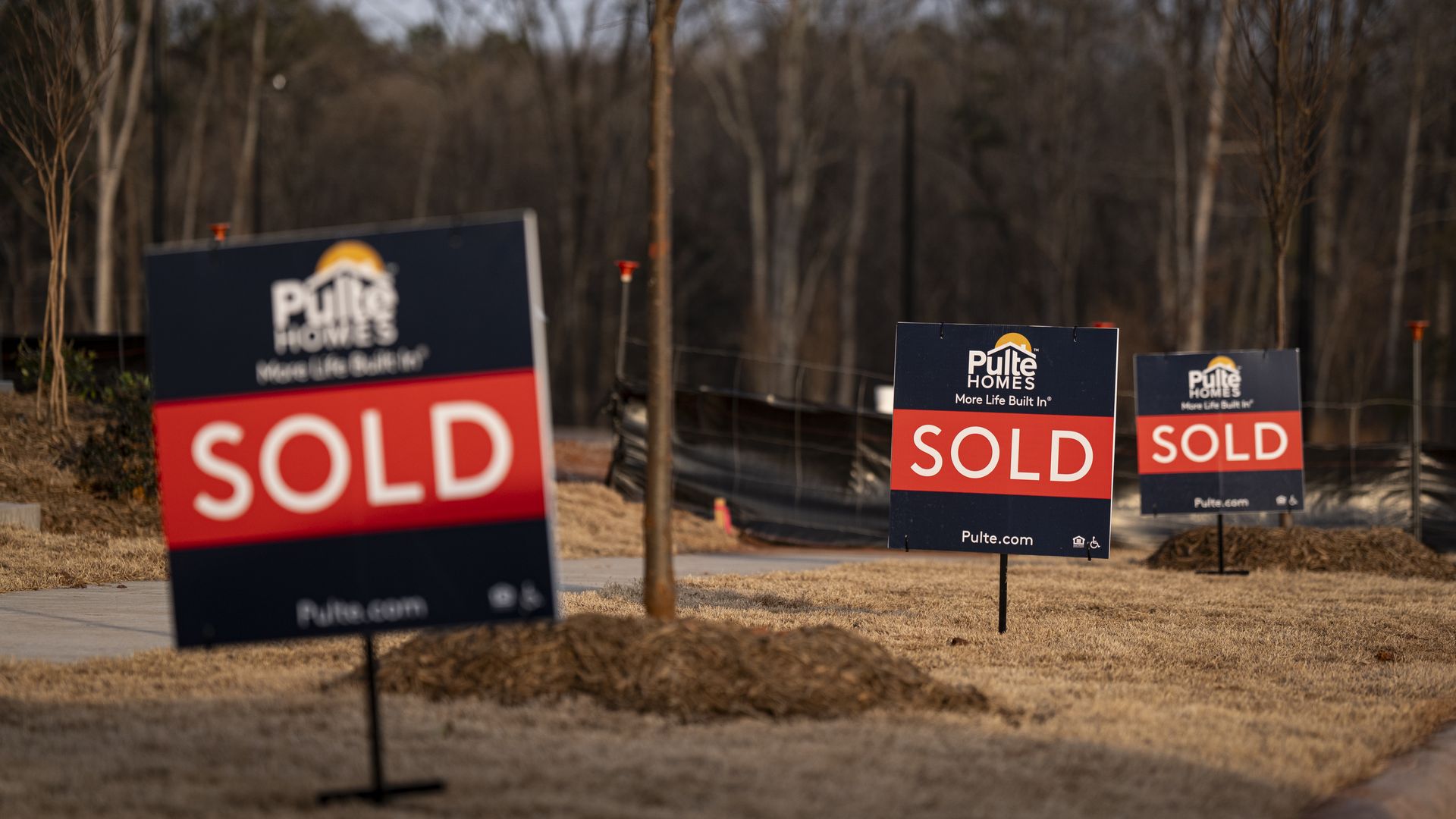
Sold signs outside of new homes built in Durham in March. Photo: Al Drago/Getty Images
Housing is becoming an even more important part of North Carolina's ability to attract new companies, according to a new strategic plan released by Gov. Josh Stein's administration.
Why it matters: By 2029, the entire state could have a housing gap of more than 760,000 units, the NC Chamber estimated in a report last year, which will likely mean higher home prices for residents and missed opportunities for economic development.
Driving the news: The new strategic plan, the state's first since 2021, aims to sketch out how North Carolina can maintain its strong economy into the next decade.
- To keep its growth, the report argues, North Carolina will need to expand housing as it becomes a limiting factor for residents and talent due to high prices.
Zoom in: North Carolina's Commerce Secretary Lee Lilley said that after sitting down with stakeholders from across the state, "the No. 1 issue raised wasn't site readiness or natural gas lines, it was housing."
- "It came up in big cities, came up in the suburbs and came up in rural communities," Lilley told Axios. "Everybody said, 'We've got a housing problem. It's too expensive, and we don't have enough of it."
State of play: The Stein administration is trying to figure out how it can increase housing in the state, even issuing an executive order this month on the topic.
- "What we want to focus on is better policies that are going to enable communities to build additional housing or to maintain or refurbish housing that's already there," Lilley said.
The new economic development strategic plan suggests several pro-housing policies including:
- Investing in and regionalizing the state's water and wastewater systems, many of which cannot handle significant housing growth.
- Focus disaster recovery investments on expanded housing in impacted areas, like western North Carolina communities affected by Hurricane Helene.
- Incentivize companies making improvements to manufactured housing to expand in the state.
- Designate census tracts with the greatest housing opportunities as part of the federal Opportunity Zone 2.0 program.
The big picture: The Carolinas, as a whole, have been one of the hottest spots for new home construction in the country since the pandemic.
- And the Raleigh metro area regularly ranks among the top 10 metros for housing construction.
What they're saying: Tom Barkin, president of the Richmond Federal Reserve Bank, whose district stretches from Maryland to the Carolinas, said that he views new housing construction as a strength of North Carolina.
- "I rave about North Carolina in this," he told Axios this month. "If you cross the state line [from Virginia into North Carolina] all of a sudden housing is being built and being built at scale."
- But he warned that momentum can easily be slowed by anti-growth impulses.
- "When you've got a state that's growing by 2% population a year, you're going to need more housing, so it's got to continue," he added. "I think the challenge, of course, is that more housing is very popular for the people who buy it, and it's not that popular for the people who aren't buying it."