Raleigh pitches affordable housing and retail for old DMV HQ site

Add Axios as your preferred source to
see more of our stories on Google.
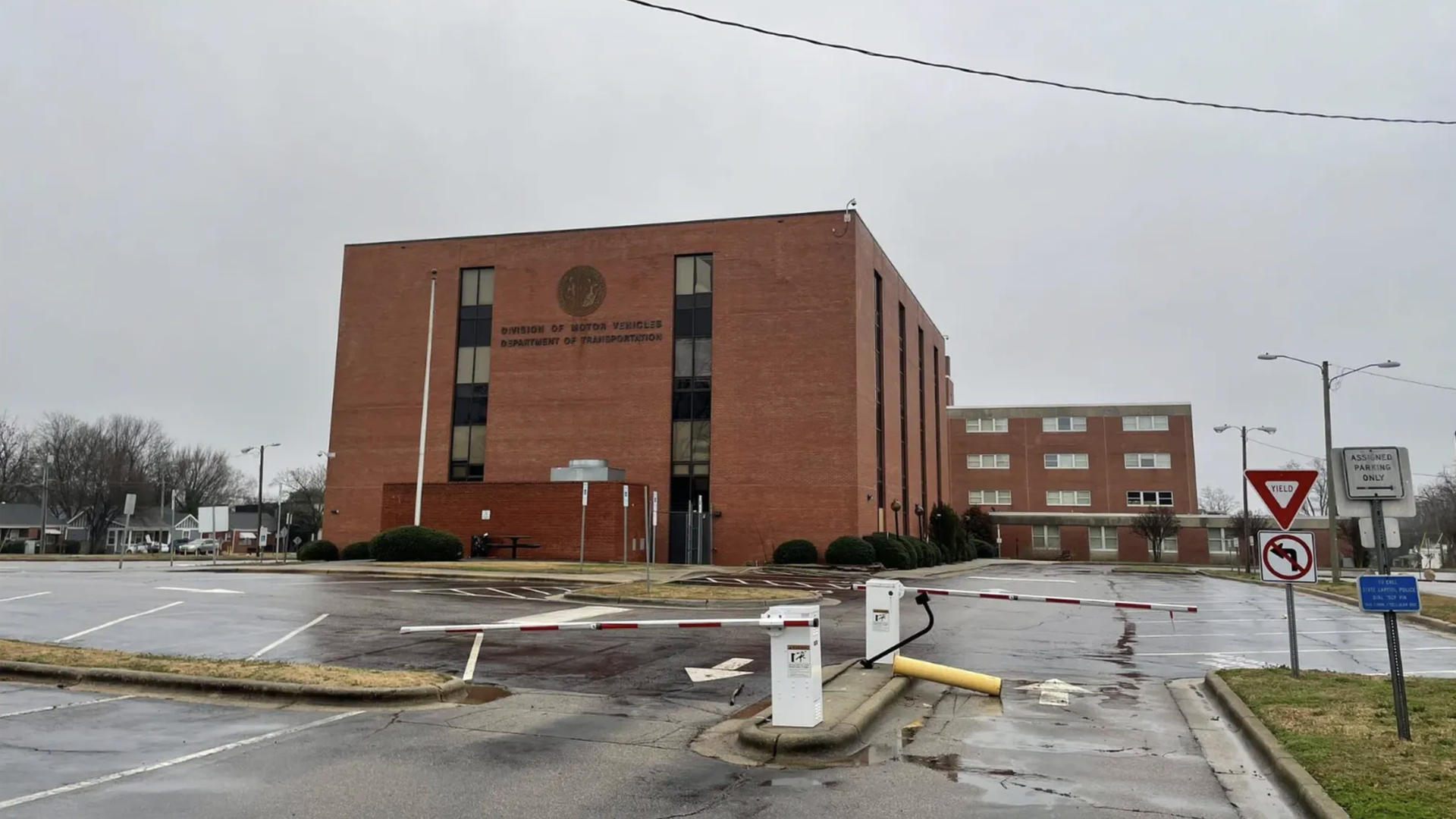
The old DMV headquarters on New Bern Avenue in 2023. Photo: Zachery Eanes/Axios
Demolition of the former DMV headquarters on New Bern Avenue is about halfway complete, but city leaders are beginning to get a clearer picture of what the site could become.
Why it matters: The city spent $20 million to buy the roughly 6-acre property in 2023 with a goal of maintaining control of an influential piece of land in a rapidly transforming neighborhood and on a future bus-rapid transit line.
State of play: The hope, city leaders have said, is that site could both provide density for the future transit line, as well as community benefits through affordable housing, more retail space and community gathering spaces.
Driving the news: City staff presented three sketch options for the future of the site at a meeting Tuesday.
- Demolition of the site is currently behind schedule due to the scale of asbestos abatement that exists on the site.
Zoom in: The city has been engaging with community members for the past two years on what they would like to see built there and working with consultants on financial feasibilities.
Between the lines: The city is hoping to not subsidize the site much further than the $20 million it's already spent on the land.
- But due to a glut of new apartments suppressing rent growth, city staff said apartments are a less attractive investment at the moment and might need more subsidizing than previous years.
- "Unfortunately where we are at in the market today is there is a glut of multifamily supply and still relatively high construction pricing and interest rates," Ken Bowers, Raleigh's deputy director for planning and development, told city council.
- A typical mid-rise apartment in today's market, he said, would likely require giving away the land and also a further subsidy to attract a developer to build it.
Zoom in: Given that reality, staff presented three options as most feasible:
Option 1 includes the city winning a 9% low-income housing tax credit for the site and building 269 apartments.
- Sixty of them would be set aside as affordable, and the project would include 20,000 square feet of retail, 300 parking spaces and 36 townhomes.
- This option would likely not require further subsidy from the city, per staff.
Option 2 envisions the city getting a 4% low-income housing tax credit and building 269 apartments again.
- Under this scenario, though, 110 units would be set aside as affordable while also building 22 townhomes, more than 300 parking spaces and 20,000 square feet of retail.
- This option, however, would likely need between $6 million to $10 million in additional subsidies.
Option 3 was also modeled under a 4% low-income housing tax credit and would build 368 apartments.
- In this option, 111 of the apartments would be affordable while also building 20 townhomes, 448 parking spaces and 20,000 square feet of retail. The parking would be in a city-subsidized deck.
- Staff said this option would require between $6.4 million and $7.4 million in additional subsidies from the city.
What's next: The city plans to put out a request for interest on the site to gauge how strong of demand exists from private developers.