Raleigh to add new water restrictions due to ongoing drought

Add Axios as your preferred source to
see more of our stories on Google.
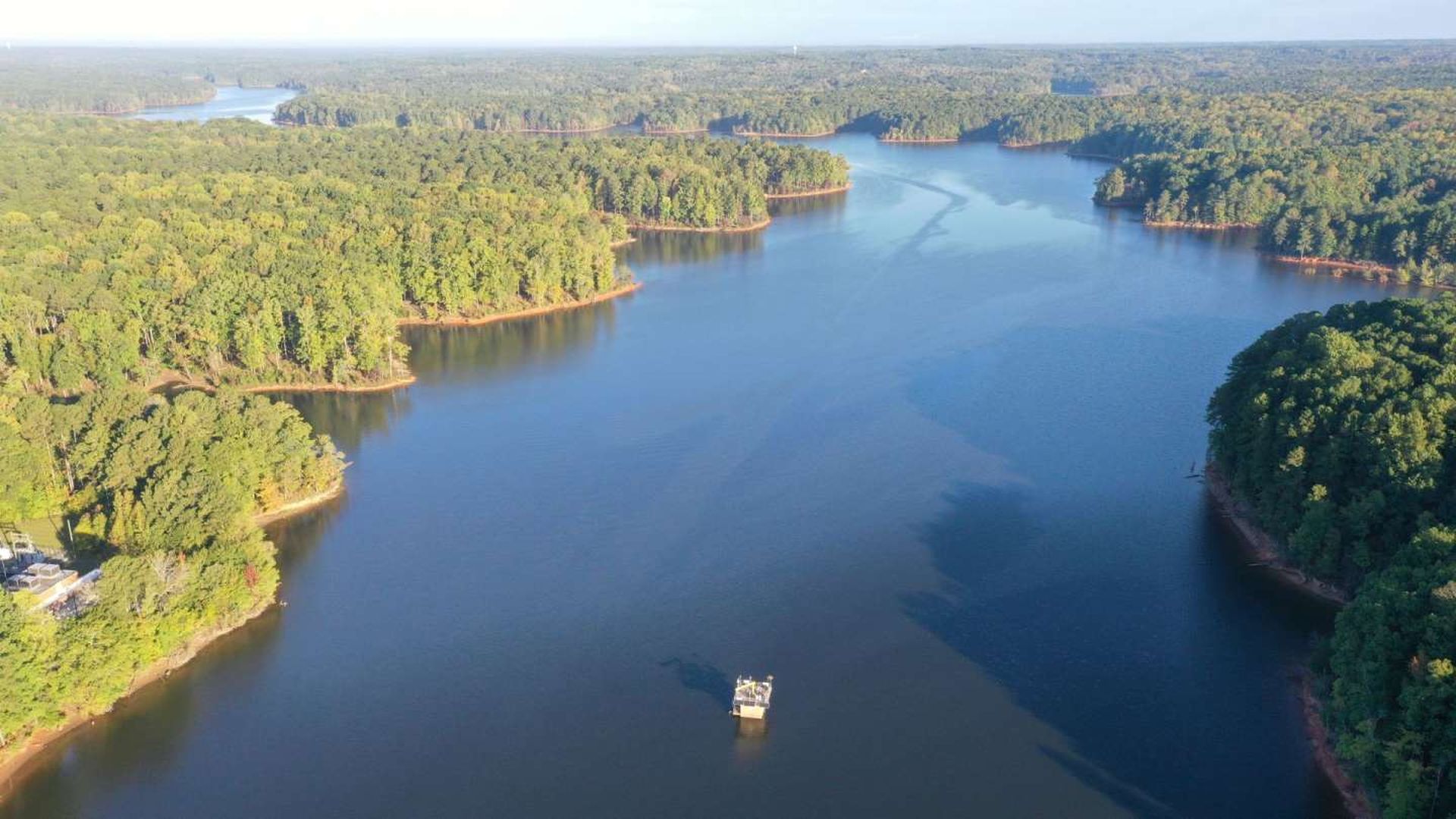
Falls Lake is Raleigh's main water source. Photo: City of Raleigh
Raleigh will institute Stage 1 water restrictions starting on Monday due to drought conditions affecting its main reservoir at Falls Lake.
Why it matters: All of North Carolina is experiencing a severe drought this spring, and the Raleigh area is not expected to get significant rainfall this week.
Driving the news: Falls Lake is currently at 84% of its water supply.
- Stage 1 water restrictions are triggered when Falls Lake its 85% of its supply in April. (The percentage is different for each month. In May, the Stage 1 trigger is 75% of Falls Lake's capacity.)
- The city has three stages of water restrictions, with Stage 1 being the least restrictive.
Zoom in: The restrictions provide different rules for outdoor and indoor water uses.
For outdoor watering, the restrictions include:
- Automatic or manual sprinklers can only be used between midnight and 10am for odd-numbered addresses on Tuesdays and Wednesdays for even-numbered addresses.
- Hose-end sprinklers can be used from 6am-10am or 6pm-10pm on Tuesdays or Wednesdays.
- Handheld hoses and drip irrigation can be used at any time.
- Plumbing and service line leaks must be fixed within 48 hours of written notice.
For indoor water:
- Restaurants may serve tap water only upon request from a customer.
- Hotels must ask guests staying more than one night to reuse towels and bedsheets.
Threat level: First-time violators of the restrictions will be issued a warning. A second violation comes with a $100 fine, and a third violation is $500.
State of play: While April is expected to be warm and dry, city officials said above-average rainfall is expected for May and June.
- Raleigh last had mandatory water restrictions during the severe droughts of 2007 and 2008 — a period that led many cities in the Triangle to change how they use water.
- Raleigh's secondary water supplies — Lake Wheeler and Lake Benson — are still near full capacity.