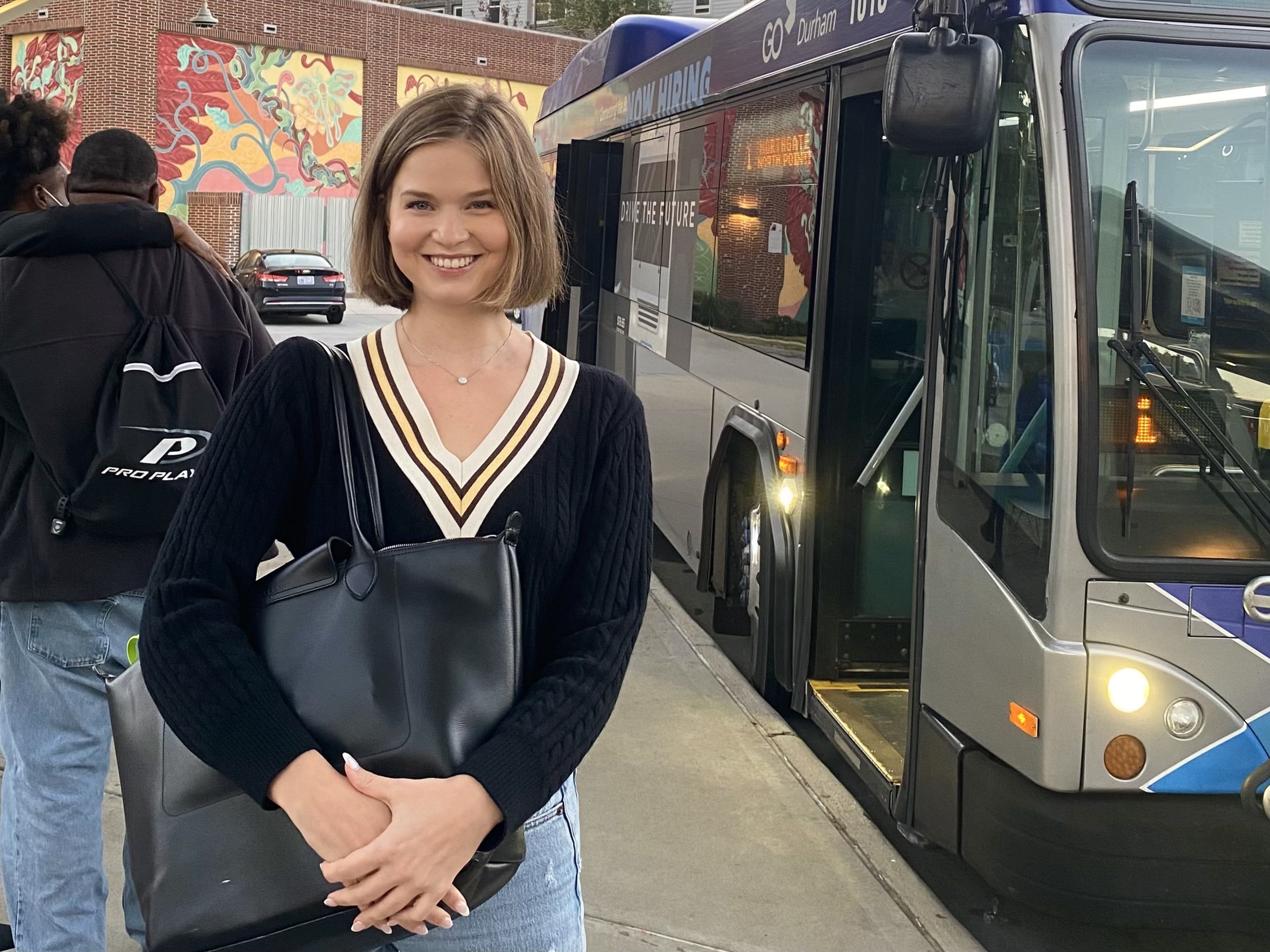
A step-by-step guide to taking the bus in the Triangle

Add Axios as your preferred source to
see more of our stories on Google.
Illustration: Maura Losch/Axios
With gas prices creeping toward $4 a gallon in the Triangle, it's as good a time as any to try out public transit.
Why it matters: In Raleigh, car commuters spend an estimated 42 hours in traffic a year. Navigating by bus and train can help save time and take the edge off.
🚌 The big picture: Buses are the most versatile method of public transit in the Triangle.
- Most operate under the GoTriangle umbrella, though Chapel Hill and Orange County kind of do their own things.
🗺️ Zoom in: Curious about where they go? This map is a terrific resource.
📱 Before you ride: You will want to download an app. It makes route planning a lot easier.
- Not all buses cost money (more on that later), but credit cards aren't accepted on the bus. So downloading the app is a non-negotiable unless you bring exact change.
- All local buses use the Umo app (Except Chapel Hill, whose buses are free and can be tracked online.) It tells you when the next bus is coming.
💵 How much it costs: None of the bus systems costs more than $5 a day.
- Totals often come in below that if you're staying in one city — GoRaleigh caps fares at $2.50 a day. The standard GoDurham, GoCary, Chapel Hill and Orange County routes are all completely free.
- Some major employers — including Red Hat, Duke and UNC, and state and local governments — pay for their employees' bus passes. And kids, seniors and some others can also ride for free. Go deeper
🚏 How it works: Here's a step-by-step guide to riding.
- Download Umo. Give it access to your live location.
- Add money to your account if you're riding GoTriangle or GoRaleigh buses. The GoTriangle routes are always labeled with three numbers or three letters. For example, 400 goes from UNC to Durham, and ZWX stops in Zebulon, Wendell and Raleigh.
- Plan your route. Enter an exact destination in the search bar. Just browsing? The "ride" tab at the bottom right lets you see all the routes serving nearby stops.
- Get to your stop early. Our buses sometimes come a few minutes early, and it's frustrating to watch your bus roll past, especially if the next one isn't due for 30 minutes or an hour.
- Make sure you're on the right side of the street.
- Go toward the road as the bus approaches. Double-check the number and color. GoTriangle buses are typically green; GoRaleigh's are typically red; and most GoDurham and GoCary buses are blue.
- Board the bus. Walk right on if it's free. If not, scan the QR code generated by Umo.
- Enjoy the ride. The bus may not open its doors at every stop, so pull the chain when you're ready to be let off. Nervous about missing your stop? Just ask the driver.
⏰ Caveat: Public transit works best during the day. Few buses run early in the morning or late at night.
⏭️ What we're watching: It costs millions to provide free bus service, and several local governments are weighing whether to continue the practice.
🚍 The bottom line: Public transit has a learning curve, but it'll become second nature in no time. See you out there!