Health care providers urge checking measles vaccine status as cases surge

Add Axios as your preferred source to
see more of our stories on Google.
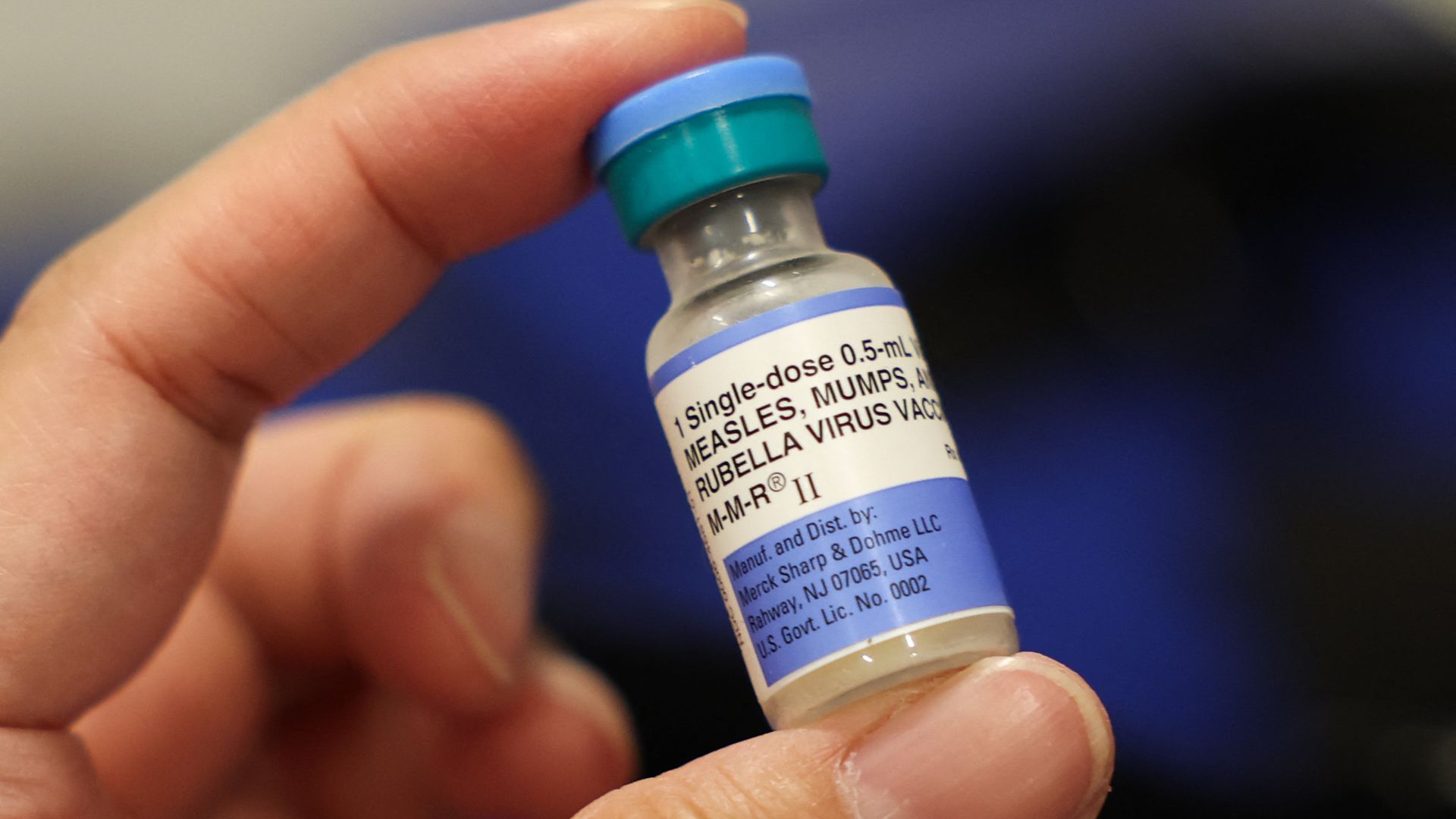
A vial of the Measles, Mumps, and Rubella vaccination. Photo: PATRICK T. FALLON/AFP via Getty Images
North Carolina has confirmed 22 cases of measles in the state since December amid a national resurgence in cases and a hot spot in neighboring South Carolina.
Why it matters: Health care providers are urging people to check their vaccine status and see if they received one dose, two doses or no doses of the measles, mumps and rubella vaccine as a child.
What they're saying: "Two shots for adults is the best protection you can have, and if you look at the data from the last year in the United States, the vast majority of people were unvaccinated or unknown [status]," David Wohl, an infectious disease specialist at UNC Health, told Axios.
- Generally, he added, if you have had two doses of the vaccine, health care providers will not be worried about your risk, even if you got those two doses decades ago.
Zoom in: According to the Centers for Disease Control and Prevention, one dose of the measles vaccine is 93% effective at preventing measles, while two doses is 97% effective.
- In 1989, two doses of the vaccine began to be recommended, due to an influx of breakthrough cases.
- Those born before 1957 are considered to have lifelong immunity because they likely already had the disease.
- North Carolina's Department of Health and Human Services has launched a tool to help people check their immunity status.
Between the lines: In North Carolina, measles is primarily being spread among children. Of the 22 confirmed cases in the state, 17 were in people under the age of 18.
- Wohl said that if cases accelerate and begin to look like South Carolina's case load (more than 900 cases since last fall), then public health officials should begin to think about recommending earlier measles vaccines.
- Typically, a first dose of the MMR is given at 12 months.
The bottom line: You can accelerate the cadence of the vaccines if measles is spreading in your area, Wohl said.
- "I think if we start to see what we saw in South Carolina ... pediatricians, and public health professionals have to start thinking about whether or not to make those recommendations."