How Duke Energy plans to keep outages from happening on the coldest nights of the year

Add Axios as your preferred source to
see more of our stories on Google.
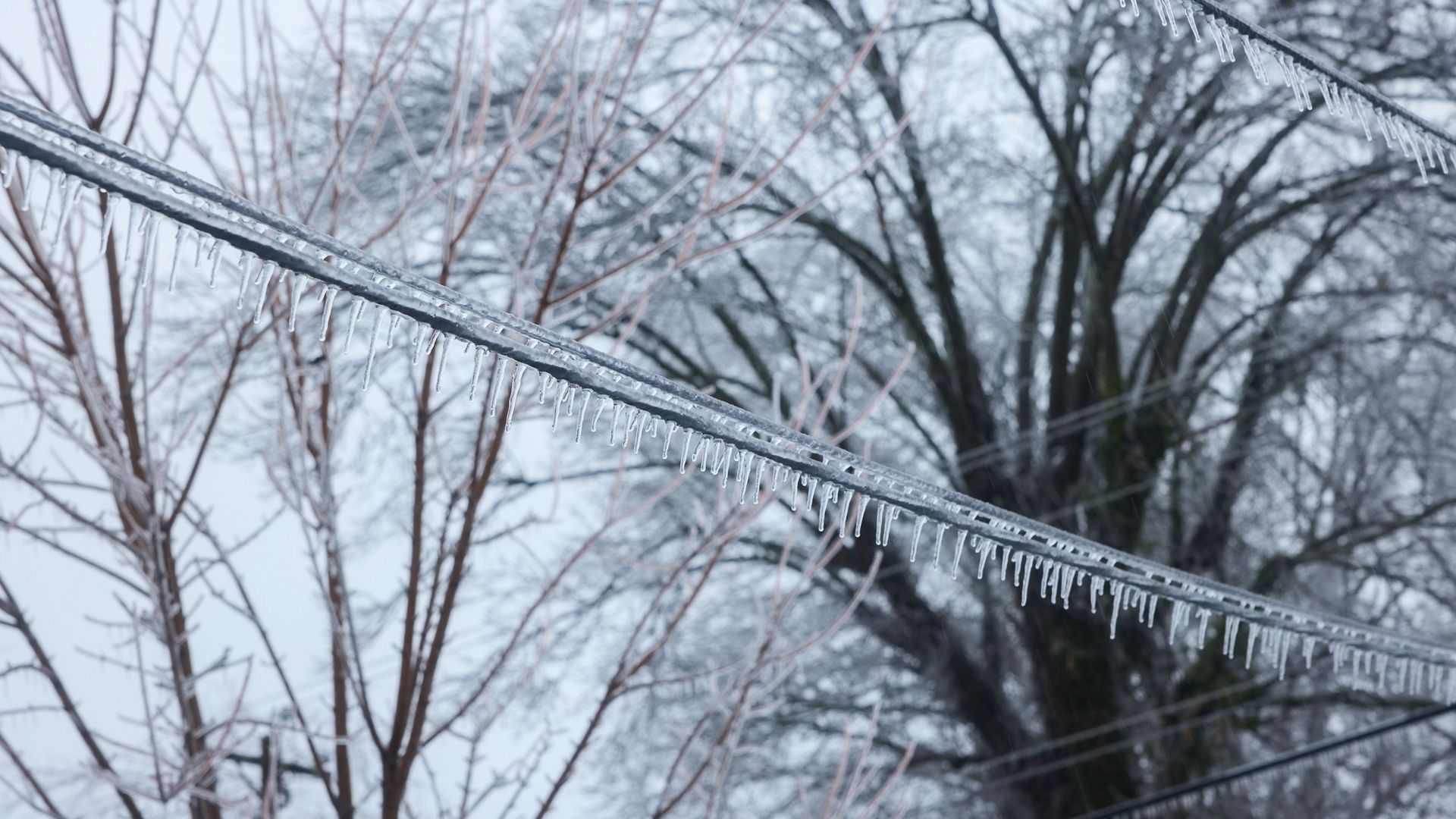
Power lines covered in ice during a winter storm in Nashville Tenn. North Carolina was spared the worst but Duke Energy must still navigate extremely low temperatures. Photo: Kate Dearman/Bloomberg via Getty Images
Duke Energy's power infrastructure kept the lights on without major disruptions for most of central North Carolina during a sleet storm over the weekend.
Why it matters: But the system will continue to be tested by some of the coldest temperatures we have seen this winter, with lows in the teens nearly every night this week.
Flashback: In 2022, around half a million customers were left without power when Duke Energy had to enact rolling blackouts on Christmas Eve due to a surge in demand for heat from freezing cold temperatures due to Winter Storm Elliott.
- It was the first time Duke Energy had ever enacted rolling blackouts in North Carolina, The News & Observer reported, and it left many people in the dark for hours in the below-freezing weather.
- Duke Energy said that several issues contributed to the issues that night, including freezing instruments at two plants, software issues and an inability to buy extra power from neighboring utilities.
Driving the news: This week will prove to be extremely cold as well — though thankfully widespread damage from freezing rain was avoided.
- Energy analysts have been monitoring the performance of electrical grids across the South due to the latest winter storm, and so far it has performed well in places that have seen widespread tree damage, like Tennessee and Mississippi.
State of play: Traditionally, North Carolina's grid has been stressed most by summer temperatures, but winter demands have been increasing, according to the North American Electric Reliability Corporation.
- "This shift is attributed to the continued addition of solar generation, which reduces summer peak demand, and a trend toward electrification of heating, which drives up winter peak demand," NERC's winter reliability report said.
- That report noted that North Carolina's resources could be strained by "severe cold weather" events though blackouts are "unlikely."
Zoom in: Jeff Brooks, a spokesperson for Duke Energy, told Axios that the state's main utility has made many upgrades to its grid since 2022 to avoid blackouts. That includes:
- Improved modeling around demand and weather. Brooks said Duke's models are constantly learning from its own data and from data of other utilities.
- Scheduling significant maintenance projects to months with less demand rather than year round.
- Purchasing extra energy from neighboring utilities further in advance thanks to better modeling
- Improved software to manage the grid. On the night of the 2022 blackouts, software issues exacerbated the amount of time it took to get the lights back on.
- And expanded a program that incentives some users with lower rates if they use less electricity during peak demand hours, as well as sending out communication earlier.
What they're saying: "We've made a lot of improvements since 2022, and we've learned things that certainly have helped us better prepare and plan," Brooks said.
- "Rotating outages [remain] a tool in the toolbox for managing electric needs, but it's not something we want to use," Brooks added. "It's something that would only be used after other measures have been used."
The other side: Many environmental and sustainable energy groups have pointed to the 2022 blackouts as a reason why Duke Energy should adopt more renewable energy sources due to infrastructure freezing at two coal and natural gas plants. Increased battery storage, some have argued, would make solar more useful in these situations.
- Duke, for its part, has filed plans to increase solar, nuclear and battery storage capabilities in the state, along with increases natural gas. Though, many groups have complained the plan eliminates future wind energy investments and doesn't add enough solar.
Brooks said battery investments remain important to Duke Energy, and is already a growing part of its mix.
- "We'll have thousands of megawatts of that [battery storage] capability over time, and as the technology matures we will have the opportunity to harness those advances," Brooks said. "It's a tool today, and it will be a tool in the future."