Deliberately aggressive immigration tactics in North Carolina sow fear, confusion

Add Axios as your preferred source to
see more of our stories on Google.
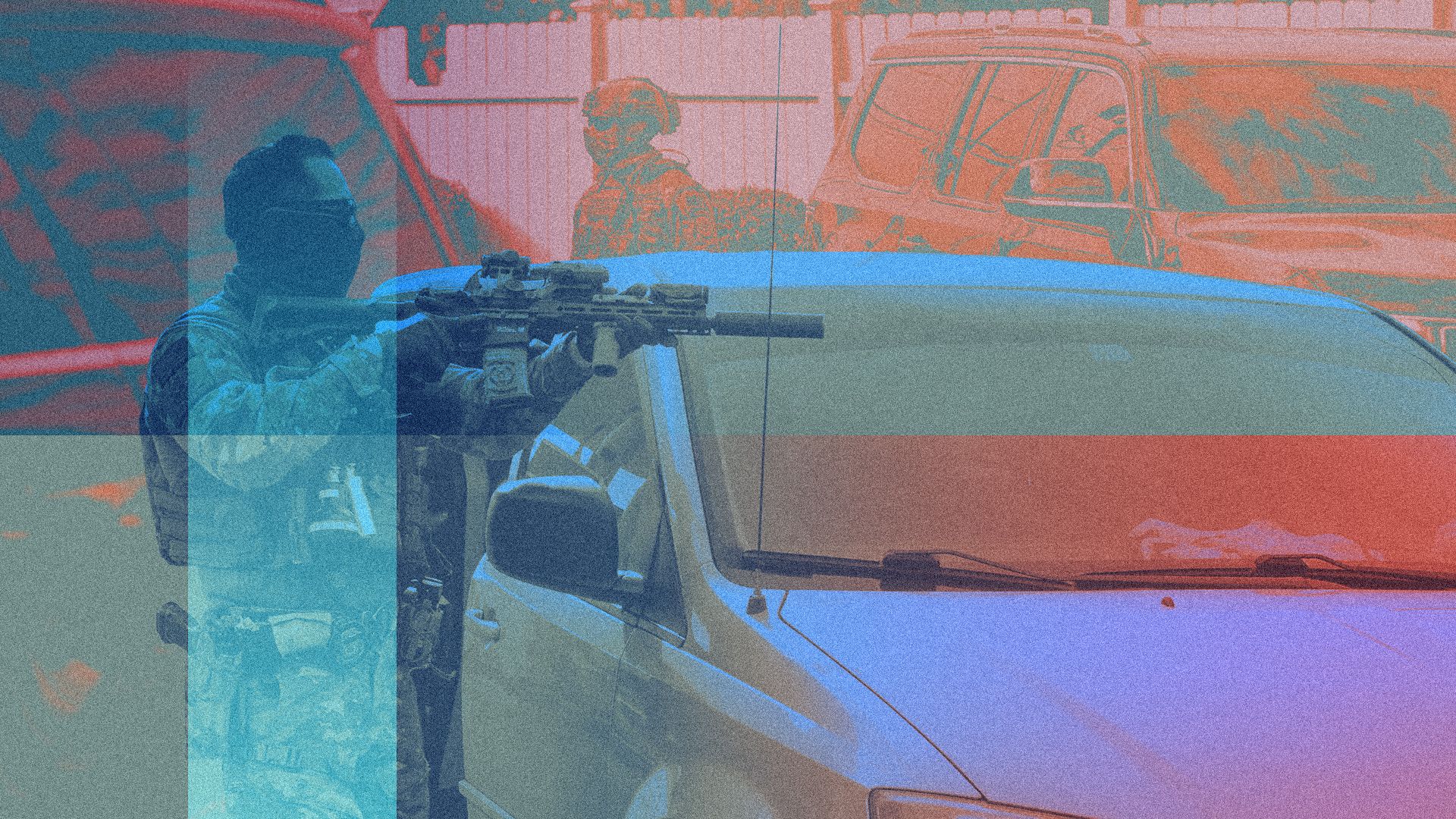
Photo illustration: Brendan Lynch/Axios. Photos: Jamie Kelter Davis and Scott Olson/Getty Images
The aggressive tactics used by immigration agents in North Carolina, which advocates say sow fear and confusion, aim to persuade immigrants to leave the U.S. voluntarily, Border Patrol's chief recently affirmed.
Driving the news: Federal agents surged into Charlotte and the Triangle last month, and were documented wearing tactical gear and masks while making arrests in public places, sparking widespread fear.
- The Department of Homeland Security reports making over 250 arrests in "Operation Charlotte's Web," and Immigration and Customs Enforcement maintains a permanent presence here.
What they're saying: Border Patrol leader Gregory Bovino has not sat for an interview with Axios Raleigh or Axios Charlotte, despite multiple requests, although he did discuss the work of the "mean green team" in Charlotte on a recent podcast.
- "There's a strategy here ... And that is — self-deportations," Bovino told the retired federal agent interviewing him.
The big picture: DHS did not provide statistics about self-deportations before our deadline, but told The Atlantic's Nick Miroff that around 35,000 people self-deported this year by using a government app that arranges plane tickets.
- Miroff writes that immigration agencies "have embraced and promoted imagery of harsh street-level immigration enforcement to sow fear and intimidate people into leaving."
Zoom in: Andrew Willis Garcés, a Greensboro-based strategist for Siembra NC, an activist group that supports immigrants, told Axios that masked agents chasing people as they take out the trash, do landscaping or go to church has that effect.
- "That's the goal. It's to make people afraid to go to work or go to school," Garcés said.
Case in point: Photographer Logan Cyrus, who lives in east Charlotte and documented Border Patrol activity there last month for the Charlotte Optimist, told Axios that "it was kind of surreal having these people dressed in combat gear all over the neighborhood."
- Border Patrol agents, including one armed with a gun, penned in his vehicle and questioned him one morning, Cyrus said.
Cyrus said a "palpable fear" lingers in Charlotte, mixed with defiance and confusion.
- "It seems like cruelty is the point to a lot of this. Even if they're not catching anybody, the fact that they're scaring people is part of their whole operation," he said.
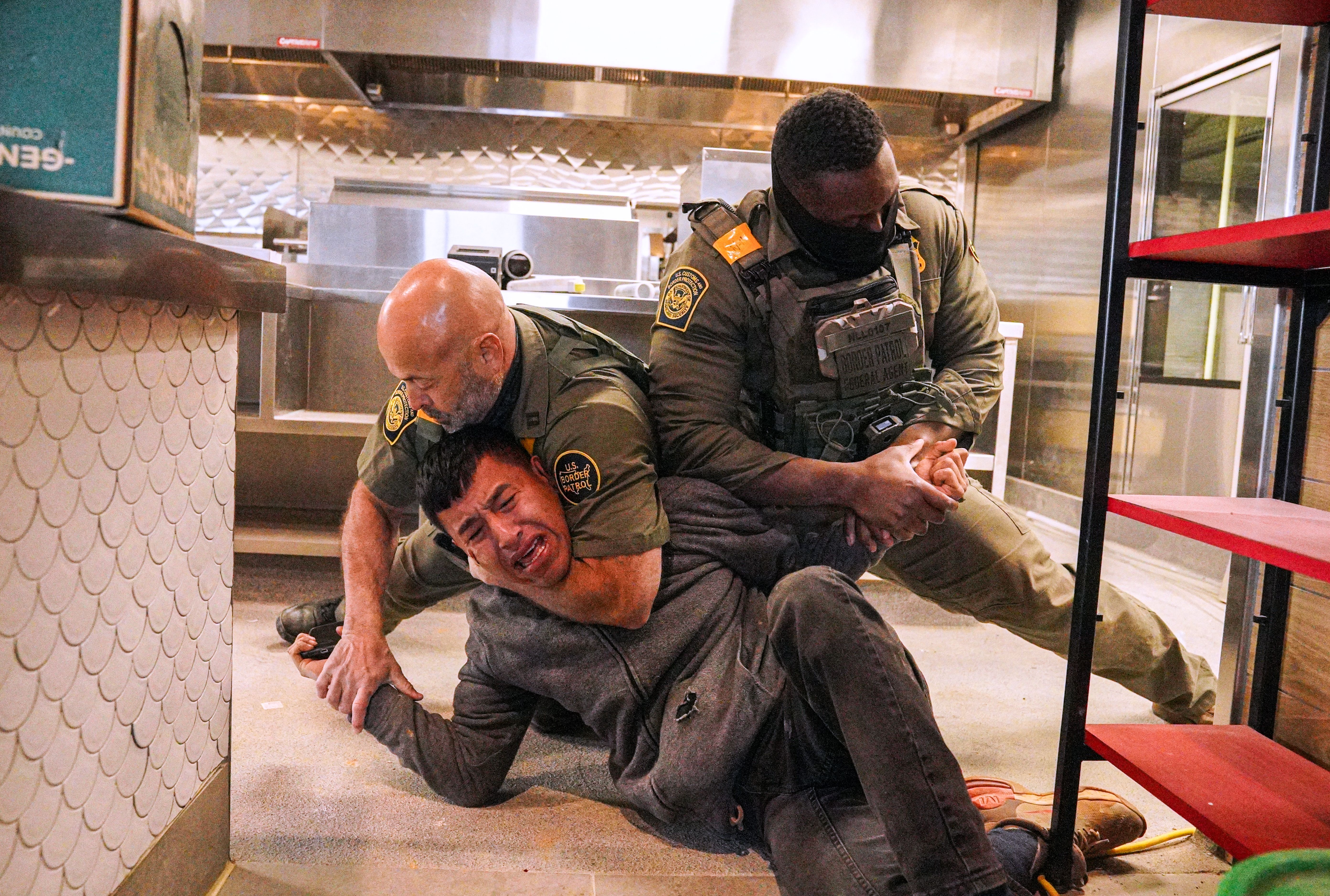
Between the lines: Garcés and Cyrus both say that in North Carolina, agents have shied away from media and others recording them.
- Still, violent images that feed the sense of fear have emerged, like a Getty image of a bloody takedown inside a fast food restaurant under construction.
Context: Siembra NC is a network of mostly volunteers that assembled to support immigrants during President Donald Trump's first administration. They document immigration enforcement and chase down rumors submitted to their hotline (336-543-0353).
- They find that most ICE arrests in North Carolina happen in early morning traffic stops.
- "We think it's because they're looking for people on their way to work or school," Garcés said. "We don't know if that will continue to be true forever, but it's currently the pattern."
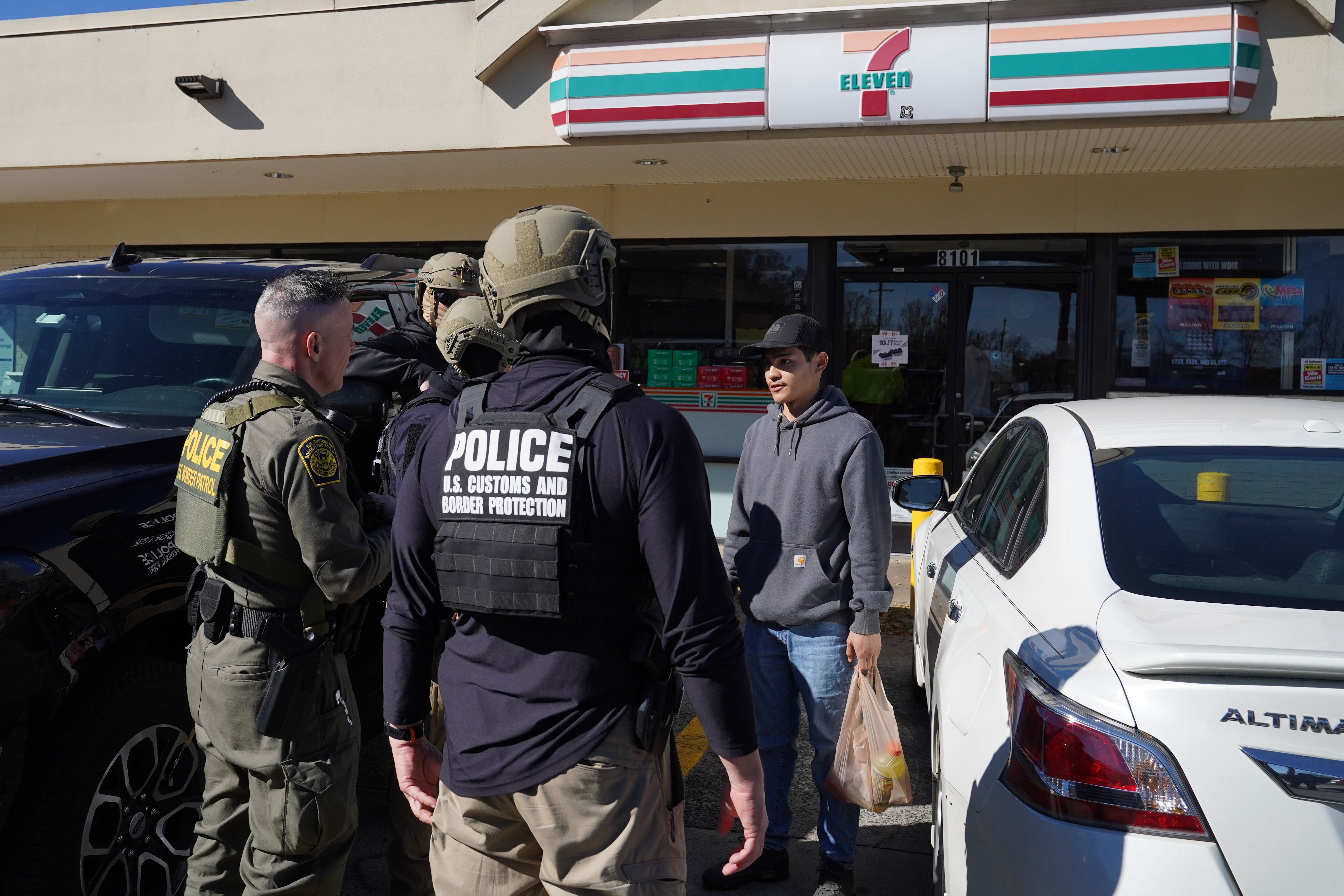
The other side: The Trump administration says its immigration enforcement efforts "prioritize public safety" and that agents are "wearing masks to protect themselves from being doxed and targeted."
- We asked Border Patrol and ICE about their tactics in North Carolina, but didn't hear back before our deadline.
Caveat: We still don't know much about the people Border Patrol arrested in North Carolina, like most of their names or criminal backgrounds. DHS posted some mugshots, but hasn't given reporters a full list of people they detained.
- CBS News obtained a government document on "Operation Charlotte's Web" that they report shows Border Patrol arrested 270 people, 90 of whom they categorized as "criminal aliens."
- Bovino said on the podcast — without providing evidence — that Charlotte "surprised even us" with "the amount of aggravated felons, gang members walking the streets with impunity."
What's next: Although Border Patrol caravans were documented leaving Charlotte, DHS says the operation is not over. ICE remains active in North Carolina.
- Siembra NC is arranging more early morning patrols to help people in Charlotte and the Triangle get to work and school safely.