The government shutdown is starting to squeeze North Carolina workers

Add Axios as your preferred source to
see more of our stories on Google.
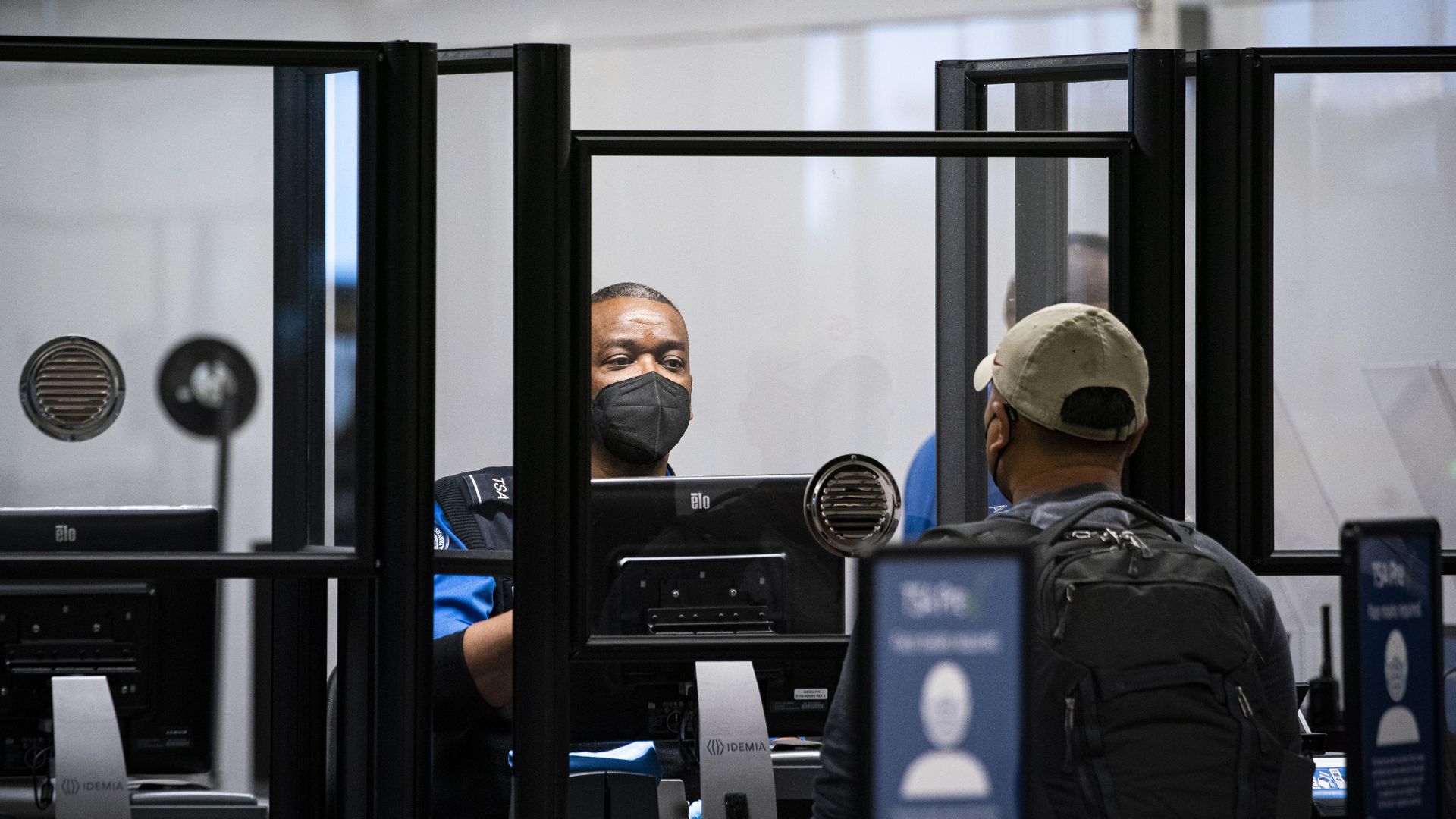
A Transportation Security Administration agent screens a traveler at Raleigh-Durham International Airport. Photo: Al Drago/Bloomberg via Getty Images
As the federal government's shutdown nears a new month, government workers and advocates warn that its disruptions and effects will begin to be felt more seriously.
Why it matters: The government shutdown affects a whole host of services. But most acutely, it is preventing tens of thousands of workers from being paid in North Carolina, even as bills pile up, and could soon impact key programs providing food assistance.
By the numbers: There were 81,700 federal government jobs in North Carolina as of August 2025, according to the most recent estimate from the Bureau of Labor Statistics' Current Employment Statistics program.
- That includes more than 2,000 workers at the Environmental Protection Agency's largest office in Research Triangle Park. Many were furloughed starting this week, The News & Observer reported.
State of play: So far, Transportation Security Administration agents have been keeping things humming along at Raleigh-Durham International Airport despite the lack of paychecks.
- But Mac Johnson, a former TSA worker at RDU who heads Local 449 of the American Federation of Government Employees, warns things are getting harder to continue behind the scenes.
- Johnson, who worked at RDU during the 2018 government shutdown that lasted 35 days, said he's less optimistic about a deal coming now than he was then.
What they're saying: TSA agents "continue to come to work as long as they have funds available to buy gas," Johnson, who represents around 600 members, told Axios.
- Many workers already have to take advantage of food pantries because of a lack of pay, he noted.
- "And it's absurd that someone would be placed in a position whether or not to pay the rent, mortgage, childcare, buy food for their homes, gas, car insurance," he said of federal workers' predicament without a paycheck.
Threat level: At the start of next month, another domino effect may begin when the shutdown starts to threaten November's Supplemental Nutrition Assistance Program benefits, commonly known as food stamps, Axios has reported.
- An administration official said in a letter to state agencies earlier this month that there would be "insufficient funds" to pay full November benefits for some 42 million people nationwide.
- The letter directed states not to start the process of distributing benefits to SNAP recipients' electronic benefit transfer, or EBT, cards for November "until further notice," Axios' Andrew Solender reported.
Zoom in: North Carolina's Department of Health and Human Services warned on Wednesday that disruptions to SNAP could begin next month, when around 600,000 people in the state would be due to receive assistance.
- Also under threat is the Women, Infants, and Children (WIC) program, which provides formula and support for 262,000 mothers and newborns in the state.
What they're saying: "We should be back in session. We should be voting. We should be getting out federal budgets together. We should be taking care of the ACA tax credits," Deborah Ross, a Democrat who represents Raleigh in Congress, told NC Newsline while touring a food bank this week. "But instead, here we are."
The other side: "This is on the Democrats — they chose to shut down the government," an administration official told Axios' Solender, referring to Democrats' demand, among other things, of a reversal of Medicaid cuts from the "big, beautiful bill."
- "If they want these benefits to continue, they should join Republicans in voting to open the government next week."