RTI expands new energy tech labs despite layoffs and funding uncertainty

Add Axios as your preferred source to
see more of our stories on Google.
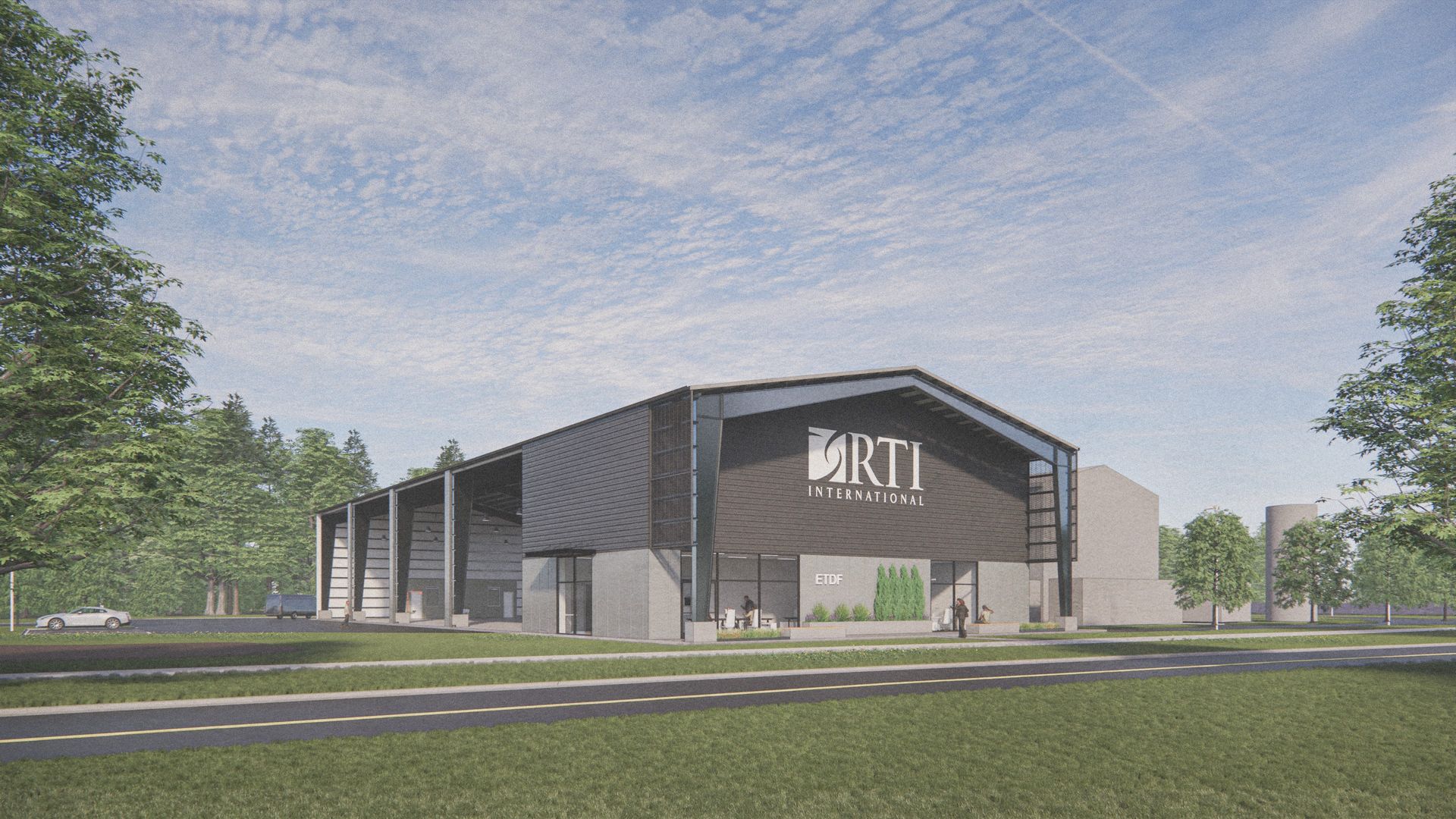
A rendering of RTI International's Pilot Xcelerator expansion. Photo: RTI International
It's been a turbulent year for RTI International, a research nonprofit that is one of the region's largest employers but has had to significantly reduce headcount due to federal funding changes by the Trump administration.
- But the company, which was the first tenant in Research Triangle Park, continues to invest in its future — breaking ground on a new research space Tuesday it hopes will attract more private contracts.
Why it matters: RTI's new Pilot Xcelerator lab is a $14 million bet on commercial growth despite a brutal year of layoffs driven by cuts to federal contracts. The investment could spark new hiring, too.
- The new facility — which tests the scalability of new energy technologies — will be the 12th active building or lab space on its sprawling, 180-acre campus in the heart of Research Triangle Park.
Between the lines: RTI's layoffs have been driven by the elimination of U.S. Agency for International Development and many other federal contracts by the Trump administration.
- The company, which employs 1,800 in North Carolina, has had to lay off more than a third of its global workforce this year, including more than 400 in North Carolina.
- Now, the company is hoping to pivot toward more commercial contracts for growth.
What they're saying: "We have been very clear this is a catalyst moment for us. This is not a hunker down, wait it out moment at all," Tim Gabel, RTI International's CEO, told Axios. "We've got money to invest in smart ways. We're pivoted to the future. We're not trying to go back."
- The company had been planning this expansion before federal funding uncertainty started, but Gabel said it remained steadfast in its plans despite so many contracts being cut.
Zoom in: RTI's new lab space will be used to test the scalability of promising energy technologies piloted in labs. Think of it like Phase 2 clinical trials for new forms of fuel or other energy sources.
- Two areas it has already seen some traction in are with companies testing out more sustainable forms of jet fuel from companies like Aether Fuels and Lydian Labs, or different ways to fuel the creation of fertilizer, which requires large amounts of energy.
- The new technologies are experimental, and only a small percentage of them prove scalability once they get tested more extensively by RTI, Sameer Parvathikar, program director of the Pilot Xcelerator, told Axios.
- "We've traditionally depended on the Department of Energy as the early funder for a lot of the innovation" RTI works on, Gabel said. "But this really is going to be targeting more of the commercial market."
Editor's note: We've updated this story with RTI's statewide headcount.