North Carolina's 2024 Supreme Court race comes to an end after six months

Add Axios as your preferred source to
see more of our stories on Google.
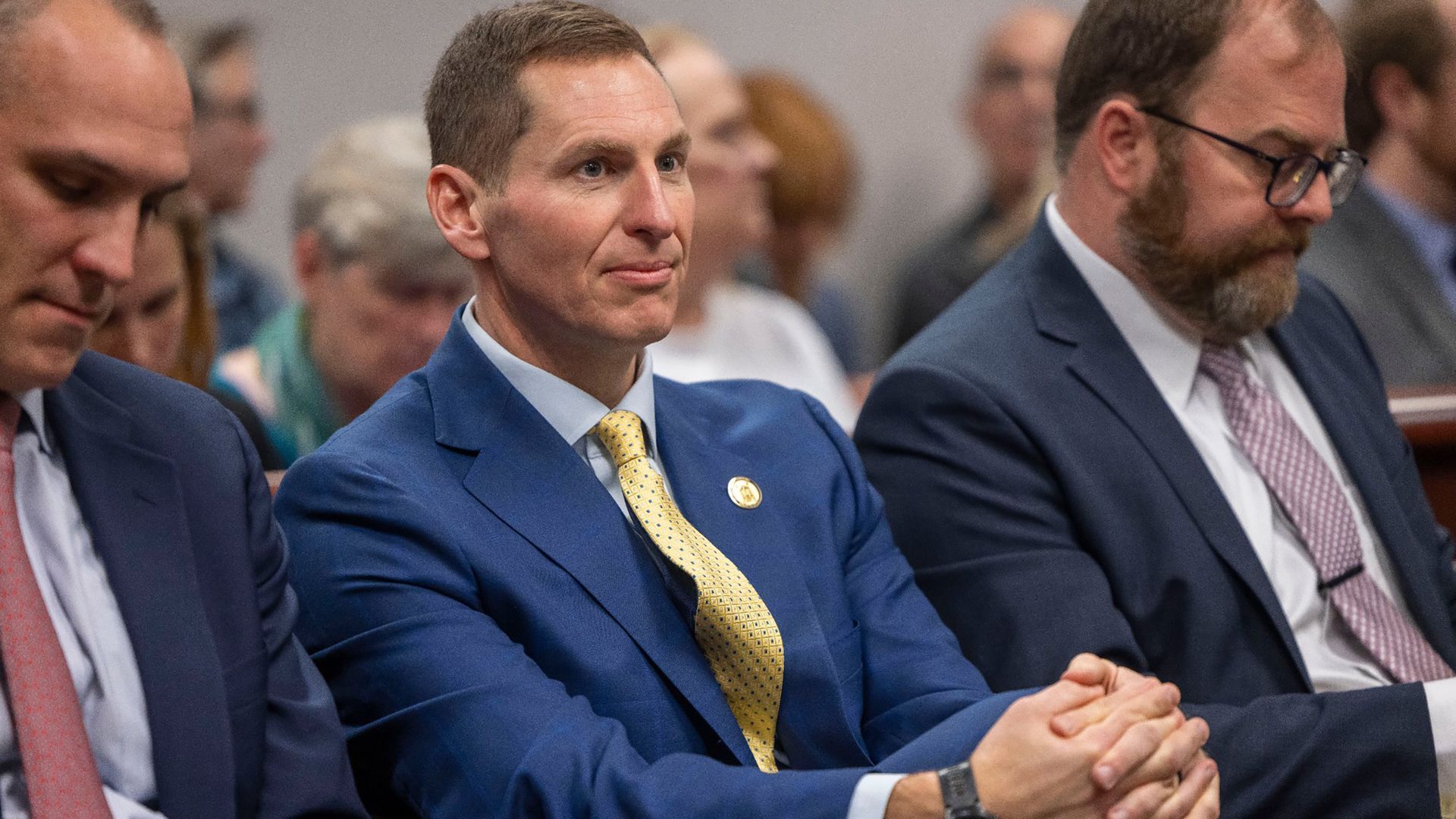
Judge Jefferson Griffin, the Republican candidate for the N.C. Supreme Court. Photo: Robert Willett/The News & Observer/Tribune News Service via Getty Images
The last undecided 2024 race in the country came to a close Wednesday, when Republican North Carolina Supreme Court candidate Jefferson Griffin conceded to his Democratic opponent, incumbent Allison Riggs, the Associated Press reports.
Why it matters: The move comes six months after the election and an extraordinary legal battle in which Griffin sought to overcome Riggs' lead of several hundred votes by throwing out tens of thousands of North Carolinians' ballots.
Catch up quick: After months of back-and-forth over the case in state and federal courts, Trump-appointed U.S. District Judge Richard Myers dealt a decisive blow to Griffin on Monday in overturning two recent Republican-majority state court rulings in Griffin's favor.
- Retroactively invalidating votes cast in the 2024 election, which Griffin had sought to do, would violate voters' due process rights, Myers ruled.
- He ordered that the North Carolina State Board of Elections certify Riggs' win.
- "You establish the rules before the game," he wrote in his opinion. "You don't change them after the game is done."
Driving the news: Griffin said Wednesday that he would not appeal the ruling.
- "While I do not fully agree with the District Court's analysis, I respect the court's holding — just as I have respected every judicial tribunal that has heard this case," Griffin said in a statement. "I will not appeal the court's decision."
The other side: Riggs also released a statement, saying: "I'm glad the will of the voters was finally heard, six months and two days after Election Day."
- "It's been my honor to lead this fight - even though it should never have happened - and I'm in awe of the North Carolinians whose courage reminds us all that we can use our voices to hold accountable any politician who seeks to take power out of the hands of the people," Riggs said.
State of play: Election officials' final vote tally after the November election showed Riggs in the lead by more than 600 votes. Two recounts, as requested by Griffin, showed Riggs leading by more than 700.
- Griffin subsequently challenged tens of thousands of ballots across the state, arguing that they should be tossed, despite the fact that they had followed the rules in place when they registered and cast their votes.
- When the state elections board rejected those protests, Griffin filed a lawsuit.
- In a recent decision, the state Supreme Court sided with a three-judge appeals court panel in ruling that some 260 ballots of voters who have allegedly never lived in the state should be thrown out. (An analysis by journalist Bryan Anderson found that dozens of those voters have, in fact, lived in North Carolina.)
- At the same time, the high court countered the appeals court and ruled that only military and oversees voters would need to cure their ballots by providing a copy of their voter identification or filling out an exception form, a far smaller number than the 60,000 ballots the appeals court said should be cured.
- Myers' ruling Monday rendered that ruling moot.
Zoom in: Just one Supreme Court seat was up for election in 2024, and the only other Democrat on the court, Anita Earls, is up for reelection in 2026. Three Republican seats will be up for grabs in 2028, and two in 2030.
- Democrats hope to flip the court, which has a 5-2 Republican majority, before 2031, when the state legislature will redraw congressional and state legislative districts. A loss for Riggs would've made that difficult.
What's Next: The state elections board told CNN that it will issue a certificate of election to Riggs on Tuesday.