NC GOP's path to victory in state Supreme Court race narrows

Add Axios as your preferred source to
see more of our stories on Google.
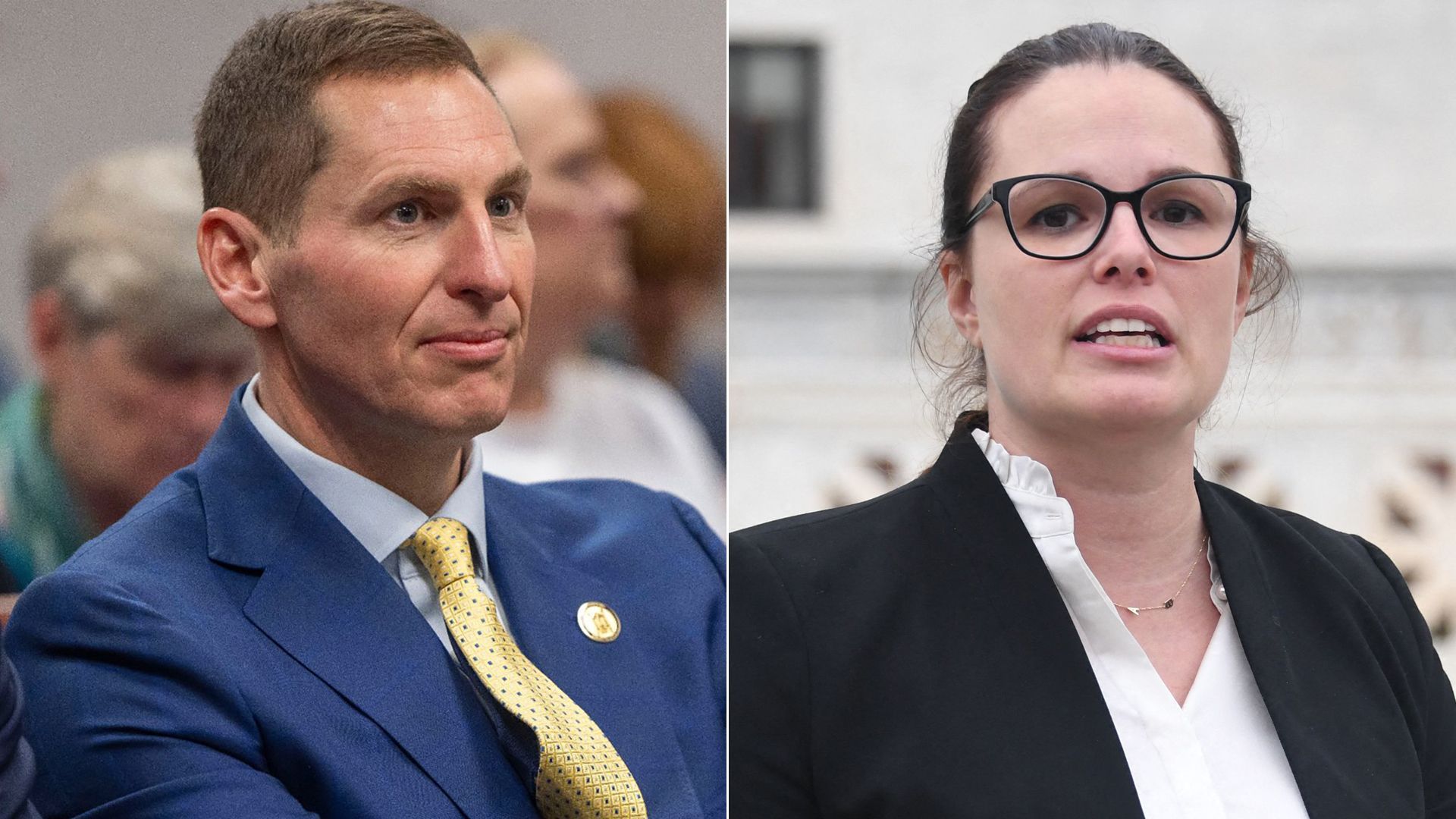
GOP Supreme Court candidate Jefferson Griffin and Democratic incumbent Allison Riggs. Photos: Robert Willett/The News & Observer/Tribune News Service (left) and Olivier Douliery/AFP (right) via Getty Images
North Carolina Republicans have not let up on their effort to overturn the results of the state's 2024 Supreme Court race, though the party's path to victory has significantly narrowed in recent weeks.
Why it matters: The ballots of several thousand military and overseas North Carolinians who voted in the race — the only still-undecided 2024 race in the country — remain in question and are at risk of being thrown out.
Driving the news: After a six-month court battle over election results, GOP Supreme Court candidate Jefferson Griffin and his opponent, Democratic incumbent Allison Riggs, now await a federal judge's ruling on how many voters will need to provide a copy of their identification or submit an exception form if they want their vote to count in the race.
- The State Board of Elections interpreted a recent ruling by the state Supreme Court to mean only 1,400 voters would have to do so. Griffin has argued that number should be as many as 5,500.
The big picture: Either way, the number of voters who ultimately have to cure their ballots will be just a fraction of the more than 65,000 ballots Griffin initially challenged in the weeks after initial counts and recounts showed Riggs winning the race.
- Still, if even just a few thousand ballots are unable to be cured or are thrown out, the results could swing in Griffin's favor.
Catch up quick: Election officials' final vote tally after the November election showed Riggs in the lead by more than 600 votes. Two recounts, as requested by Griffin, showed Riggs leading by more than 700.
- Griffin subsequently challenged tens of thousands of ballots across the state, arguing that they should be tossed, despite the fact that they had followed the rules in place when they registered and cast their votes.
- When the state elections board rejected those protests, Griffin filed a lawsuit. The case has pinballed through the courts since.
- In a recent decision, the state Supreme Court sided with a three-judge appeals court panel in ruling that some 260 ballots of voters who have allegedly never lived in the state should be thrown out. (An analysis by journalist Bryan Anderson found that dozens of those voters have, in fact, lived in North Carolina.)
- At the same time, the high court countered the appeals court and ruled that only military and oversees voters would need to cure their ballots by providing a copy of their voter identification or filling out an exception form, a far smaller number than the 60,000 ballots the appeals court said should be cured.
- Numerous parties, including Riggs, asked the 4th Circuit Court of Appeals to weigh in. That court ordered the State Board of Elections to refrain from beginning the curing process, for now.
Between the lines: Democrats, voting rights activists and legal experts have warned that if Griffin succeeds, it could give way to more candidates moving to change election rules long after a race is over.
- "The big story here," said Anne Tindall, a lawyer with Protect Democracy told The New York Times, "is that never, ever, ever before have we seen a court, months after an election, change election rules to retroactively disqualify a class of voters and flip the results."
- "If you can do that," she added, "no election is safe — period."
Of note: The State Board of Elections has noted that any voter who is concerned their registration is incomplete or not up to date can submit an updated voter registration form. Here's how.
What's next: The parties in the case — including Griffin, Riggs and the state elections board — had until Monday to submit briefs to federal Judge Richard Myers, who has said he'll rule "as soon as practicable" on how many ballots need to be cured.