Scam alert: Toll texts target North Carolina drivers

Add Axios as your preferred source to
see more of our stories on Google.
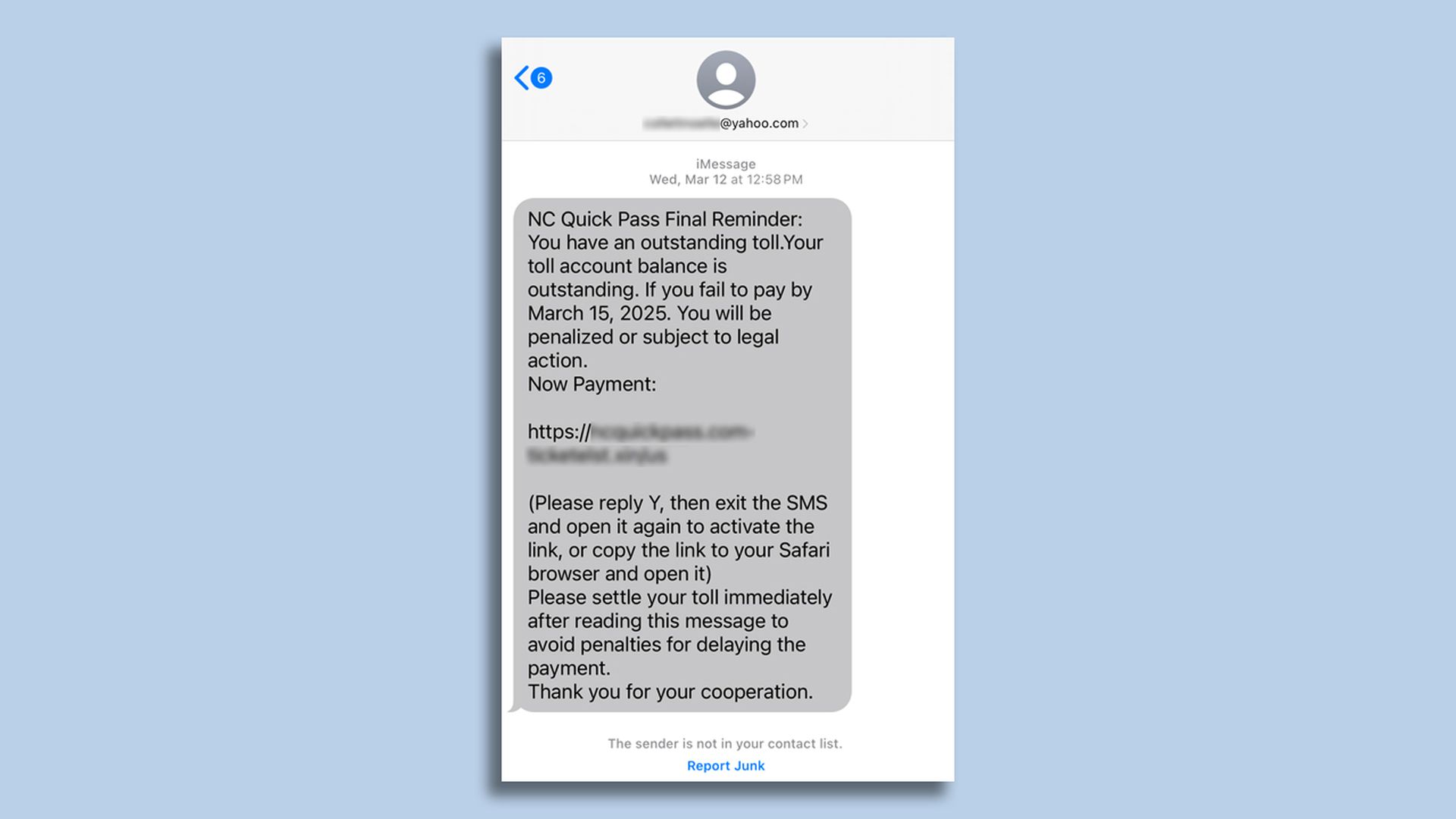
Screenshot: Zachery Eanes/Axios
Don't click on links in text messages claiming to be from NC Quick Pass or any other tolling agencies, as they may be part of a nationwide scam.
Why it matters: The messages are fraudulent and sent at random, including to non-toll users, North Carolina Attorney General Jeff Jackson said.
- Clicking on links included in the messages — many of which closely mimic legitimate tolling agency sites — could subject you to financial fraud.
The big picture: The messages are known as smishing, or Short Message Service (SMS) phishing. The sender disguises themselves as E-ZPass or a state tollway operator claiming the recipient has an unpaid toll.
- The goal is to get victims to pay the fraudster or share their sensitive information, like driver's license, Social Security or bank account numbers, Axios Phoenix's Jessica Boehm writes.
Driving the news: NC Quick Pass has received thousands of phone calls daily asking about the legitimacy of text messages that accuse recipients of "toll evasion" or claim that you'll be subject to a penalty or "legal action" if you fail to pay.
What they're saying: "These scam texts are targeting a massive number of people—including me," Jackson said in an announcement last month.
- "Don't fall for them, and please warn your family. We're investigating, but in the meantime, be wary of any unsolicited texts — especially those that claim to be from the government or threaten legal action."
How it works: NC Quick Pass will not ask for payment via text message or threaten you with legal action for an outstanding balance, Jackson said.
- Text messages from NC Quick Pass will only come from "696277," and legitimate NC Quick Pass links are ncquickpass.com or secure.ncquickpass.com, per Jackson.
- If you receive a scam text, check your account through the toll service's official website or call its customer service number, delete the text and file a complaint at www.ic3.gov.
- If you mistakenly click on a link: "Take efforts to secure your personal information and financial accounts. Dispute any unfamiliar charges," Jackson said.