The Triangle is among the most vulnerable regions to NIH cuts

Add Axios as your preferred source to
see more of our stories on Google.
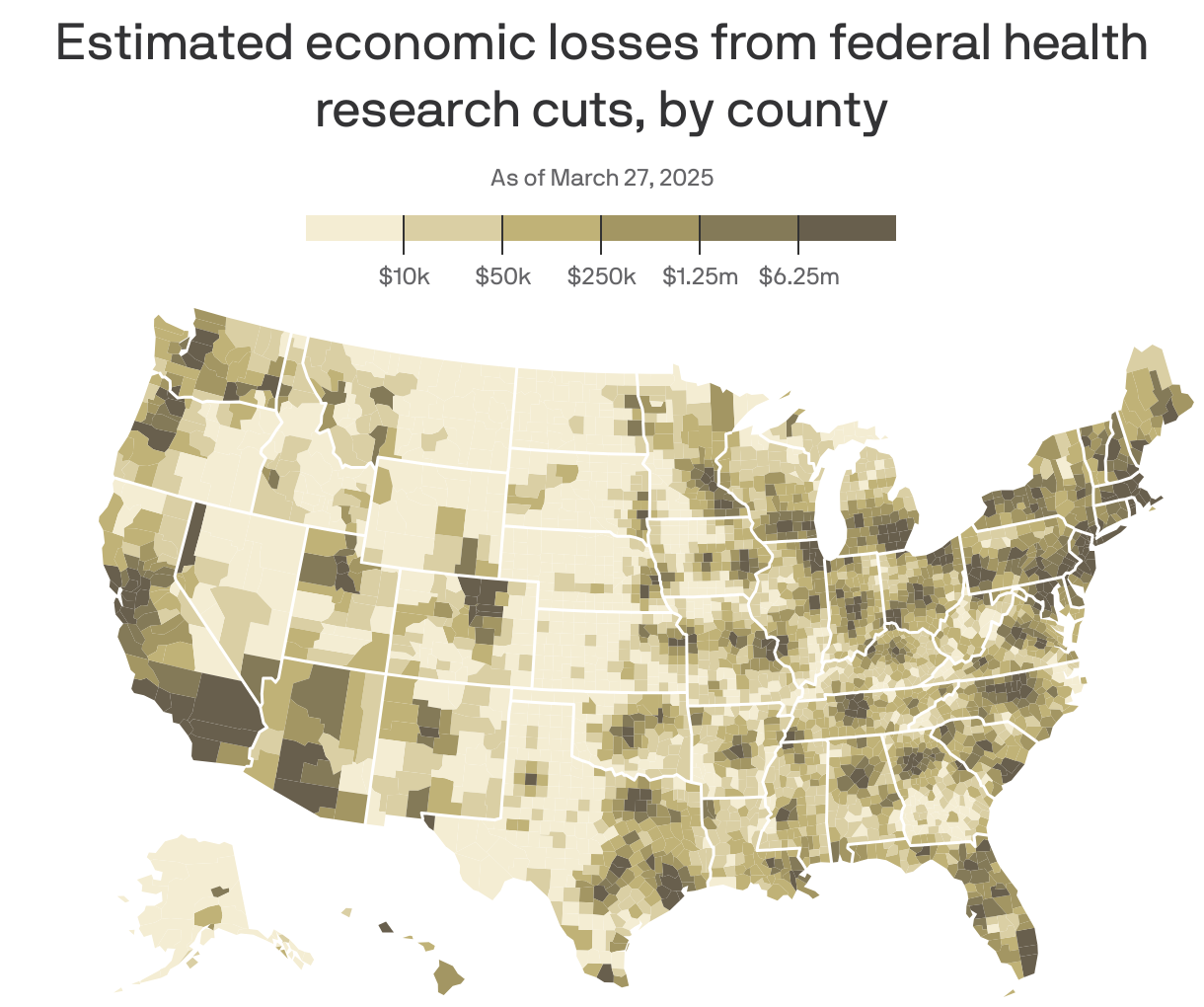
The Triangle could experience economic losses of at least $441 million as a result of the Trump administration's planned cuts to indirect funding by the National Institutes of Health, per the Science & Community Impacts Mapping Project.
Why it matters: That would be among the highest in the country, with the Triangle home to a significant number of top-tier research universities, institutions and hospitals, according to the research.
Catch up quick: In February, the Trump administration said it would cap the indirect cost rate on all new and current grants at 15% of the total cost.
- Nearly two dozen states, including North Carolina, sued, earning a temporary freeze on the cuts for the states that participated in the suit.
- That litigation is expected to continue, with the NIH expected to appeal a permanent injunction handed down by a judge this month.
How it works: The researchers — from the University of Pennsylvania, the University of Maryland, the University of Utah, the Georgia Institute of Technology, and the University of Oregon — used a variety of data points, including commuter information, to determine the estimates.
Zoom in: The 15% rate would be a significant drop for the Triangle's universities, which are among the largest recipients in the country of NIH funding.
- UNC's negotiated indirect cost rate was 55% last year, Duke's was 61.5%, and N.C. State's was 52%.
- The universities often used the indirect costs to pay for the infrastructure that supports overall research, like lab equipment.
What they're saying: "Research fuels our state's economy, technological innovations, and health discoveries, but it cannot thrive without the proper infrastructure to support it," Penny Gordon-Larsen, UNC's vice chancellor for research, said in a statement to Axios.
- Indirect cost reimbursements, she added, help fund "the backbone of research," such as specialized equipment, high-performance computing, building maintenance, and research safety and compliance.
Between the lines: Even if the indirect cost rates are ultimately left unchanged, the current NIH grant cycle is trending smaller than last year's and the review process for grants has been delayed.
Major institutions in the Triangle are already beginning to prepare for what reduced federal funding could mean for them — with UNC noting that "the federal funding environment is looking increasingly unpredictable, with potential cuts looming on the horizon."
- UNC said it will trim its budget by $50 million to offset potential federal funding cuts.
- RTI International, a major recipient of federal funds in Research Triangle Park, has laid off more than 500 workers.
- Duke president Vincent E. Price has tasked the school's and hospital's leaders with creating a new strategic plan featuring potential cost reductions in response to funding uncertainties.
- And N.C. State briefly instituted a hiring freeze before lifting it last month — though Warwick Arden, the school's provost, told university officials in a memo to "exercise caution ... in your hiring and spending decisions."