North Carolina flu deaths spiked in early February


Add Axios as your preferred source to
see more of our stories on Google.


The country's worst flu season in 15 years has left hundreds of thousands of Americans hospitalized while straining physicians' offices and emergency departments.
Why it matters: The virus is causing more severe complications and hitting young children especially hard.
- North Carolina has reported 246 influenza-associated deaths since October, the state's latest data show. Two were children between ages 5 and 17. More than 160 were adults older than 65.
"The two predominant strains that are circulating right now are known to be more severe and have more severe outcomes, especially in high-risk patients," said Carol McLay, president of the Association for Professionals in Infection Control and Epidemiology.
- "It's really clogging up our ERs and our outpatient facilities. And for the first time, we've seen cases of influenza that have surpassed COVID-19 in hospitalizations and deaths, since the COVID pandemic began," she said.
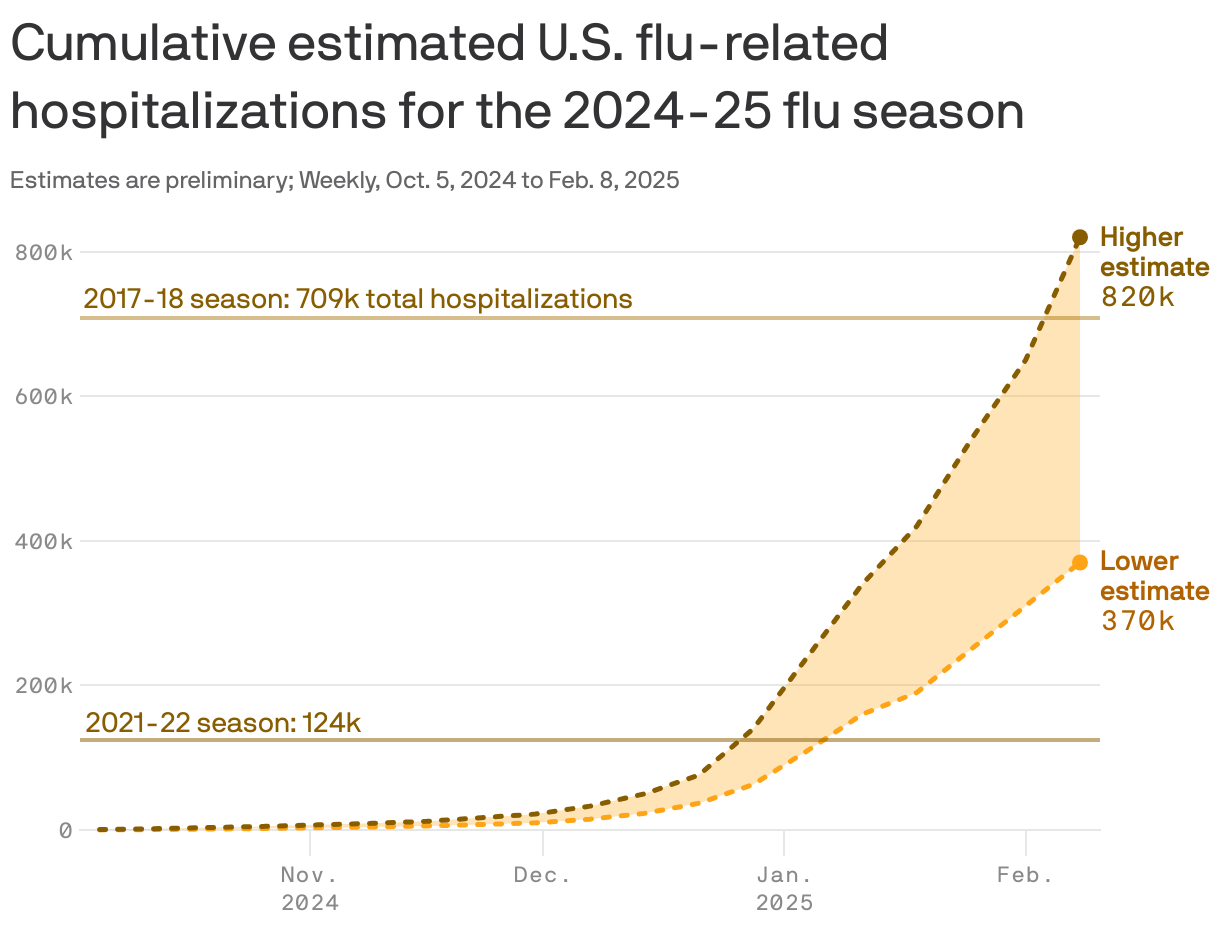
Zoom out: This flu season is classified as a "high-severity" season, with estimates of at least 29 million cases nationwide, the most since the 2009-2010 flu season, according to the latest Centers for Disease Control and Prevention data.
- There have been at least 370,000 hospitalizations, and 16,000 deaths from flu as of Feb. 8, per the CDC. That's on a pace to surpass the previous high recorded during the 2017-2018 flu season.
- Nearly every state is reporting high or very high flu activity, with roughly 32% of tests coming back positive and some areas testing as high as nearly 40% positive.
- "It's lots of more severe illnesses. Of the adults that are being hospitalized, most of them are having pneumonia and requiring intubation and ventilation," McLay said.
Zoom in: North Carolina reported "very high" flu activity for the week ending Feb. 8, when it reported nearly 13% of emergency department visits were for flu-like illnesses — up from 3.7% at the same time last year — and 57 flu-associated deaths.
- That Feb. 8 week was the worst of this season, so far. The percentage did drop to 9.2% for the week ending Feb. 15, and the flu-associated deaths fell to 34.
Of particular concern nationally is the severity being seen in kids this year. There have also been reports of a limited number of pediatric cases with serious neurological complications associated with the flu.
- There have been 68 flu deaths in kids across the country.
- Pediatric flu deaths hit a record 200 last year, and this season is shaping up to be worse, said Matthew Cook, president and CEO of Children's Hospital Association.
Yes, but: In North Carolina, this year's pediatric influenza-associated deaths are lower than last year's, when the state had 16, its highest number since 2004.
- As of the week ending Feb. 17 last year, North Carolina reported 11 pediatric flu-associated deaths, compared to the two so far this year.
Between the lines: This flu season may be made more severe because rates of seasonal flu vaccination have been falling in recent years for some groups, including children.
- Compounding the problem is the fact that this year's flu vaccine was a bit less effective (35%) than in a typical year (45%).
- People have also had much less exposure to flu in recent years amid the COVID-19 pandemic.
- "We think because people were social distancing and using masks for so long during COVID that we have reduced immunity to it," McLay said.
What we're watching: Public health officials say they are increasingly flying blind since they can't interact with or get flu data from global sharing platforms FluNet and FluID since the Trump administration announced the U.S. exit from the World Health Organization.
- "We are communicating with them but we haven't heard anything back," Maria Van Kerkhove, emerging diseases and zoonoses unit head for the WHO, said in a press conference.
- She added that the WHO had learned about bird flu updates not from the CDC, but from posts by the U.S. Department of Agriculture.
- That also has ramifications for next year's vaccine, since the global body helps determine the composition of seasonal shots.
This especially rough year for season flu coincides with the spread of avian flu throughout U.S. poultry and dairy farms, as well as wildlife.
- The fear is if the two have enough chances to mix, it may eventually create an avian flu strain that could spread between humans and turn into a pandemic.
The bottom line: There's a lot of respiratory virus still going around this season. If you haven't gotten the vaccine yet, it'd still be prudent to get one, experts urge.
- "There is no doubt, the data is out there, if you are vaccinated for the flu, even if you do get the flu, it is much less severe and it prevents you from being hospitalized and, obviously, prevents death as well," McLay said. "It's not too late to go out and get a flu vaccine."