Helene relief bill also targets the power of cities in North Carolina

Add Axios as your preferred source to
see more of our stories on Google.
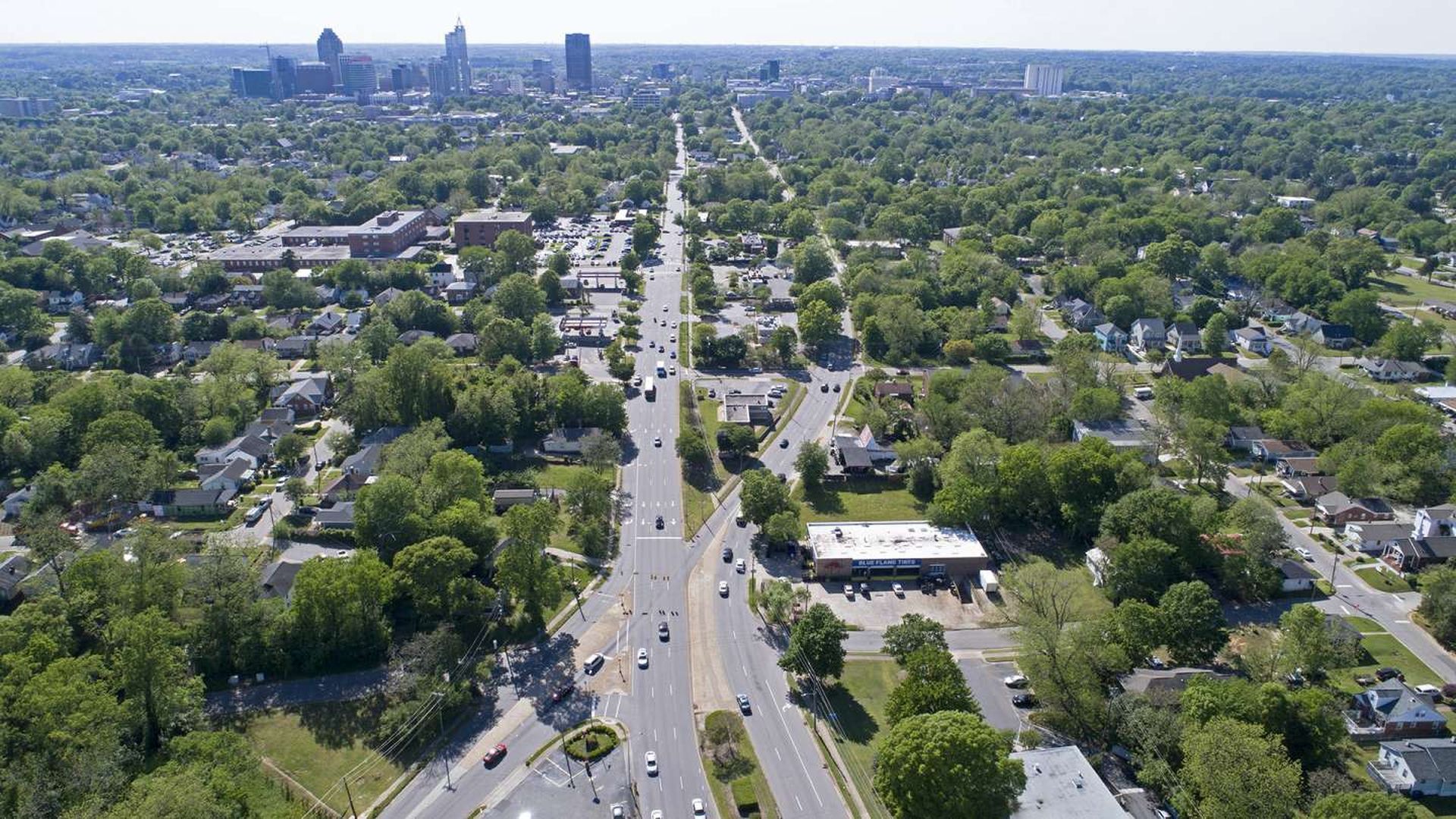
The New Bern Avenue corridor in Raleigh. Photo: City of Raleigh
Tucked away on the last page of the N.C. General Assembly's Hurricane Helene relief bill is a provision that could limit how North Carolina's booming municipalities handle their growth.
Why it matters: The provision removes some zoning and land-use powers from cities. Many local officials are concerned it could impact the way municipalities plan for transit districts or protect watersheds.
- The bill was vetoed by Gov. Roy Cooper on Tuesday. But incoming N.C. House speaker Destin Hall told reporters he's confident there will be enough votes to override the veto — though three Western North Carolina Republicans voted against the bill initially.
Driving the news: Senate Bill 382 bans municipalities from downzoning any properties without the written consent of all property owners that would be affected.
- Downzoning, for this purpose, would refer to decreasing the development density of land or reducing the permitted uses of land under existing zoning ordinances and rules.
State of play: In recent years to deal with growth, North Carolina cities like Raleigh, Durham and Chapel Hill have been more focused on upzoning properties, which allows for more density or development uses than were previously allowed — like duplexes on land that previously only allowed single-family homes.
- But in some situations, cities might have to downzone properties or disallow some uses as part of broad future land planning — like the creation of a new transit overlay district. Or they might try to downzone properties near important watersheds to prevent pollution or flooding.
- Raleigh, for instance, is worried the ban could retroactively affect its transit overlay district on New Bern Avenue's bus-rapid transit route that prohibits some future uses.
- Raleigh has argued that several blocks of gas stations, auto shops and drive-thrus would lower the potential density on the transit corridor. While those existing businesses are grandfathered in, the city is hoping to encourage more housing to be built there.
Zoom in: Durham officials believe the provision was put into the bill as a result of discussions during the ongoing rewrite of its unified development ordinance, which sets the rules for development across the city.
- Durham's UDO is currently considering which uses will be allowed in certain transit districts that will support bus rapid transit lines in the future, and some auto-dependent uses could be phased out.
- Now, one land owner in a potential transit district could put a stop to a larger planning decision, if the new planning district or UDO takes away some uses or density.
- It's unclear who pushed for the inclusion of the provision. The office of state Senate leader Phil Berger did not respond to a request for comment about it.
What they're saying: "We're experiencing a possible precedent where municipalities are at risk of losing zoning privileges, which in this state is one of the very few things that we have any control over," Durham Mayor Leonardo Williams told Axios.
- "Most of (the) energy goes into upzoning ... however if we do need to do some downzoning to create transit opportunity areas, I think the General Assembly should allow us to be sensible in that approach."
Between the lines: The biggest challenge for Durham is expected to be in the areas identified on its Comprehensive Plan's Place Type Map as Transit Opportunity Areas (TOAs), which are intended to be mixed-use, transit and pedestrian-focused, Sarah Young, the director of the Durham City-County Planning Department, told Axios.
- "It will be difficult to transition these areas to the types of places our community wants to see if we cannot amend our zoning regulations to phase out auto-dependent uses over time," she said.
Raleigh Mayor Mary-Ann Baldwin, who leaves office next month, said cities weren't warned of the provision in the bill.
- "This will have a negative impact on our efforts to build density along our Bus Rapid Transit corridors and major bus routes," she told Axios. "I'm really concerned about the unintended consequences as we prepare for future growth."
- Raleigh's planning director, Patrick Young, said his department is studying the potential impacts of the bill and plans to brief the Raleigh City Council on it.
Zoom out: Scott Mooneyham, director of political communication at the North Carolina League of Municipalities, told Axios that many cities and towns have reached out to his organization with concerns about the changes to zoning privileges.
- He said local governments did not have enough time to weigh in on the provision.
What's next: Mooneyham said he doesn't think the provision will be changed during a potential override of the vote.
- But he is hopeful that the General Assembly could revisit the potential consequences of the law when they return next year.