Why fatal overdoses are plummeting in North Carolina

Add Axios as your preferred source to
see more of our stories on Google.
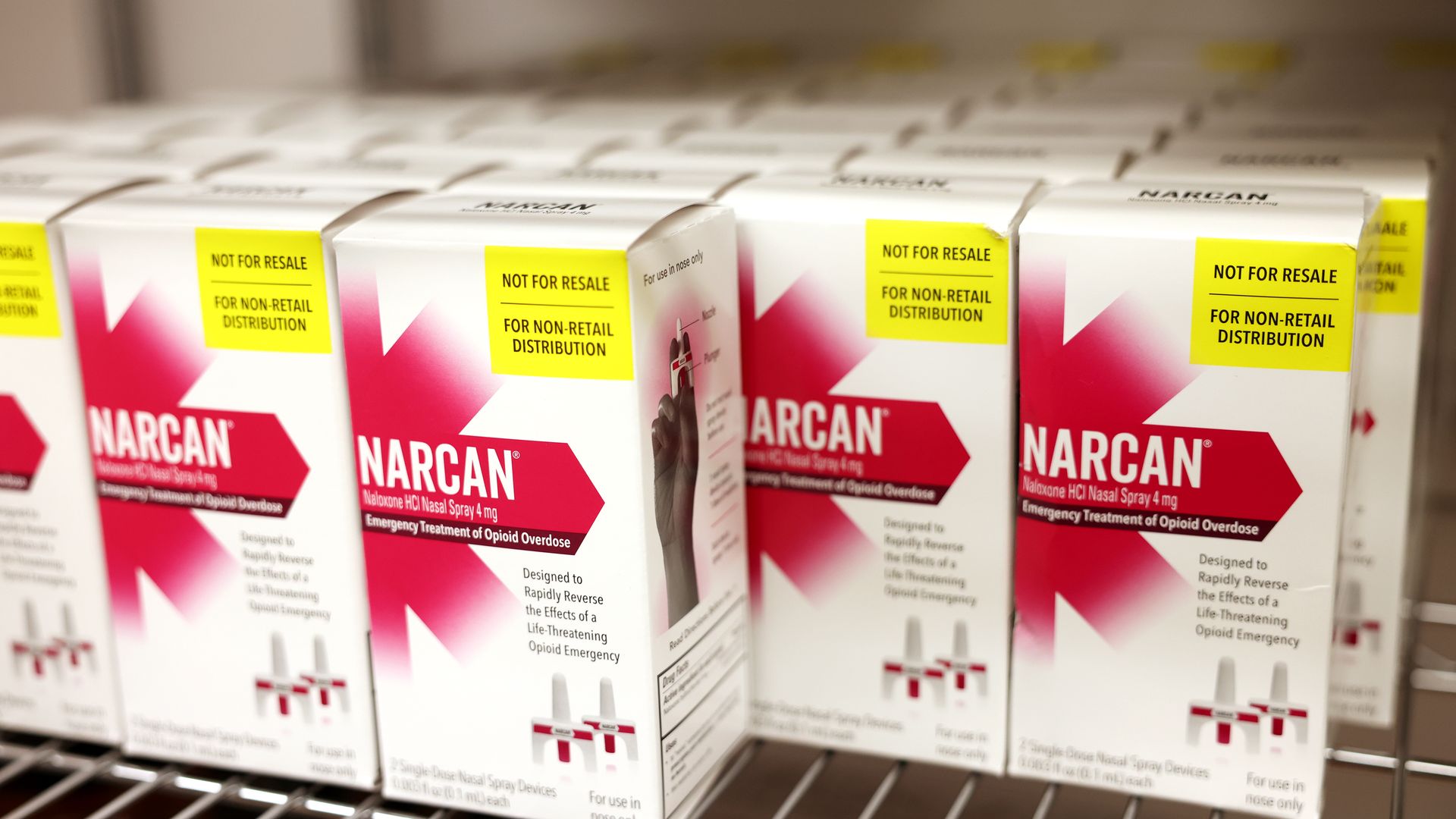
Photo: Jessica Rinaldi/The Boston Globe via Getty Images
The number of fatal overdoses has declined rapidly in North Carolina over the last year — far outpacing how fast they've fallen nationally.
Why it matters: Overdoses kill more than 100,000 people in the U.S. a year — but the number appears to be dropping quickly, Axios' Erica Pandey writes.
- The rate of deaths fell last year for the first time since before the pandemic, offering a hopeful milestone amid an epidemic that's ravaged the nation for over two decades.
By the numbers: In the 12 months ending in April, there was a 10% decline in fatal overdoses nationally from the same period a year before, according to preliminary CDC data.
- In North Carolina, that figure dropped 23%.

The big picture: In 2022, 75% of fatal overdoses nationwide involved opioids — especially fentanyl, a synthetic opioid, according to the National Institute on Drug Abuse.
- Illicit fentanyl is highly potent (50 times more potent than heroin), cheaply made and easily transported, making it extremely profitable, per NIDA.
- Traces of fentanyl are being found in almost every illegal drug seized, from cocaine to marijuana, experts say.
State of play: Greater investment into harm reduction and recovery has contributed to the decline in fatal overdoses in North Carolina, NCDHHS spokesperson Summer Tonizzo told Axios. Highlights include:
- The distribution of more than one million doses of naloxone (the generic name of Narcan, which reverses the effects of an overdose) to agencies serving those at highest risk for overdose.
- Expanding syringe services programs across 66 counties and one federally recognized tribe.
- Directing funds to more than 40 community-based programs across North Carolina to expand overdose prevention activities, services and treatment assistance.
- Quarterly NC Opioid and Prescription Drug Abuse Advisory Committee meetings that covered educational topics about substance abuse.
- Conducting five statewide summits on overdose prevention.
- Expanding access to opioid treatment programs.
Zoom out: A cornerstone of Josh Stein's time as the state's attorney general, North Carolina is part of a $26 billion opioid settlement with Johnson & Johnson and three other drugmakers over the companies' alleged involvement in stoking the nation's opioid crisis.
- North Carolina's share is about $1.4 billion. Counties, towns and cities are using the incoming cash to combat the crisis, putting it toward Narcan distribution and recovery services.
Zoom in: Schools throughout the U.S. are working to combat youth overdoses. Every Charlotte Mecklenburg School started carrying Narcan this year, for instance.
- Last spring, the Wake County school board approved a new policy outlining how schools will carry Narcan.
What they're saying: Having schools carry Narcan is "no different than an EpiPen or AED system or a fire extinguisher," advocate Barbara Walsh told Wake County's school board last spring, WRAL reported.
- The founder and executive director of the Fentanyl Victims Network of North Carolina, Walsh is the mother of a Wake school system graduate named Sophia who died in 2021 after Walsh said she accidentally drank from a water bottle that had been laced with fentanyl.