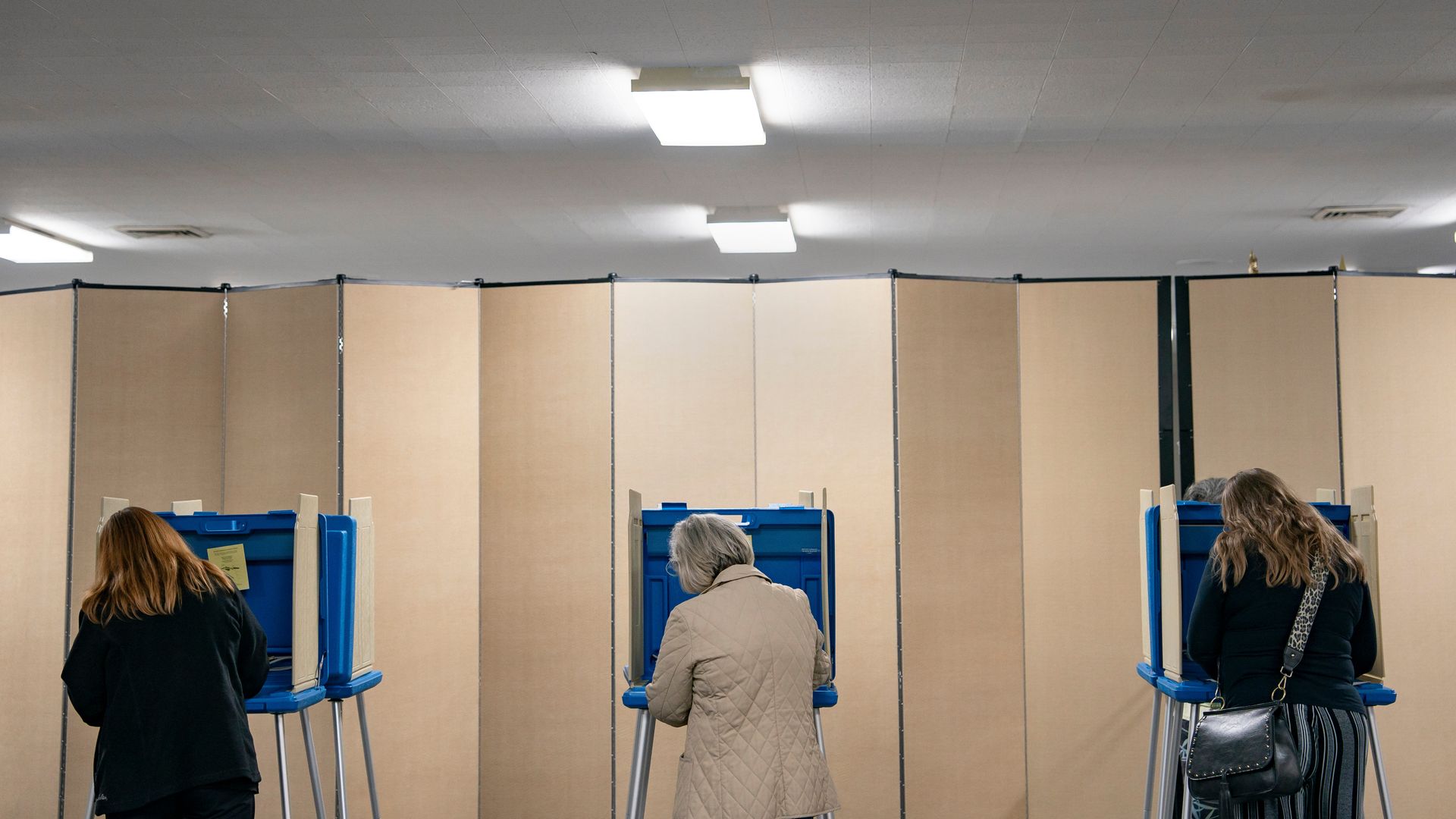
Voters cast their ballots at a polling station inside the Adamsville Baptist Church in Goldsboro, North Carolina, on March 5. Photo: Allison Joyce/Bloomberg via Getty Images
North Carolina's new voter ID law did not appear to have a widespread effect on voters who showed up to the polls on March 5, an analysis from WFAE found.
Why it matters: The primary was North Carolina's first statewide election with the requirement pushed by state Republicans for a decade.
Democrats argued in court that it would potentially disenfranchise its voters across the state — specifically Black voters.
By the numbers: More than 1.8 million people voted, according to state election data.
Of those voters, 473 voters' ballots were not counted because they could not produce photo identification.
Republican voters made up 174 of those votes, and 171 Democratic votes were not counted.
At least 298 white voters didn't have their ballots counted, while 74 Black voters, seven multiracial voters and 10 Asian voters saw their ballots rejected for lack of photo ID, according to state data given to WFAE.
The rest did not disclose their racial background.
Yes, but: It remains unclear how many voters may not have gone to the polls at all because of the photo ID requirement, WFAE reporter Steve Harrison told NPR's "All Things Considered."