Respiratory illnesses strain North Carolina hospitals

Add Axios as your preferred source to
see more of our stories on Google.
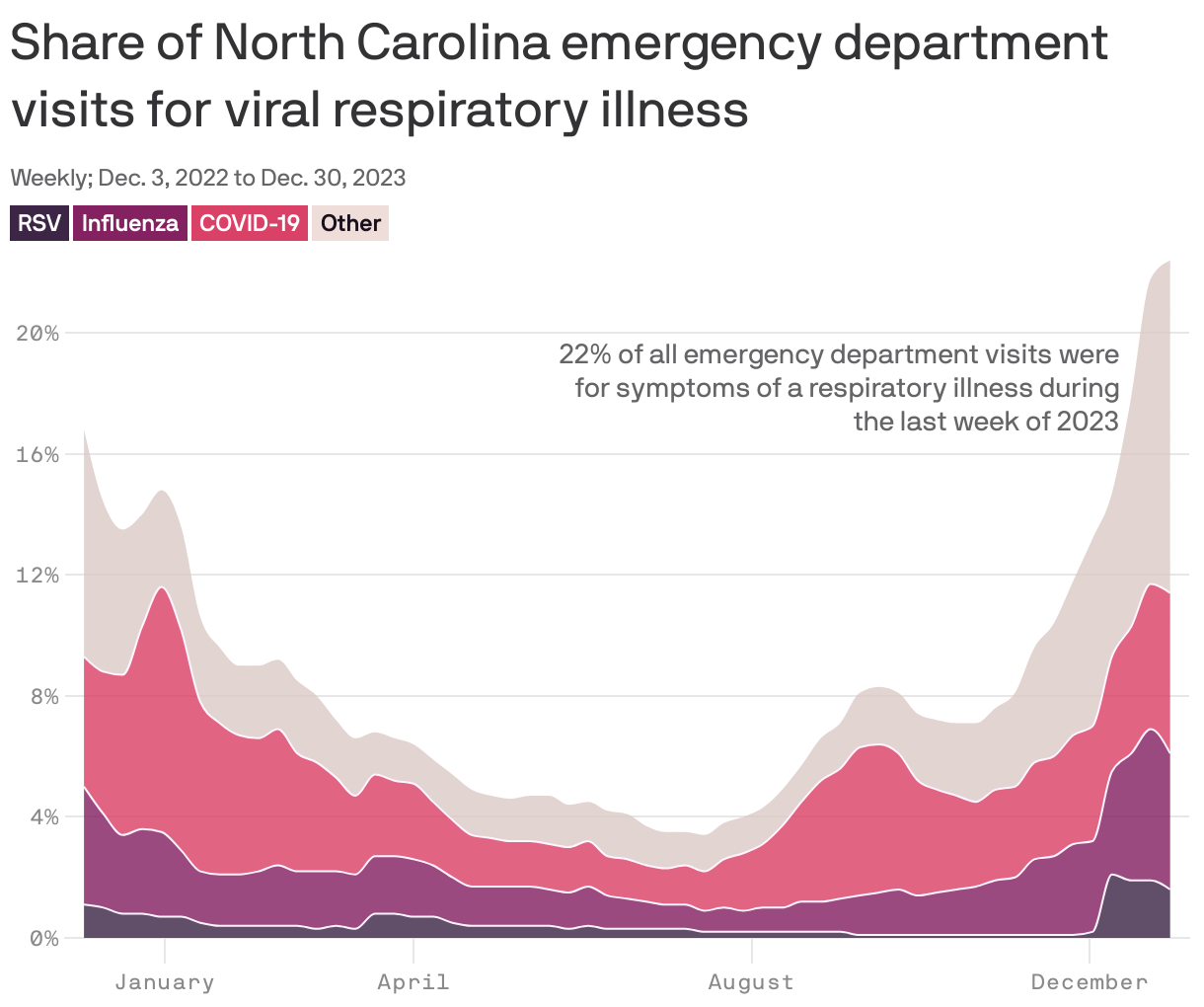
Levels of respiratory illnesses including COVID, the flu and RSV in North Carolina and throughout much of the Southeast are "very high," according to the Centers for Disease Control and Prevention.
- More than 22% of patients visiting an emergency department during the week of Christmas had respiratory virus symptoms, North Carolina's state health department reported.
Why it matters: The spread of respiratory viruses is straining the state's hospitals — including UNC Children's Hospital in Chapel Hill, which has been operating at maximum capacity for months, WRAL reports.
Threat level: Last week, nine patients were waiting for beds in the hospital's pediatric emergency room, which only has 12 beds.
- "As our capacity becomes limited because of the viral surge and viral crush that we have throughout the emergency department and other areas, then we can't do the semi-elective or elective operative procedures that we need to do," Benny Joyner, UNC Children's Hospital chief of critical care medicine, told the outlet.
What's happening: Emergency room visits for respiratory viruses have been on the rise since late October, according to North Carolina's Department of Health and Human Services.
- Those viruses accounted for 5.3% of visits during the week ending on Dec. 30 — up from 4.8% the week prior.
- That same week, more than 1,000 patients were admitted for the flu, up from more than 720 the week before.
- Meanwhile, more than 900 patients were admitted for COVID that week, up from 710.
- Joyner told WRAL he's hopeful that RSV peaked in December, but a recent decrease in cases hasn't been large enough yet to make a significant impact on the hospital.
Be smart: Joyner suggests ensuring your child is up to date on their vaccinations as kids start a new semester, and recommended keeping them home from school when they're sick to prevent the spread of illnesses.
- And don't forget to wash your hands frequently.
Reality check: Respiratory illnesses tend to surge around this time of a year, UNC Health spokesperson Alan Wolf noted.
- "Our infectious disease experts predict things will get worse before they improve," Wolf said.