The Triangle's cost of living compared to the rest of the U.S.


Add Axios as your preferred source to
see more of our stories on Google.
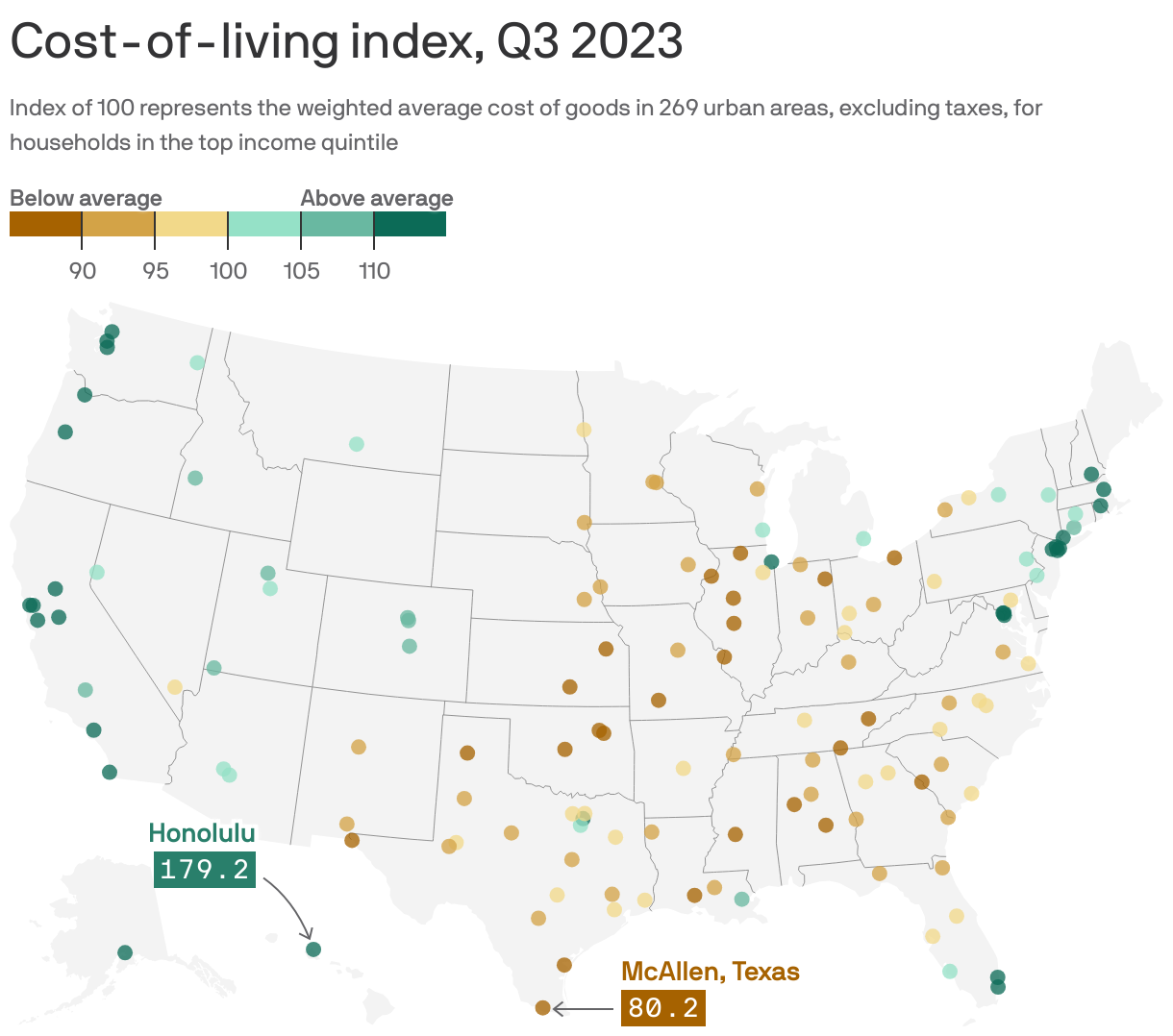
While the Triangle has increasingly become more expensive, its cities still remain cheaper than the national average, according to the Council for Community and Economic Research.
Why it matters: The region is a magnet for relocations from other high-cost metro areas, but a rising cost of living has created a larger burden on existing area households.
Driving the news: Each quarter, the Council for Community and Economic Research assembles a cost-of-living index designed to measure "regional differences in the cost of consumer goods and services."
How it works: An index value of 100 represents the national average cost of living across 269 cities.
By the numbers: Raleigh's cost-of-living index value for the third quarter of the year was 96.8.
- Durham's was 98.7.
- In comparison, that's well below places like Manhattan (227.8), San Francisco (169.5), Boston (148), or Washington, D.C. (145.3).
Yes, but: Raleigh and Durham residents are paying more than the national average for things like groceries and health care.