NC's missed suicide and crisis hotline calls

Add Axios as your preferred source to
see more of our stories on Google.
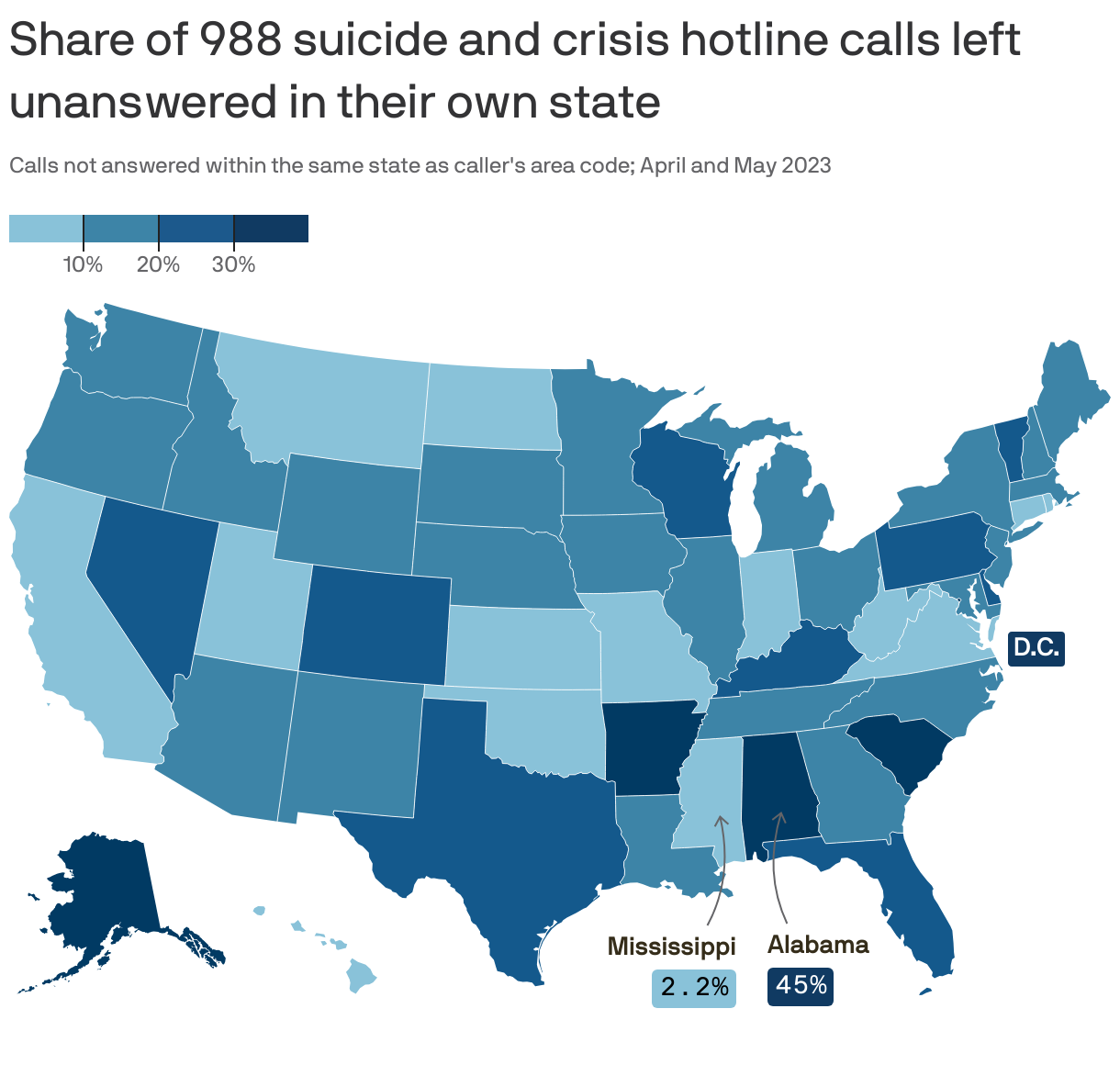
Some 15% of the more than 10,000 calls made across North Carolina to the national suicide and crisis hotline between April and May went unanswered, per a new analysis from health research outlet KFF.
Why it matters: As we hit the 988 hotline's one-year mark, the missed calls may be an indicator that few states have established the long-term funding commitment to sustain the program, Axios' Sabrina Moreno reports.
- Without more resources, 988 could languish as the nation continues to grapple with its mental health crisis.
Zoom in: Around 5% of the 15% of calls North Carolina missed in April and May were rerouted to a national overflow line, a DHHS spokesperson told Axios.
- National overflow centers may not be familiar with local resources and thus may be unable to assist callers with treatment referrals or other assistance, KFF found.
- Among missed calls, as many as 11% of callers hung up before their calls were answered, DHHS said.
The big picture: Calls are being missed at a time when many still don't know the service exists.
- Plans to use some of the nearly $1 billion in federal funding for a nationwide public service campaign haven't materialized, partly due to early concerns that marketing 988 could overwhelm the lifeline past capacity.
- Still, ahead of 988's launch last year, fewer than half of public health officials charged with deploying the hotline said they were confident they had the necessary staff to field the expected surge in calls.
By the numbers: Since the National Suicide Prevention Lifeline was replaced last year with an easier-to-remember number, 988 has been contacted nearly 5 million times nationwide.
- In North Carolina, where nearly 1,500 people died by suicide in 2021, the 988 line has received a total of 65,000 calls — a 31% spike — since the program launched last July, according to WECT.
- 60% of callers have been new callers and 40% are repeat, per a statement from NC's Department of Health and Human Services on Friday, and 90% of callers reported feeling better by the end of their call.
Yes, but: Across the country, funding for the program remains uncertain — only six states, not including NC, have enacted legislation to create monthly phone line fees to support the system, similar to how communities fund 911.
The bottom line: "We have to remember, we're at the beginning of what's going to be a marathon, not a sprint," said Chuck Ingoglia, CEO of the National Council for Mental Wellbeing.
- "It's taken 15 years for 911 to evolve to the kind of system that it is today. We're just one year in."