The many benefits of "building for proximity"


Add Axios as your preferred source to
see more of our stories on Google.
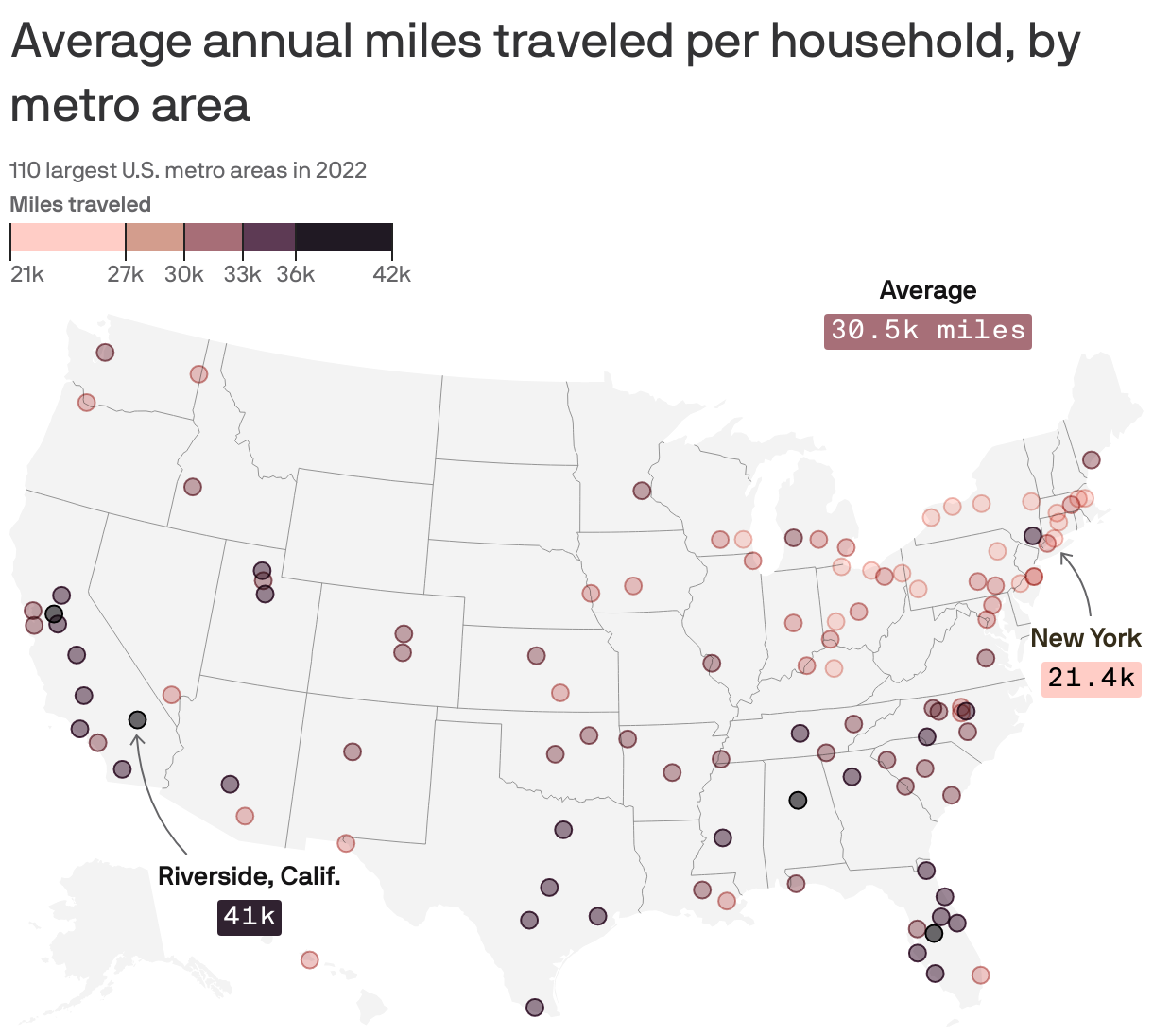
The average Raleigh-Cary metro area household traveled nearly 34,000 miles last year — compared to the national average of nearly 30,000, per a new study.
Driving the news: A Brookings Institution study explored household auto, biking, mass transit and walking data for the 110 largest U.S. metro areas to measure how close people are to where they work, eat, play, shop and more, Axios' Ben Geman reports.
- It advocates for "building for proximity" to lower overall trip distances and make walking and biking more feasible.
Why it matters: "Helping people live closer to the centers of economic activity ... should reduce the distances people need to travel for many of their essential trips," as well as lower environmental emissions and create safer streets, the analysts wrote.
By the numbers: For the average driver, living closer to centers of economic activity can save around $920 to $1,200 in annual transportation expenses, and reduce their carbon footprint by 2,455 to 3,020 pounds of carbon dioxide," the researchers found.
Context: Households within one mile of five activity centers travel around 56% less than people who live 11 or more miles from the fifth-closest hub.
- Yes, but: Only 37% of residents in the metro areas studied live within three miles of five centers of economic activity
What's next: Zoning and permitting should make it easier to build housing closer to these kinds of areas.