How to help the pollinators in your backyard

Add Axios as your preferred source to
see more of our stories on Google.
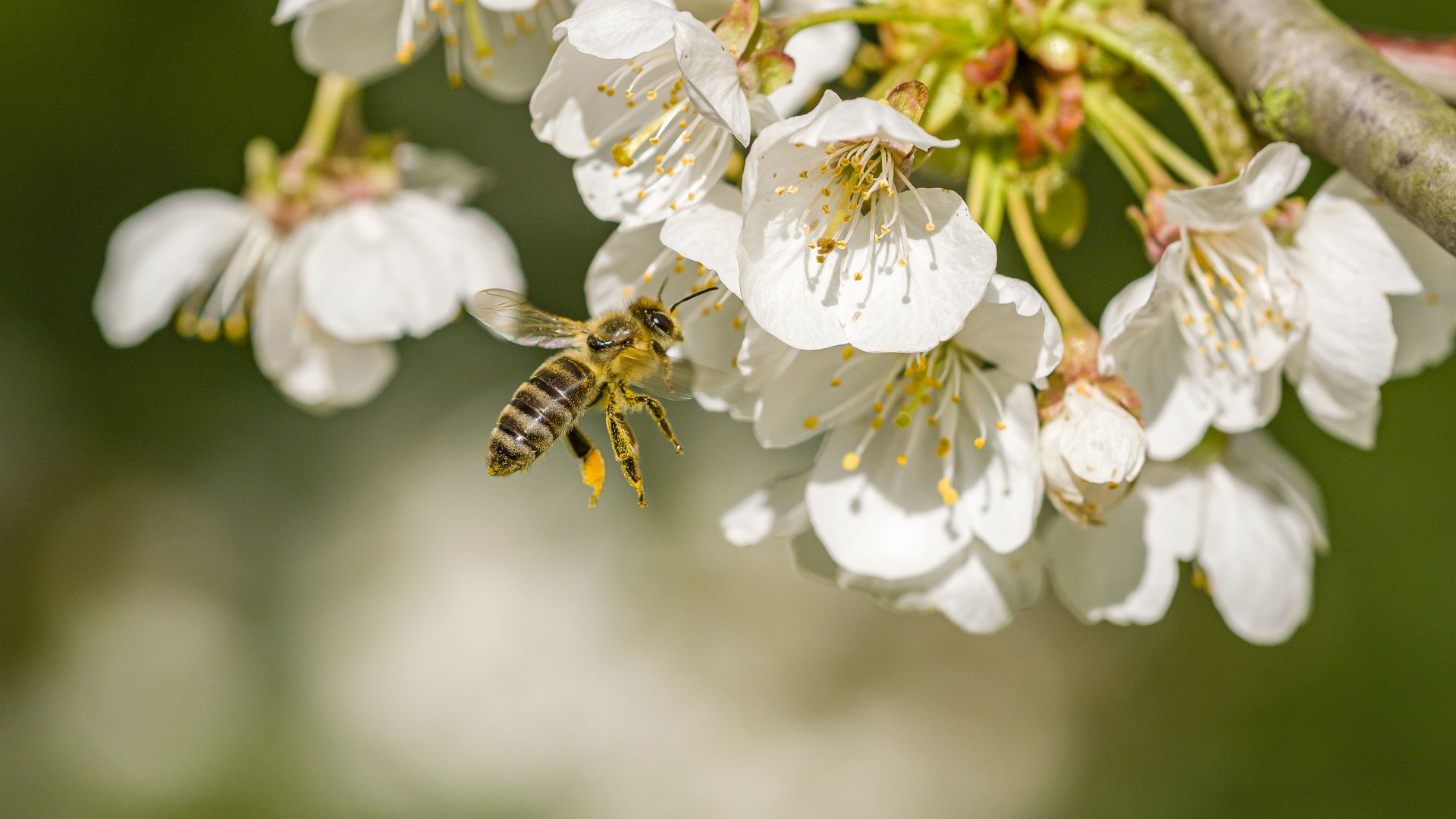
A honeybee collecting nectar from the blossoms of a cherry tree. Photo: Frank Bienewald/LightRocket via Getty Images
Communities across the U.S. just finished celebrating Pollinator Month. But despite growing awareness of environmental threats, the country's bee population continues to suffer heavy losses.
Why it matters: Honeybees and other pollinators are critical to the nation's food supply, pollinating more than 100 of the crops we eat.
State of play: Beekeepers in the U.S. lost nearly half of their managed colonies in the past year — the second highest death rate on record for the pollinators, according to the Associated Press.
- A parasite, bad weather and pesticides have made bees more vulnerable to diseases and less likely to seek food, the AP writes.
The good news: Danesha Seth Carley, the director of the NSF Center for Integrated Pest Management at N.C. State, said research has shown that putting plots of wildflowers on public land can increase the number of bees in that area — and planting a backyard garden or a few planters can be beneficial.
- "I 100-percent get behind the fact that every single person can make a difference when it comes to providing protection and habitat for bees and other pollinators," she told Axios.
Details: Even planting wildflowers on the side of highways — a practice Carley consulted the N.C. Department of Transportation on — can increase the biodiversity of a pollinator population.
- NCDOT, for example, often plants milkweed along highways and at rest stops to increase habitats for monarch butterflies, another important pollinator.
Of note: But when it comes to your own backyard, not every plant is created equal.
- "There are lots of ideas about what people think bees want," she said, "but they're not all accurate or scientifically based. So do a lot of reading."
Carley said some of her favorite pollinator-friendly plants are:
- Purple coneflower, a native perennial that matures in early summer through mid-fall. "It's easy to grow and also provides seed heads for songbirds in the fall," she said.
- Butterfly weed, another native plant with orange blooms that does well in meadow gardens.