How Raleigh's parks compare nationally


Add Axios as your preferred source to
see more of our stories on Google.
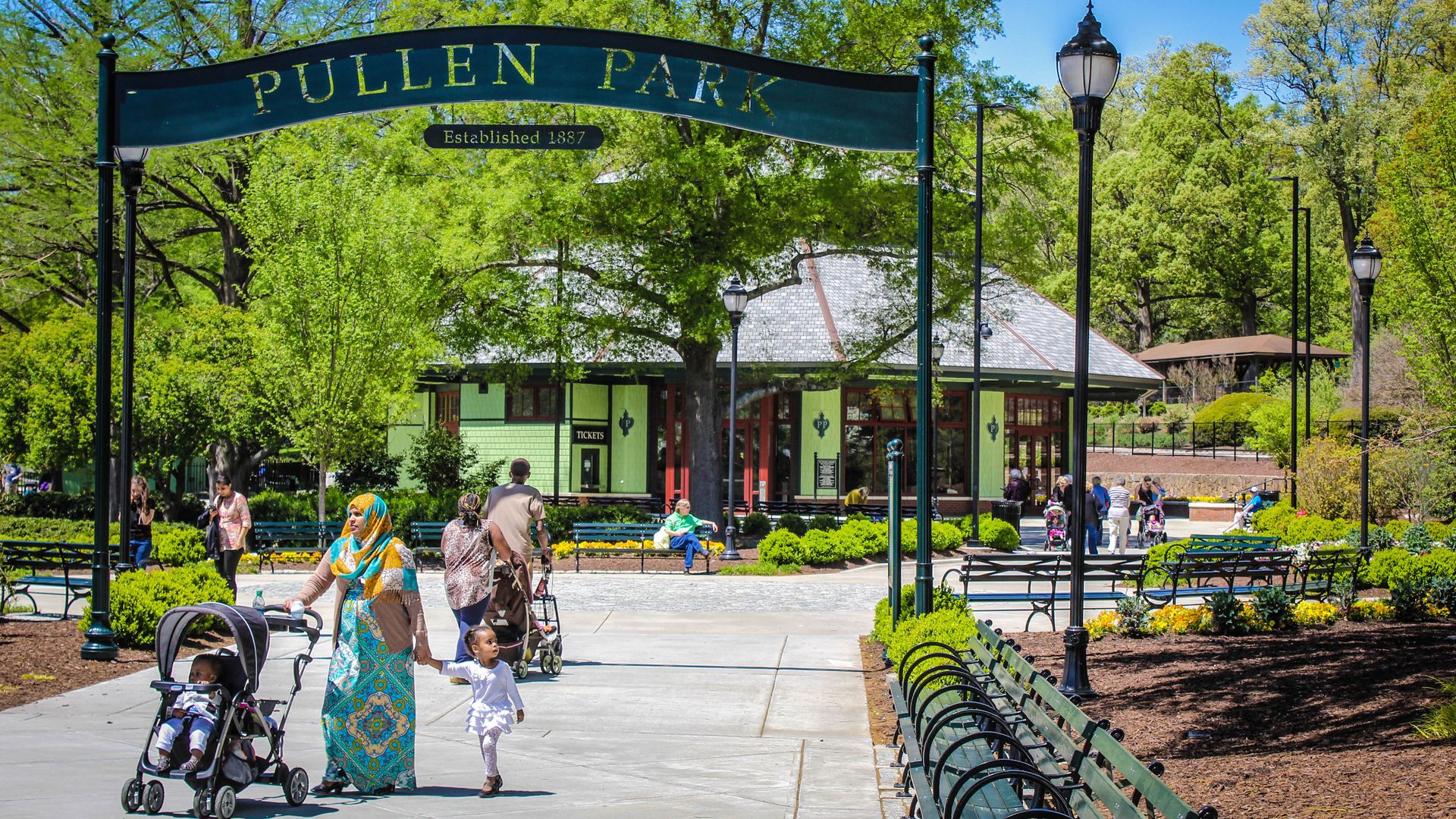
Pullen Park in Raleigh. Photo: Visit Raleigh
Raleigh ranks 53rd and Durham 89th among the 100 largest U.S. cities for its public parks, per the latest report from the Trust for Public Land (TPL), an influential pro-parks nonprofit.
Why it matters: Parks confer a wealth of benefits — including, as TPL points out in its latest annual report, significant health boosts, Alex Fitzpatrick and Kavya Beheraj report.
- Residents of the top 25 cities are less likely to report poor mental health or low physical activity, the TPL report says.
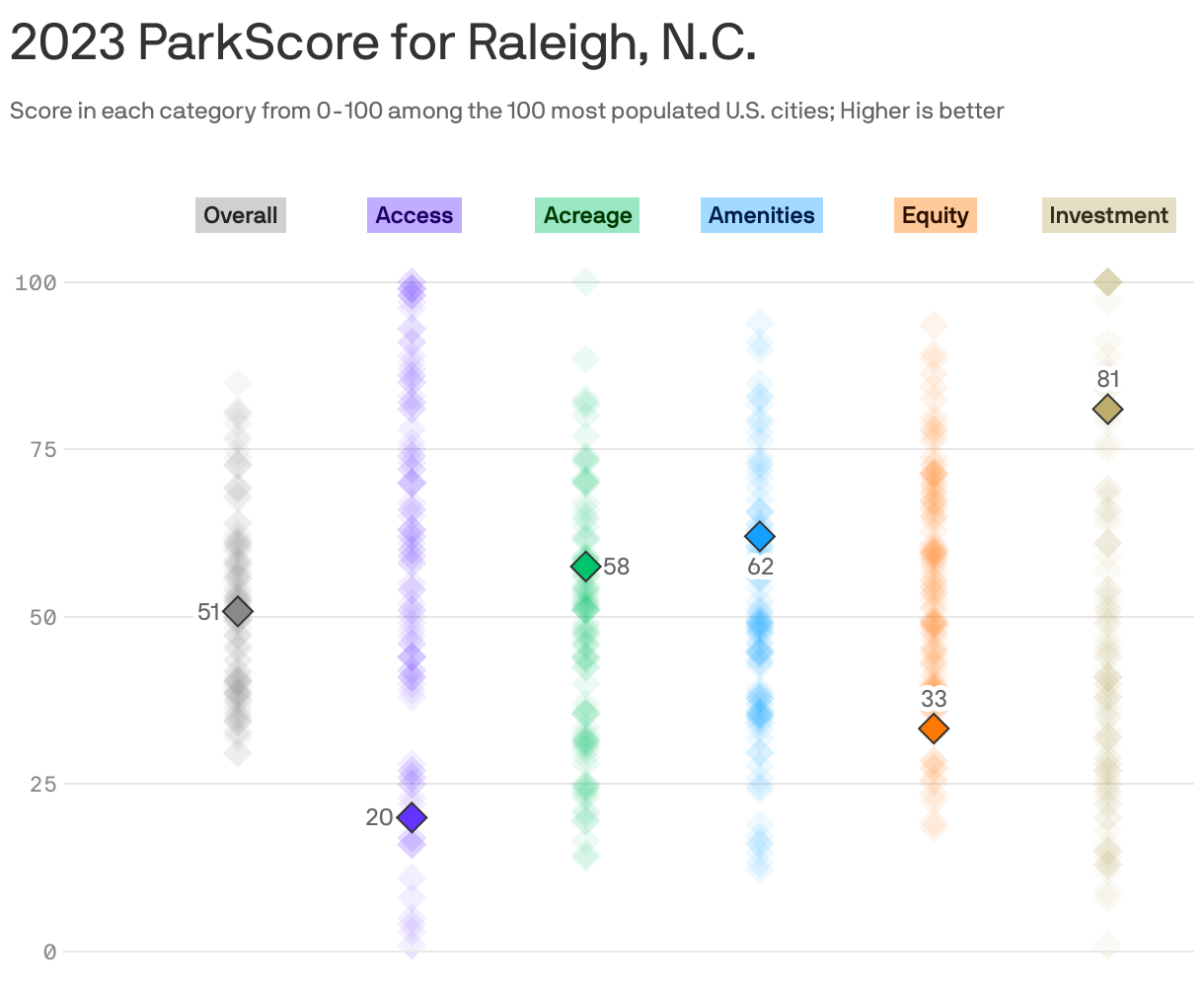
Zoom in: Both Raleigh and Durham got dinged for what TPL referred to as access, falling below median rates for the number of residents within a 10-minute walk of a park.
- Raleigh scored 20 out of 100 for access while Durham scored 23 — with both cities scoring lowest for access on their fast-growing edges, like northeast Raleigh and east Durham.
Yes, but: Stephen Bentley, Raleigh's director of Parks, Recreation and Cultural Resources, pushed back on Raleigh's low access rating, noting that TPL is very strict in what it considers park space.
- Raleigh's extensive greenway system, he said, is not counted in TPL's scoring system and neither are some parks at schools or universities.
What they're saying: Bentley believes Raleigh's access score will increase in the coming years as the city's $275 million parks bond funds new parks and planned parks in fast-growing areas get built.
- "We did a really good job in the early 2000s of buying a lot [of land] … in the northeast and east of the Neuse River," Bentley said. "So although we don't have the parks built and there's not a good access number there, in 10 and 15 years when we build those parks, then the access score will increase."
By the numbers: Raleigh still has 18 undeveloped park properties under its control, totaling around 975 acres of potential park land, according to the city.