One look at why inflation in Phoenix is so bad

Add Axios as your preferred source to
see more of our stories on Google.
Illustration: Sarah Grillo/Axios
Wages have badly failed to keep up with housing costs in Phoenix, which has been a main driver of inflation in the Valley, according to a new economic analysis.
Why it matters: If this place is to become affordable again, earnings need to go up and rent needs to come down, the study suggests.
Driving the news: The Ludwig Institute for Shared Economic Prosperity (LISEP) last month unveiled its look at affordability in 56 major metro areas.
- The Phoenix area ranked 37th on that list.
- The Valley ranked reasonably well in LISEP's True Rate of Unemployment, a metric that tracks the percentage of the labor force without a job, working involuntarily part time or earning less than $26,000 a year.
- However, Phoenix lagged in cost of living.
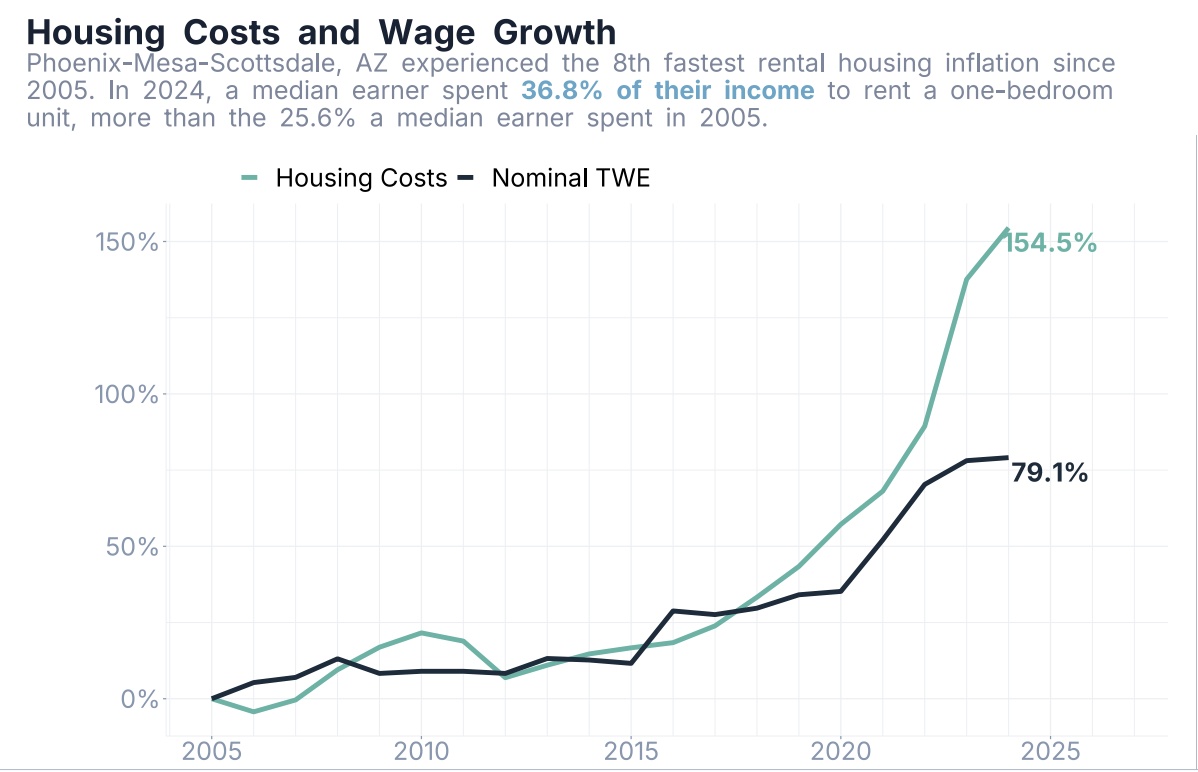
Specifically, out of all 56 metros, Phoenix has seen the eighth-fastest rental housing inflation since 2005.
- Data runs through 2024, and preliminary 2025 data suggests housing costs have begun to level out, LISEP says.
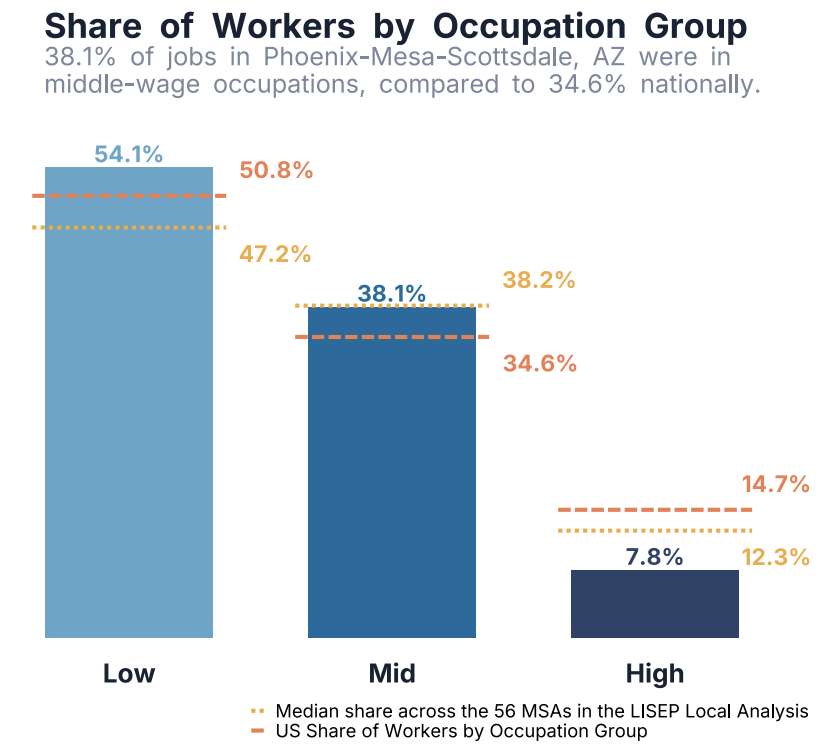
Yes, but: The Valley's labor pool includes a disproportionate share of low-income workers, compared with peer cities and the U.S. at large.
- That suggests that even if housing costs cool off, many residents will still have a hard time catching up.
What they're saying: "Very high housing costs relative to wages creates a huge gap in Phoenix that is not unlike other resort cities or retirement cities." LISEP chairman Gene Ludwig tells Axios.