What's next in Phoenix after voters reject speed enforcement cameras

Add Axios as your preferred source to
see more of our stories on Google.
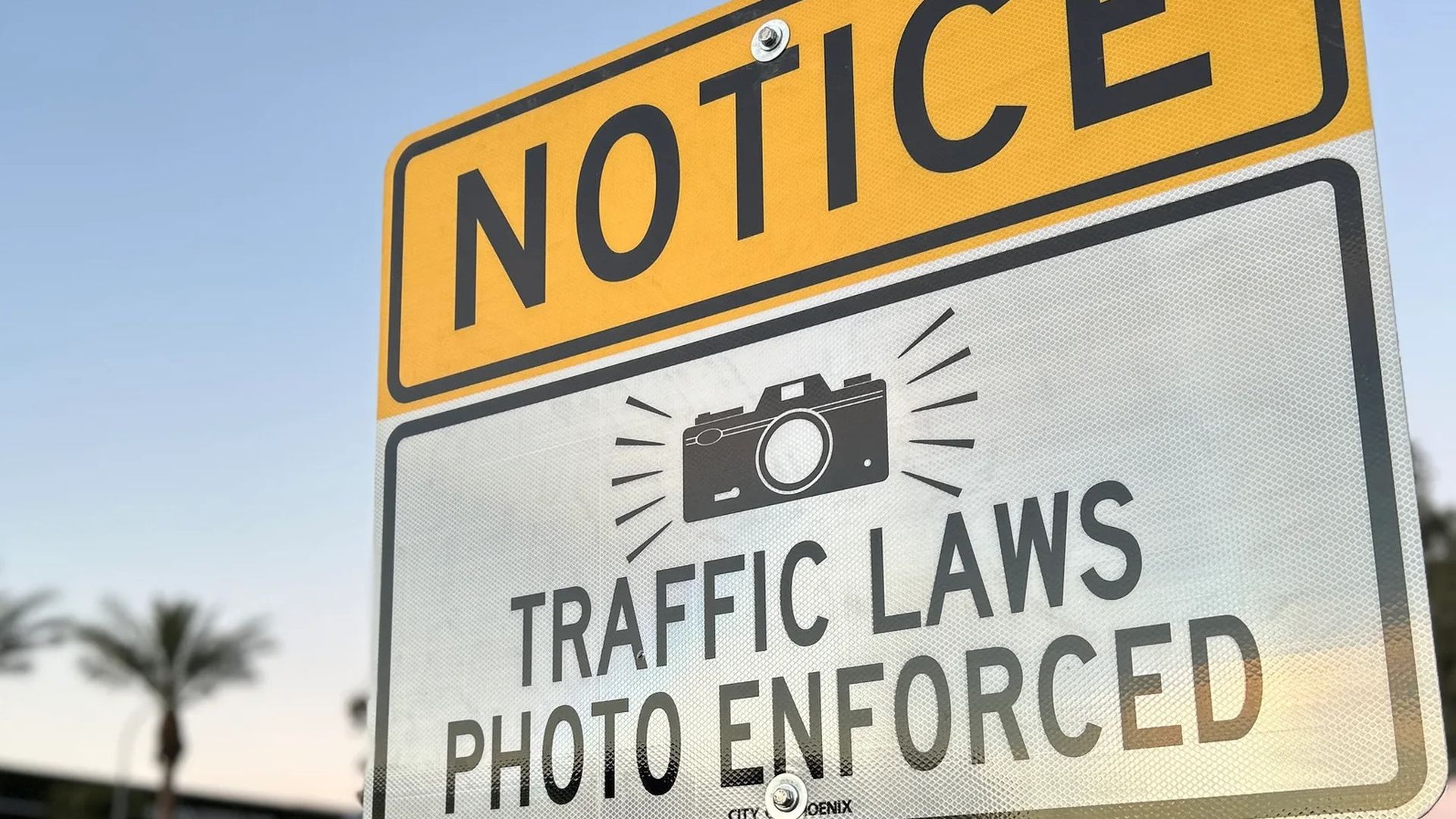
Speed enforcement cameras in Phoenix could be on the way out. Photo: City of Phoenix
Arizona voted last week to hit the brakes on speed enforcement cameras, potentially leading to the end of the program in Phoenix.
Why it matters: With the passage of Proposition 319, the city must ask voters in the next general election for permission to operate its cameras.
Driving the news: Prop. 319, which was referred to the midterms ballot by the Republican-led Legislature earlier this year, bars municipalities from using preexisting speed enforcement cameras without voter approval.
- While votes are still being tallied, Prop. 319 looks to be the most popular ballot item, earning more votes than even Gov. Hobbs.
How it works: Cities that don't already have a speed enforcement camera contract before the start of 2027 are barred from installing them.
- Cities that do have contracts — including Phoenix and Scottsdale — must obtain voter approval in the 2028 election in order to keep them.
- Municipalities have to ask for voter approval again after 10 years.
Zoom in: Phoenix has a choice on its hands: It can put the question before voters as required or it can end its speed camera program early.
- The city's contract with its speed camera vendor, Verra Mobility, expires at the end of March, though the city can renew it.
What they're saying: Spokesperson John Trierweiler says the Phoenix Street Transportation Department "supported Photo Safety Cameras as one tool to help reduce serious injury and fatal crashes and change driver behavior" but "respects the outcome of Proposition 319 and the decision of Arizona voters."
- Mayor Kate Gallego didn't respond to questions from Axios about next steps.
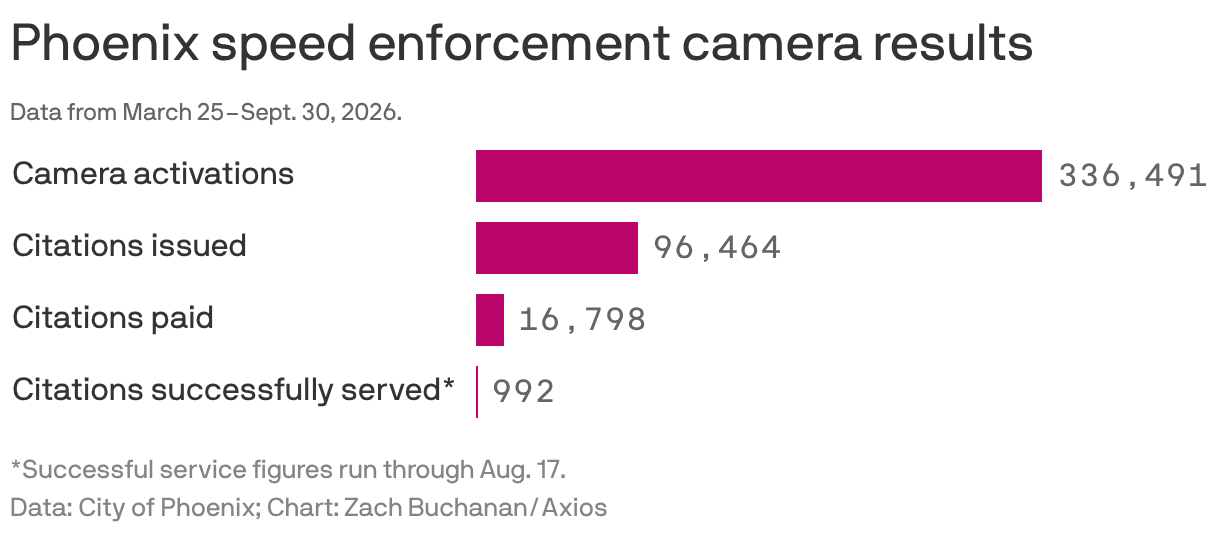
By the numbers: Since Phoenix's enforcement began March 25, a fraction of citations generated by the speed cameras have been paid, per numbers shared by the city.
- Through Sept. 30, the cameras were activated 336,491 times, but roughly 240,000 of those instances produced no citation for reasons such as blurry images or the driver pictured was not the vehicle's owner.
- 96,464 citations were issued and 16,798 (17.4%) have been paid, though some citations may still be pending.
- Mailed tickets carry no force of law, and Verra Mobility has successfully physically served 992 citations through Aug. 17.
Follow the money: Per the city, $4.2 million in fines and fees have been paid, $1.5 million of which goes to the city.
- Verra Mobility is paid $3,000 a month for each of the city's 17 cameras and $20 per paid ticket, meaning it's netted roughly $692,960 since the city's program began.
- Trierweiler notes that remaining funds are reinvested into the city's road safety efforts.
The bottom line: Get ready to likely vote on this issue again in two years.