Biggs' time as Senate president illustrates governing style

Add Axios as your preferred source to
see more of our stories on Google.
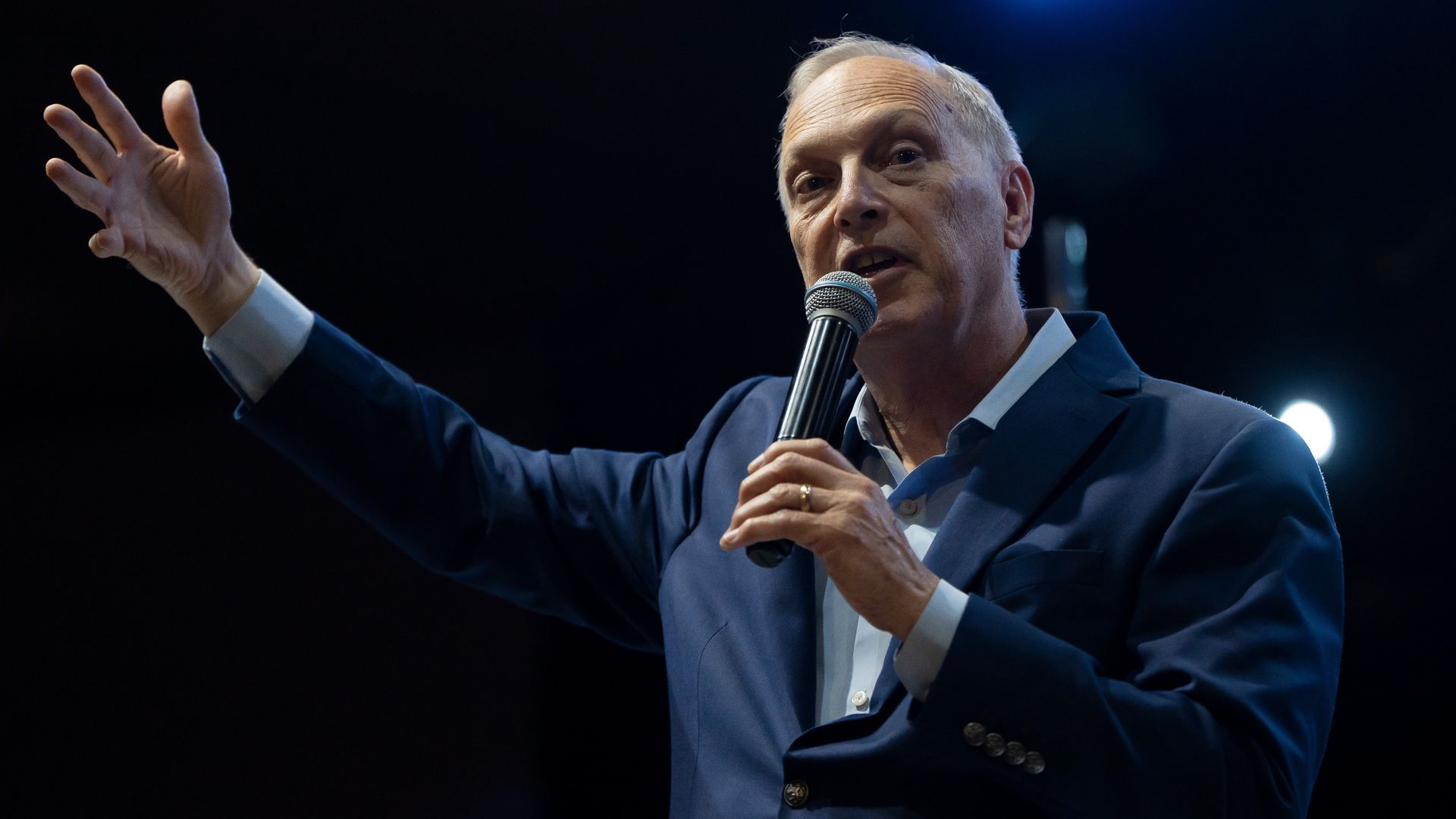
Republican governor nominee Andy Biggs speaks at a campaign event in Tucson last month. Photo: Rebecca Noble/Bloomberg via Getty Images
Andy Biggs' time as Arizona Senate president could provide a glimpse into how he would conduct himself if elected governor, showing some nuance to the hard-line conservative he's been for the past decade in Congress.
Why it matters: Democratic Gov. Katie Hobbs portrays Biggs as a right-wing extremist who's out of step with Arizona, while Biggs has touted himself as a practical conservative with bipartisan credentials.
The big picture: Biggs showed a more pragmatic streak as Arizona Senate president, though he sometimes stood his ground on conservative principles until forced to compromise.
The intrigue: In Congress, Biggs has been on the right wing of the Republican caucus.
- He led the House Freedom Caucus for two years, helped force out Kevin McCarthy as speaker and voted against certifying 2020 electoral votes won by Joe Biden in Arizona and other states as Donald Trump sought to overturn his election loss.
- But as state Senate president, Biggs was more pragmatic than many people expected him to be, says Kirk Adams, a former state House speaker who worked closely with him in the Legislature and as former Gov. Doug Ducey's chief of staff.
Yes, but: If he doesn't need to compromise, he likely won't, Adams says — and that'll be the case if he's governor with a Republican-controlled Legislature.
- He's "been on the fringe of every caucus he's been part of" when he's not in leadership, Adams says.
- "He will push the envelope as far as he can go. Ultimately, if necessary, and only when necessary, he'll make a deal," he adds.
Between the lines: Adams points to two issues in particular — the fight over Medicaid expansion under former Gov. Jan Brewer and negotiations over the K–12 funding plan Proposition 123.
- He played what Adams called "matador defense" on Medicaid expansion, staunchly opposing it but setting the stage for an eventual Senate vote.
- Biggs initially opposed settling a K–12 funding lawsuit by increasing payouts to schools from the state land trust, but agreed to a deal with the Ducey administration once there was no stopping it.
- Former Democratic Sen. Steve Farley recalled how hard Biggs fought the reinstatement of a health care program for low-income children. Supporters were able to circumvent Biggs' opposition, and rather than try to find new ways to block it, he backed off, which Farley tells Axios "was probably not an easy thing for him to do."
Republican Maricopa County Supervisor Debbie Lesko, who served with Biggs in the Legislature and in the U.S. House, says he had to be more pragmatic as Senate president than as a rank-and-file lawmaker, and as governor she thinks he would do the same.
- Lesko described Biggs, whom she endorsed in the GOP primary last year, as a man of principles who would compromise to get the most conservative outcome he could as Senate president.
What they're saying: Biggs tells Axios he's always found ways to work with people he disagrees with.
- What some might call pragmatism Biggs thinks of as being sensible, communicative and trying to work with people, he says.
- He adds there were numerous times when he let bills he disagreed with go up for a vote because they were important to the sponsor, and he touts his work forging budget compromises.
- As to Adams' comment about making deals only when absolutely necessary, Biggs says, "I think that is a compliment because he says we're making a deal."