Arizona's infrastructure is barely scraping by, engineers say

Add Axios as your preferred source to
see more of our stories on Google.
Illustration: Maura Losch/Axios
Arizona's infrastructure — the roads, bridges, water systems and more that make living in the state possible — leaves a lot to be desired, earning a mediocre C grade from the state chapter of the American Society of Civil Engineers (ASCE).
Why it matters: Facing population growth, the state and its municipalities have yet to dedicate the massive amounts of funding required to address significant infrastructure demands.
What they're saying: Arizona's C grade is the same as it was in 2020, the last time ASCE assessed the state. But that's nothing to brag about, says Arizona section president Frederick Tack.
- "While this grade is ahead of many states around the country, an average grade of C is not acceptable," Tack said at a news conference Tuesday.
How it works: Arizona was graded on 11 categories: roads, bridges, rail, transit, aviation, dams, stormwater, wastewater, drinking water, levees and energy.
- The state's bridges earned the highest marks, a B+, with only 1% of its 8,587 bridges rated as "structurally deficient."
- Roads received a D+ due to population growth driving expansion and causing a maintenance backlog, with the state facing a projected funding gap of $162 billion by 2050.
- In all other categories, Arizona earned between a C- and a B-.
Between the lines: A common denominator among all categories was a lack of funding.
- Many recent infrastructure projects in the state were made possible by federal dollars from the 2021 Infrastructure Investment and Jobs Act, but that funding runs out later this year.
- If lawmakers want to truly tackle infrastructure challenges and avoid costly problems down the road, they'll need to seriously open the state's wallet.
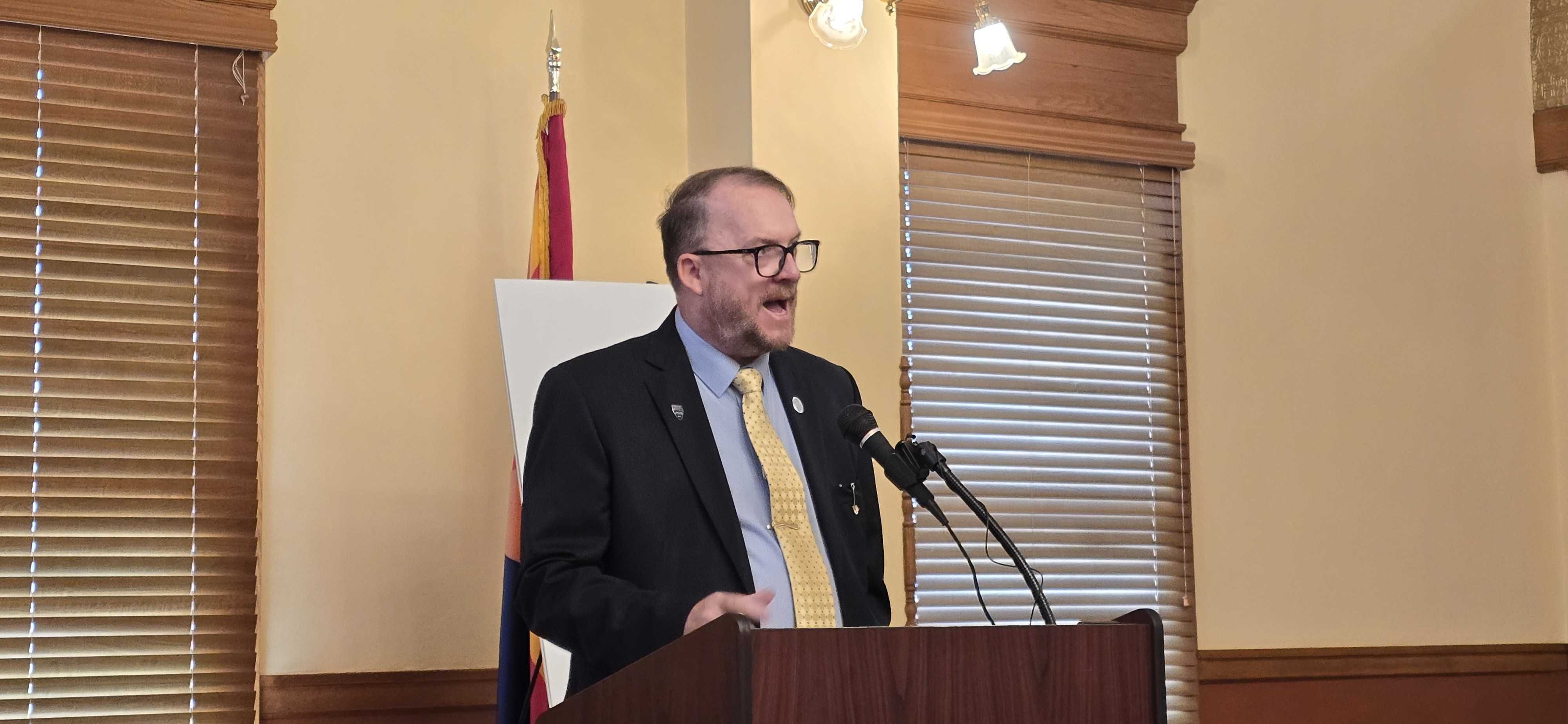
Case in point: "Our (19 cents per gallon) gas tax has not changed in over 30 years," said Elizabeth Barnes-Hanson, who co-chaired Arizona's report card. "That is mostly how we fund transportation."
- Other states do more to raise money off drivers and businesses who use public roadways, and the report card recommends Arizona raise the gas tax "or implement a mileage-based user fee" to generate funding.
Zoom in: While Arizona's water systems all received grades in the C range, challenges posed by the ongoing drought and pending cuts to the state's allocation of Colorado River water make addressing the state's water needs a huge priority.
- Drinking water infrastructure needs are expected to exceed $12 billion over the next 20 years, per the report card.
- The state's growing status as a hub for water-intensive data centers complicates that picture.
- "We need to make decisions as individuals," Tack said, "and decisions in Arizona that I would make would be low-water decisions."
The bottom line: "The best time to have addressed all these infrastructure issues we see today is about a decade ago," Tack said. 'The second best time to address them is today."