Phoenix seeks input on possible changes to "suicide lanes"

Add Axios as your preferred source to
see more of our stories on Google.
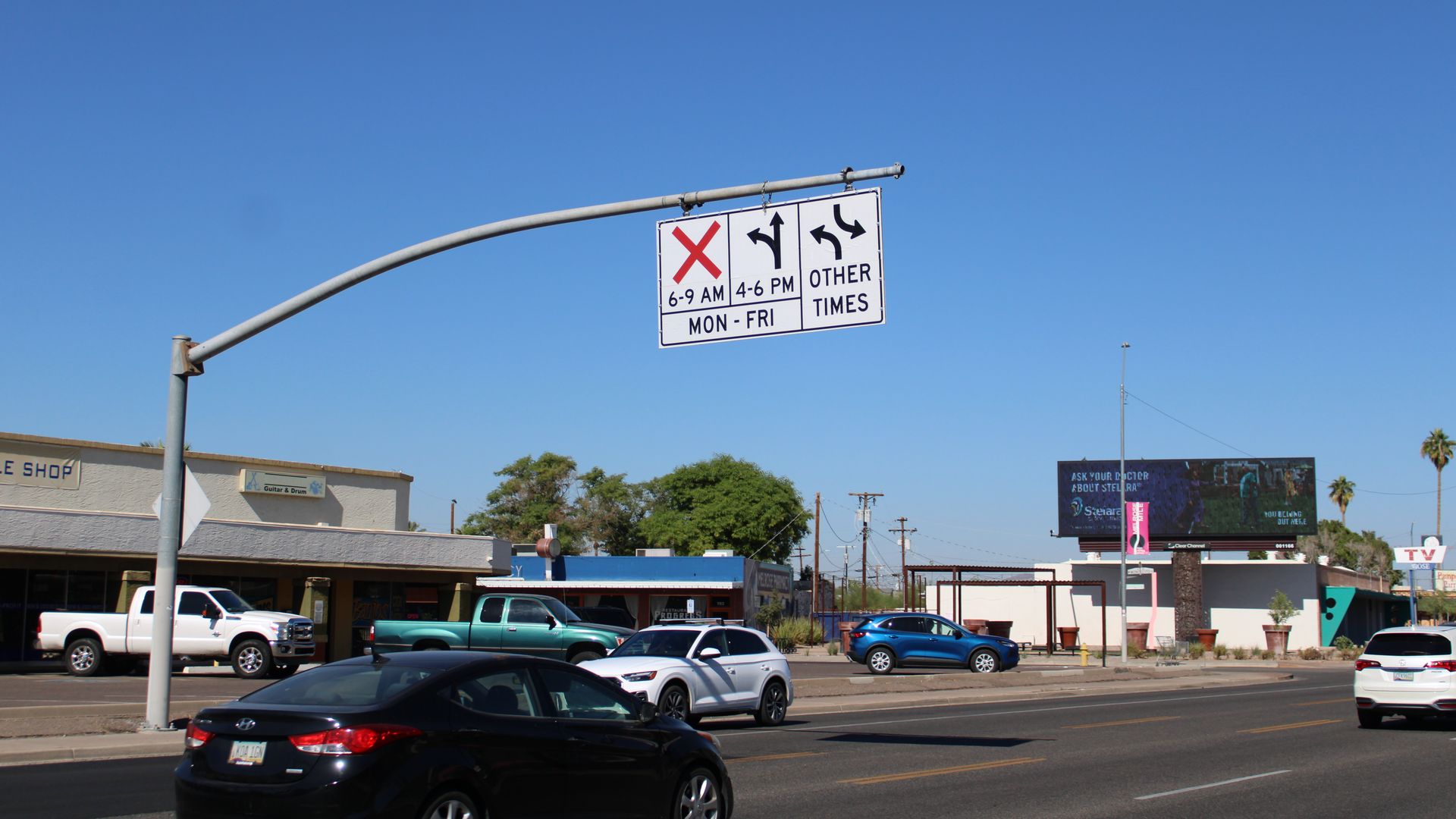
A sign on Seventh Avenue north of Indian School Road. Photo: Jeremy Duda/Axios
Everyone who drives in central Phoenix has an opinion about the reverse "suicide" lanes, and the city wants to hear them.
Why it matters: Reverse lanes on Seventh Avenue and Seventh Street help keep traffic moving during rush hour, but can be difficult to navigate, particularly for people who aren't used to them.
The big picture: The city's conducting a Midtown Core Transportation Study to examine traffic and transportation needs in central Phoenix.
- As part of that study, the Street Transportation Department is studying possible changes to the infamous suicide lanes that run along the sevens.
How it works: Left-turn lanes serve as extra lanes of traffic during morning and afternoon rush hours.
- From 6–9am between McDowell Road and Dunlap Avenue they're used for southbound traffic and from 4–6pm they're for northbound traffic.
- You can still turn left during rush hour at driveways and streets without traffic signals, but not at intersections with lights.
- That means your speedy drive in the suicide lane can come to a halt when someone needs to turn.
My thought bubble: I drive on the sevens pretty much every weekday during rush hour, so I routinely see the best and worst that the suicide lanes have to offer.
- I can't imagine how much more traffic there would be without them.
- But it's astonishing how many times per week I see people blocking traffic by trying to make illegal turns at intersections, drivers weaving around each other as a result and people driving the wrong way in the reverse lanes.
Flashback: The city created the reverse lane on Seventh Avenue in 1979 and on Seventh Street in 1982 to ease rush-hour traffic.
State of play: Phoenix residents have until May 29 to fill out a survey with their thoughts on the reverse lanes and other transportation issues.
Catch up quick: More than 5,000 people signed an online petition last year calling for the City Council to get rid of the suicide lanes.
- The council decided to keep the lanes, but approved a study to examine possible changes.
- A 2021 study concluded that removing the lanes would "create operational delays and increase travel times by more than 40 percent," create an "unacceptable level of service" at some intersections and increase the potential for crashes.
Yes, but: Critics view the suicide lanes as unacceptably dangerous.
Zoom out: The study is about more than just the reverse lanes, Street Transportation Department spokesperson John Trierweiler emphasized.
- "It's the entire area. Maybe they want more light rail options. Maybe they want more bicycle options. Maybe they want something else. Maybe they have a street lighting concern," he told Axios.
What's next: City staff will hold public meetings in the fall and will present their findings to the City Council's Transportation, Infrastructure and Planning Subcommittee by December.
🗣️ You tell us: Email us at [email protected] and let us know what you think of the reverse lanes.
- Should the city keep them, change them or eliminate them entirely?