Health officials say hantavirus cruise ship poses little risk to Arizona

Add Axios as your preferred source to
see more of our stories on Google.
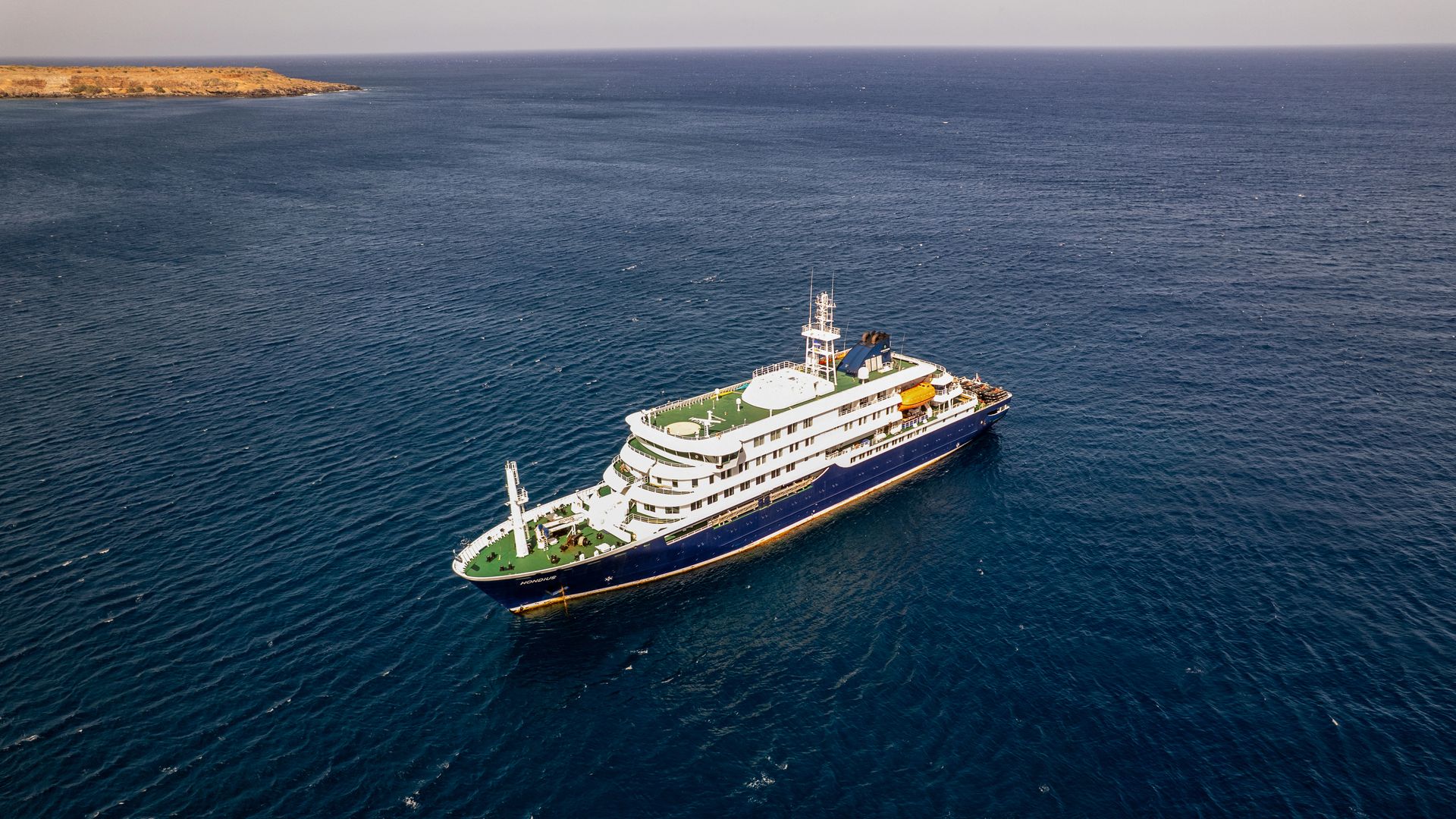
The MV Hondius cruise sits in the waters off the port of Praia, the capital of Cape Verde, after a hantavirus outbreak hit the ship. Photo: AFP via Getty Images
Health officials are monitoring an Arizona resident who was on a cruise ship where several passengers contracted hantavirus, but health officials say there's little threat to locals.
Why it matters: Hantavirus is highly dangerous and frequently fatal.
- Unlike other strains, including the one native to Arizona, the Andes strain that struck the cruise ship is transmitted from person to person.
State of play: The Arizona Department of Health Services (ADHS) said the person being monitored is not symptomatic.
- Local health officials will continue monitoring for 42 days from the passenger's departure from the cruise ship, per ADHS. The agency wouldn't say which county the person is in, citing privacy concerns.
- There's no indication that the person came into contact with any infected cruise-goers, Nicole Witt, the agency's assistant director for public health preparedness, told reporters during a briefing Thursday.
What they're saying: "The general public in Arizona does not need to be concerned," Witt said.
Zoom in: If hantavirus sounds familiar, it may be because Arizona has a unique history with the disease.
- Hantavirus had long been known in the Eastern Hemisphere but not in the western until 1993, when a newly discovered virus spread in the Four Corners region.
- Since then, strains have been discovered elsewhere in the Western Hemisphere.
- Witt emphasized that the Andes strain that afflicted the cruise ship is different from the hantavirus that's native to Arizona.
Threat level: The Andes strain's risk to Arizonans is "exceedingly low" because public health officials are already tracking it, said David Engenthaler, executive director of ASU's Health Observatory and a former hantavirus epidemiologist who worked on the 1993 Four Corners outbreak.
- Outbreaks are usually relatively small and quick because they're easily contained once detected, he told Axios.
- That's good, because hantavirus is "still one of the deadliest viruses that we know," Engenthaler said, with a 30-40% mortality rate.
- There are no vaccines or antiviral treatments, but supportive care can improve survival chances, said Michael Worobey, head of the UofA College of Science's Department of Ecology and Evolutionary Biology.
The big picture: At least three people have died and several others were infected on the MV Hondius cruise ship near Cape Verde, an island nation off Africa's northwestern coast.
- Health officials in California, Georgia, Texas and Virginia are also monitoring residents who were on the ship.
- The U.S. Centers for Disease Control and Prevention said Wednesday that the risk to the public here is "extremely low."
How it works: Most hantavirus strains are spread through particles from rodent droppings and urine that become airborne, oftentimes when people sweep in an enclosed area.
- Symptoms can appear in as little as four to five days but usually not for two to four weeks, Engenthaler said.
- The illness can initially resemble the flu, with respiratory problems appearing after a few days.