Neighborhoods push back on Arizona data centers


Add Axios as your preferred source to
see more of our stories on Google.
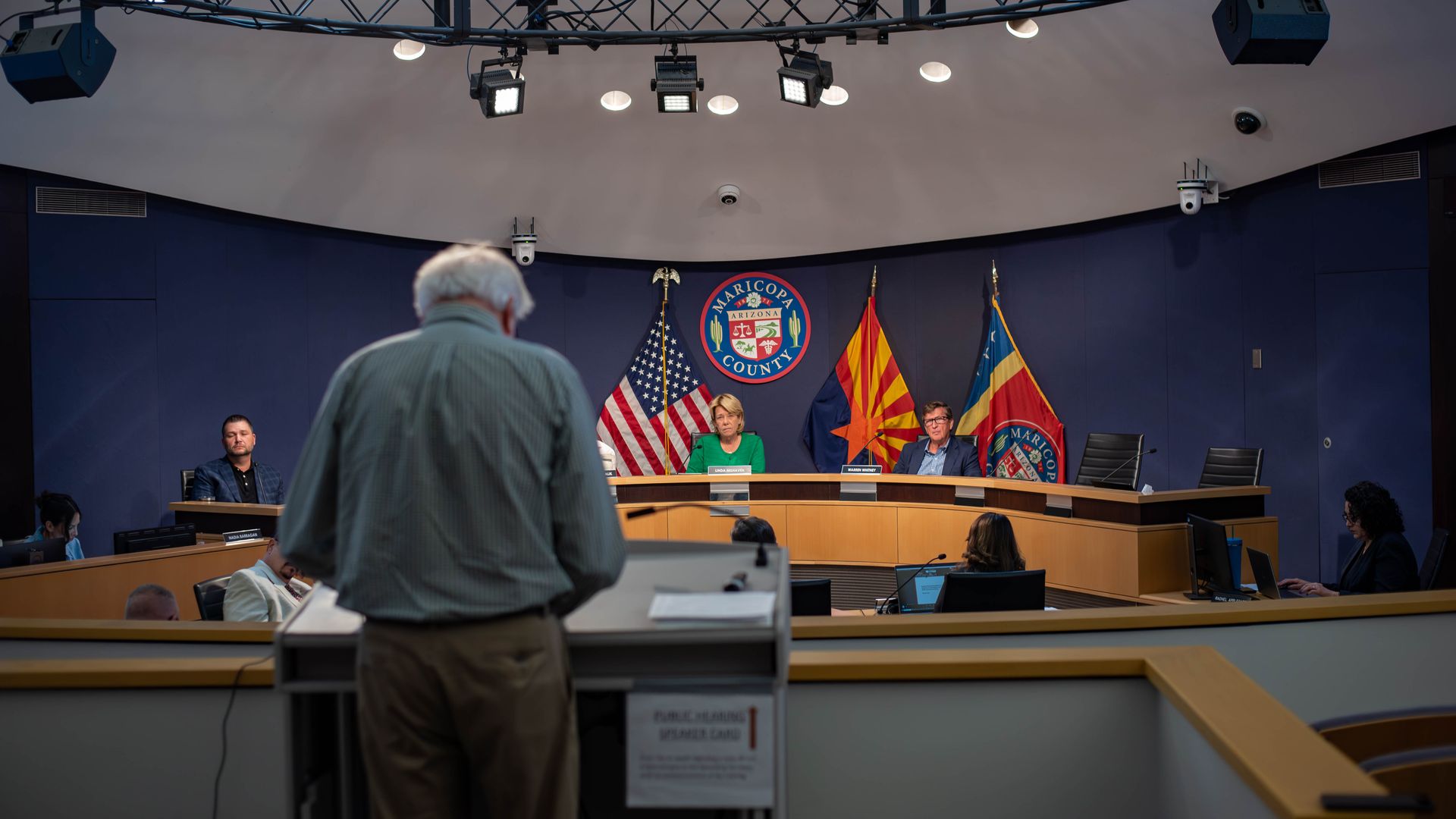
Surprise resident Roy Dunbar speaks in opposition to Project Baccara. Photo: Zineb Haddaji for Axios
In Arizona, one of the nation's data center capitals, neighborhoods have started pushing back against data center projects to little avail.
Why it matters: Neighbors say the giant technology centers diminish their quality of life and waste their water, but they face an army of lawyers and lobbyists working to push the projects through anyway.
The big picture: Arizona has 98 data centers currently operating and 86 planned or under construction, per the Pew Research Center.
- Grassroots opposition to the projects — with complaints ranging from environmental impacts to aesthetic objections — have become commonplace.
- Yet elected officials almost always approve them. The only successfully thwarted projects in recent memory were a Chandler data center voted down in December and Tucson City Council's August rejection of "Project Blue" (though it's since been revived).
The latest: Project Baccara, a proposed 160-acre technology infrastructure campus north of Luke Air Force Base, would bring two large data centers and a 700-megawatt natural-gas-powered generating station to unincorporated county land near Surprise.
- The Maricopa County Board of Supervisors will vote Wednesday on a permit the project needs to move forward.
The intrigue: 225 people emailed the county to express opposition in recent months, and more than 4,000 signed an online petition against the project.
What they're saying: "The nearby neighborhoods will bear the burden …reduced property values, increased public risk, and the noise and pollution that will be produced," Roy Dunbar, a Surprise resident and leader of the opposition coalition, told the county's Planning & Zoning Commission last month.
Yes, but: The commission on April 9 unanimously recommended Project Baccara move forward.
- Commissioners said the project, which would have an onsite power generating station, would benefit the entire Valley's grid and said the location was ideal for this type of industrial facility.
- The closest neighborhood is about a mile away.
Zoom in: Project Baccara, whose representatives declined an interview with Axios, has held multiple open houses, hearings and public meetings since August.
- This type of public outreach should be the norm, said Dan Diorio, vice president of state policy at the Data Center Coalition, an industry group. Public outreach allows developers to educate and dispel fears about water use and other common concerns, he told Axios.
- He said that the U.S. has a vast and growing demand for digital infrastructure to power AI and other emerging technologies and that effectively communicating the benefits of data centers, which drive significant tax revenue, can alleviate community concern.
Reality check: Better public outreach hasn't led to more trust in data centers. Residents across the Valley are still packing hearings and circulating petitions, even if their likelihood of success is thin.