The Don Bolles case as you've never heard it

Add Axios as your preferred source to
see more of our stories on Google.
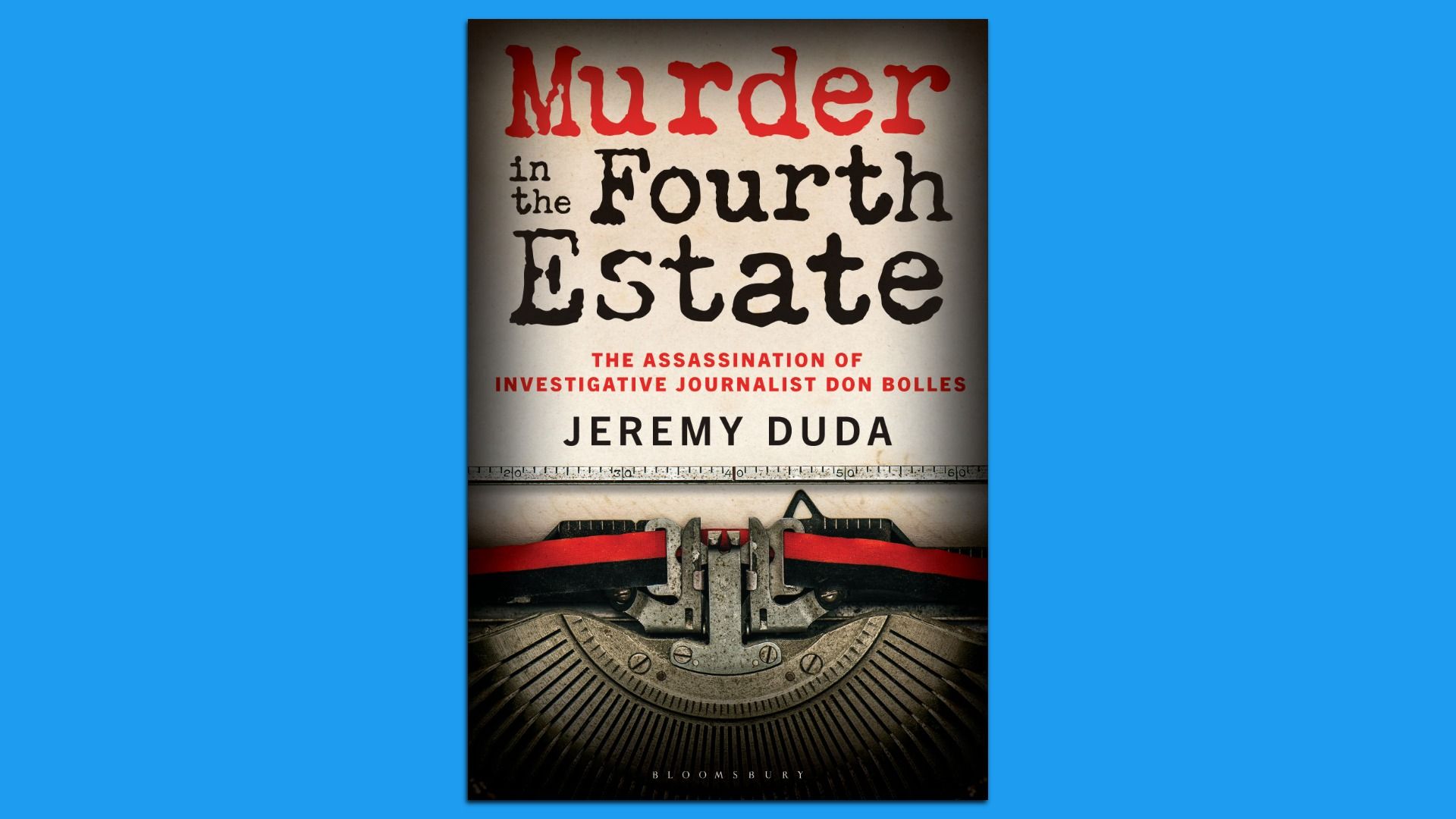
Image: Courtesy of Bloomsbury Academic
Arizona Republic reporter Don Bolles' assassination is ingrained in the state's collective memory, but there's so much to the story that most people don't know.
The big picture: You're probably familiar with details of Bolles' assassination — he was lured to the Clarendon Hotel in June 1976 by John Harvey Adamson, and was blown up with a car bomb as he left.
- Adamson claimed Phoenix contractor Max Dunlap hired him to kill Bolles over his coverage of liquor magnate Kemper Marley's appointment to the state racing commission.
Yes, but: That's only the beginning of the story.
- The Bolles investigation lasted nearly 20 years, spawned numerous related court cases and took some wild twists and turns.
Driving the news: My new book "Murder in the Fourth Estate: The Assassination of Investigative Journalist Don Bolles," available Thursday, tells the full story of the case for the first time.
Catch up quick: Dunlap and plumber Jimmy Robison, whom Adamson said detonated and helped build the bomb that killed Bolles, were convicted in 1977 and sentenced to death.
- After the Arizona Supreme Court overturned their convictions in 1980, Adamson balked at testifying again under his old plea deal, and was himself convicted and sentenced to death.
- Federal courts overturned Adamson's death sentence, and he eventually reached a new deal with the Attorney General's Office to testify again.
- Dunlap and Robison were retried on murder charges in 1993. Dunlap was convicted and Robison acquitted.
The intrigue: "Murder in the Fourth Estate" reveals details that have been largely forgotten as the case has faded from memory, and others that have rarely if ever been publicly reported. For example:
Neal Roberts, a Phoenix lawyer who was connected to numerous figures in the case, was suspected by many but never charged.
- A witness claimed to have overheard Roberts say before the assassination that he wanted Bolles killed with a bomb so it would be "loud and clear," but many consider his account suspect.
Members of the Phoenix Police Department's intelligence unit purged files related to figures in the Bolles case.
- They said they were concerned about confidential files being publicly released during discovery in the 1977 murder trials. Others believed they were trying to hide something.
A mafia hitman from Chicago who became a federal witness claimed that he and his partner were given the original contract to kill Bolles, but turned it down after coming to Phoenix.
Some critics of the investigation believe Bolles was actually killed because of a connection between a mob-backed precious metal theft ring and Arizona's dog racing tracks.
The intrigue: And the book explores what, if any, role Marley played.
- Though his name is inextricably linked to Bolles' murder, Marley was never charged, and the question of whether he was involved or knew about the plot against the reporter is far from settled.
The bottom line: As the 50th anniversary of the bombing approaches, the story of the Bolles case can finally be told in full.