Potential United Airlines-American merger raises Phoenix hub concerns


Add Axios as your preferred source to
see more of our stories on Google.
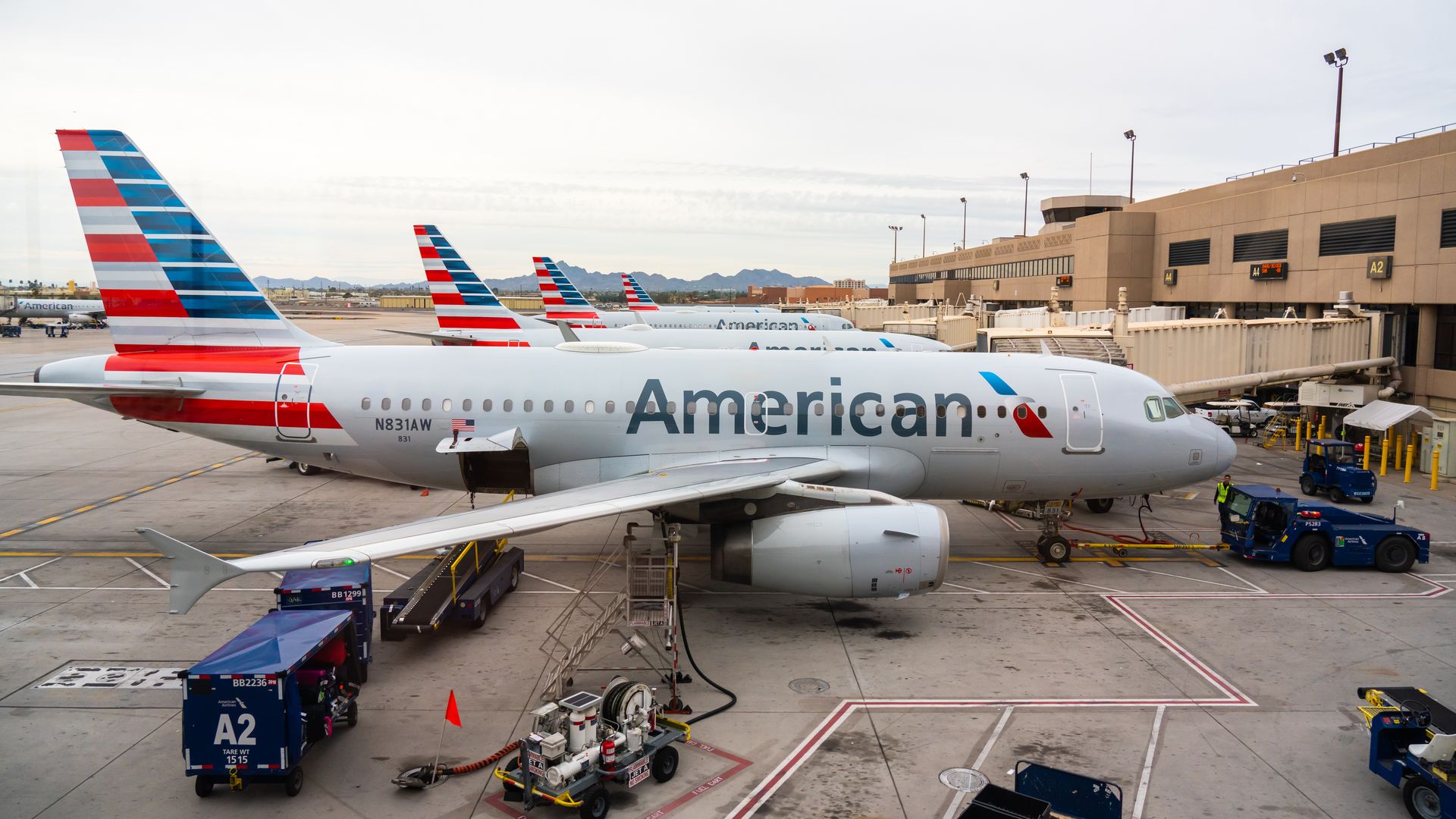
American Airlines operates a hub at Sky Harbor. Photo: Alex Tai/SOPA Images/LightRocket via Getty Images
Reports of a potential merger between United Airlines and American Airlines are evoking painful memories of past megadeals that left the Valley without a major hub or airline headquarters.
Why it matters: Major airline mergers often result in higher fares for all passengers, but they also can severely impact service at certain airports as the new company consolidates routes.
- And Sky Harbor would be an obvious place to cut back if a United-American merger came to fruition, industry experts told Axios.
Driving the news: United CEO Scott Kirby pitched the merger idea to President Trump in a February meeting, Reuters and others reported this week.
- United declined to comment to Axios and American did not respond.
Threat level: Sky Harbor's status as an American hub could be on the chopping block because United has a much larger and established hub at nearby Denver International Airport, per Henry Harteveldt, president and airline industry analyst at Atmosphere Research Group.
- Sky Harbor is American's fifth largest hub and largely exists as a holdover hub from when American merged with Tempe-based U.S. Airways, he told us.
By the numbers: American is Sky Harbor's largest carrier, operating approximately 40% of flights. United is responsible for about 6%, airport spokesperson Jon Brodsky told Axios.
The big picture: The Valley is understandably leery of airline mergers.
- Homegrown airline America West in 2005 acquired the bankrupt U.S. Airways, adopted its name and moved the national airline's headquarters to the Valley.
- But in 2013, American Airlines and U.S. Airways merged. The companies at the time promised to maintain a hub and corporate presence in Phoenix, but U.S. Airways' C-suite quickly relocated to Dallas and its downtown Tempe offices shuttered.
Flashback: Then-Arizona Attorney General Tom Horne told us he opposed the 2013 merger over concerns that less competition would mean higher prices and worse service, and he would have similar concerns about a potential United-American merger.
Reality check: Harteveldt is extremely skeptical that a merger of two of the big four airlines will ever actually happen, even under Trump's very pro-business administration.
- Combining United and American would place about a third of all air travel under one company, which would face intense backlash from federal antitrust regulators and state prosecutors, he said.
What we're watching: Attorney General Kris Mayes has sued to stop several big mergers, including the now-dead Kroger-Albertsons deal.
- "There would be concern and we would absolutely take a look at it," her spokesperson Richie Taylor told us about a potential airline merger.
The bottom line: The federal government deregulated airlines in 1978. It was supposed to boost competition, but instead opened the doors for mergers like this and sent fares skyrocketing, Vanderbilt law professor and author of "Why Flying is Miserable" Ganesh Sitaraman, told Axios.
- "I think the potential merger of American Airlines and United Airlines would be an absolute disaster for the flying public," he said.
Editor's note: This story has been corrected to note that American Airlines merged with U.S. Airways in 2013. (It did not acquire U.S. Airways.)