Arizona reckons with Chávez legacy


Add Axios as your preferred source to
see more of our stories on Google.
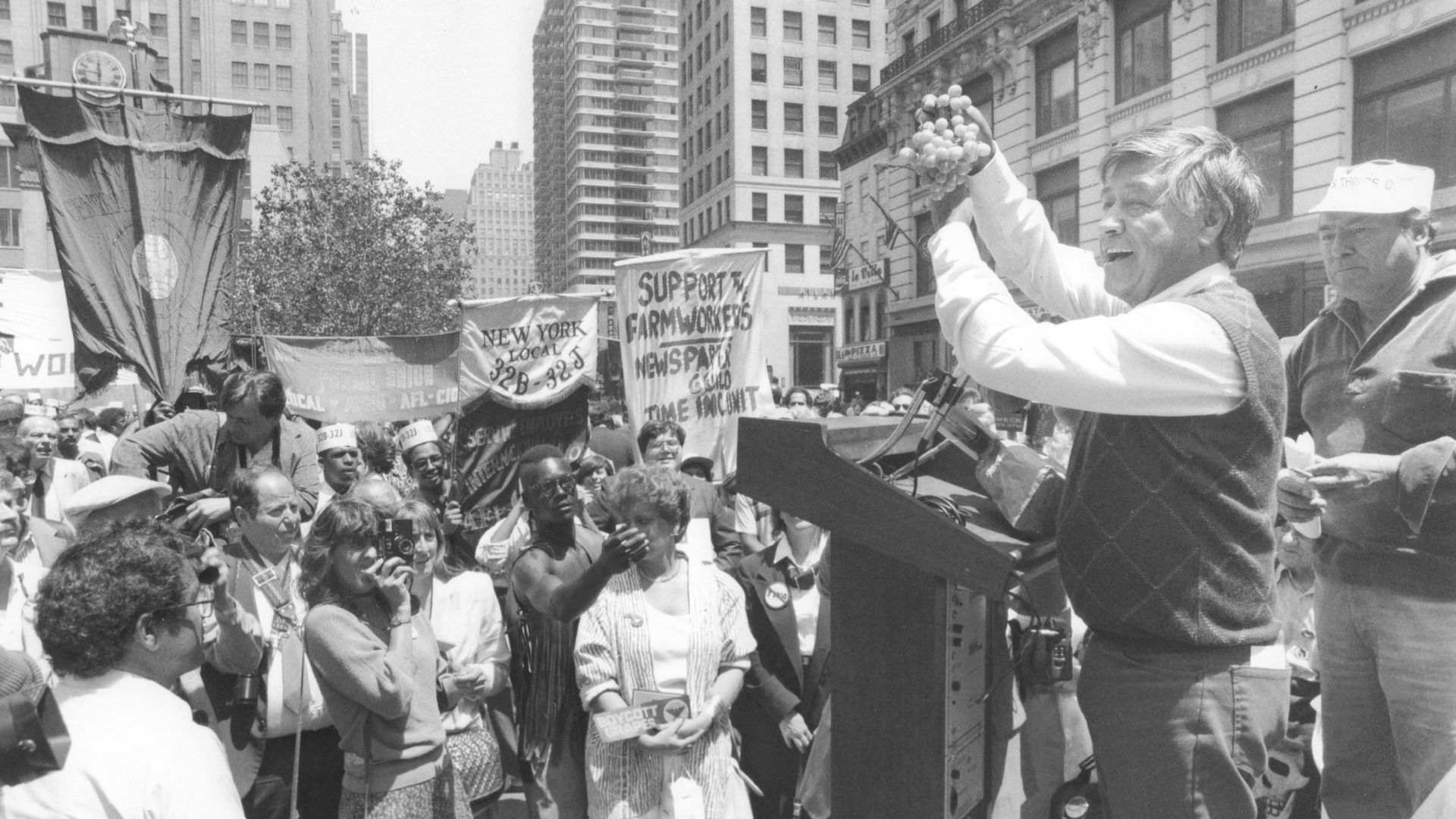
Cesar Chavez at a New York rally in 1986. Photo: Bruce Gilbert/Newsday RM via Getty Images
Arizona leaders are navigating how to remove César Chávez from a community shaped by his influence and stamped with his name.
The big picture: Allegations that Chávez sexually abused minors during his time leading the Chicano movement are prompting a public reckoning over the legacy of the late civil rights leader, who was born in Yuma.
- Multiple schools, streets, parks and public buildings statewide bear Chavez's name, and Phoenix and Tempe celebrate his birthday, March 31, as a paid city holiday.
The latest: Phoenix Mayor Kate Gallego and Councilmembers Betty Guardado and Laura Pastor want the City Council to vote at its March 25 meeting to rename the city's Chávez holiday as Farmworkers Day. They also want to begin the process to rename city facilities bearing his name and remove street signs honoring him.
- Tempe will also rename its holiday, per spokesperson Kris Baxter. The process will begin this week and require council approval.
- Mesa will immediately remove the honorary Calle Cesar Chavez street signs and commemorative plaque along Broadway Road, city spokesperson Casey Blake told Axios.
Context: In an investigation published Wednesday, The New York Times found extensive evidence that Chávez had groomed multiple young girls while leading the farmworkers movement in the 1970s, including a child he had known since she was 8.
- Dolores Huerta, Chávez's longtime collaborator and labor leader, also said she was sexually abused by Chávez and became pregnant with two of his children.
Zoom out: Once Chávez's name is wiped from public view, labor leaders and activists will look to separate the impact and legacy of the Chicano farm worker movement from the man who led it.
- "The [movement] always was, and remains, much more than Chávez," Lorena Oropeza, chair of ethnic studies at the University of California, Berkeley, told Axios.
- The moment could also shift recognition toward other leaders, including Huerta, said Cynthia Orozco, a historian and professor emeritus at Eastern New Mexico University.
- "It is time we acknowledge her even more," she said.