UW scrutinized after monkey death at Arizona primate facility

Add Axios as your preferred source to
see more of our stories on Google.
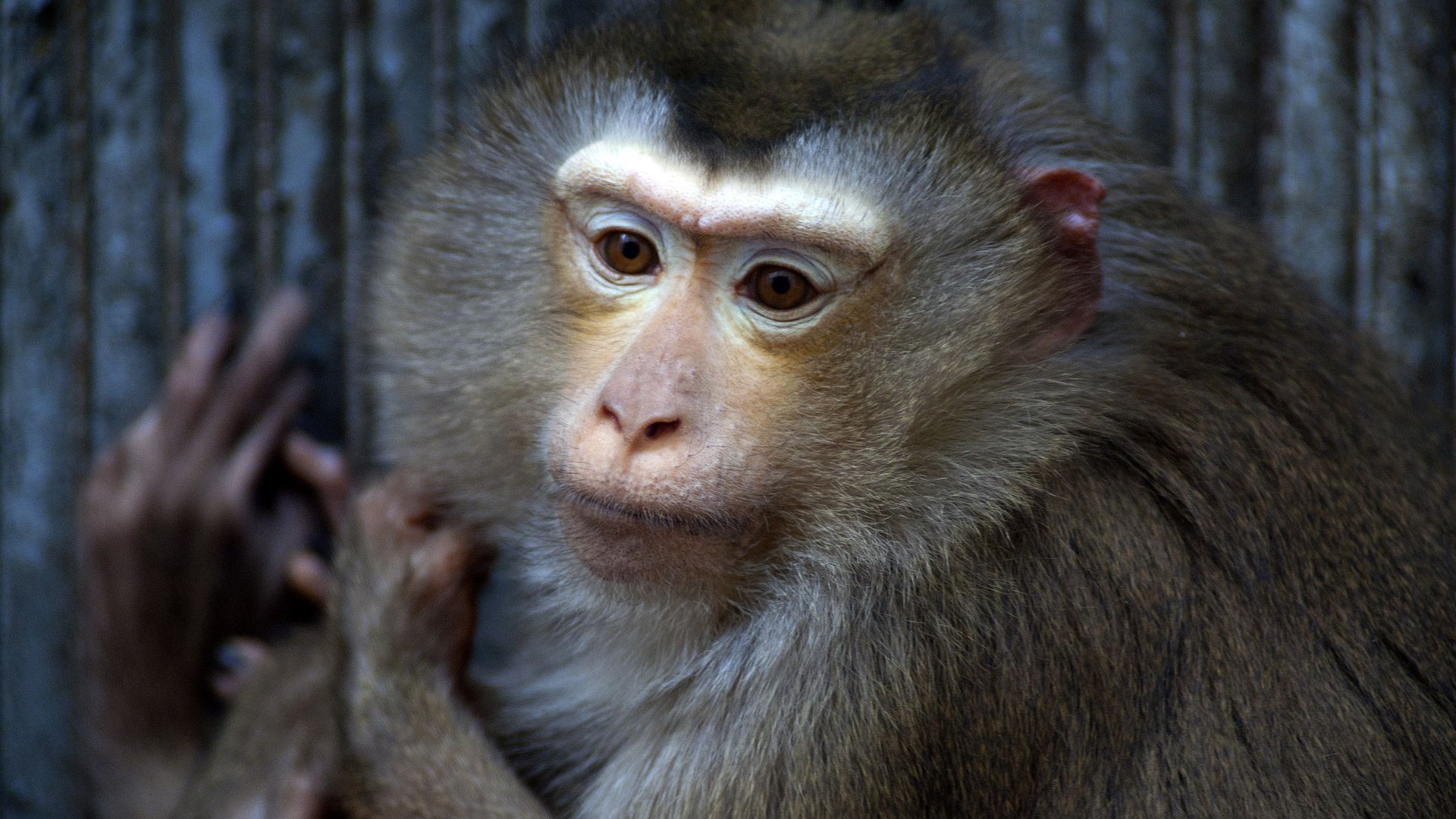
A pigtail macaque at a China zoo. Photo: Hong Wu/Getty Images
Animal welfare advocates are again urging the University of Washington to end its primate research program after a newborn monkey died at the university's Arizona breeding facility.
The big picture: Monkey research has played a key role in developing vaccines and other therapies, but ethical concerns, advancements in non-animal research and funding shifts are forcing labs and federal agencies to reconsider when — and whether — animals are still essential to medical progress.
The latest: The USDA last month cited the UW for a "critical" violation of the Animal Welfare Act after a monkey died June 30, 2025, at its breeding facility on the Salt River Pima-Maricopa Indian Community near Mesa.
- Staff found a "limp newborn," believed to be dead, in a female monkey's arms and placed it in a cooler, per the USDA report.
- An hour later, the monkey was retrieved for necropsy and was still taking labored breaths. It was then humanely euthanized.
What they're saying: Sally Thompson-Iritani, UW assistant vice provost for animal care, outreach and 3Rs, told Axios the monkey showed no signs of life, but the veterinary technician in charge did not check for a heartbeat, per policy.
- The university self-reported the incident and enacted corrective measures including enhanced employee training, she said.
Catch up quick: The university operates one of seven National Primate Research Centers, established by Congress in 1959 to accelerate U.S. medical research.
- UW took over the 21-acre Mesa facility — originally opened in the 1970s as a monkey sanctuary — in 2013 for off-site breeding of pigtail macaques.
Flashback: The center has faced public and government scrutiny since arriving in Arizona.
- A 2021 Arizona Republic investigation found the Mesa facility had a larger-than-expected number of monkey deaths and illnesses between 2013 and 2021, largely due to valley fever.
- The National Institutes of Health's Office of Laboratory Animal Welfare investigated the same year and called the Mesa breeding colony a "commendable animal facility."
- In 2022, USDA fined the university $3,750 in a settlement over animal welfare issues, including an incident in Mesa that led to a macaque's arm amputation.
Between the lines: Thompson-Iritani said she would "never minimize" welfare issues but that the public sees only the self-reported mistakes, not the overwhelmingly positive interactions between staff and monkeys.
- Deborah Fuller, director of the primate center, said staff now regularly test the macaques for valley fever, often allowing anti-fungal treatment prior to symptoms developing.
- She noted that UW scientists have used the valley fever exposure in Mesa's colony to help create a vaccine that's in testing and could someday be used in humans.
The intrigue: UW recently changed the program's name from the Washington National Primate Research Center to the Washington National Biomedical Research Center.
- Fuller said the change reflects the scope of research methods used, many of which do not involve monkeys or any animals.
- She added non-animal medical research has advanced significantly, but activists have misled funders and the public into thinking it can already replace animal research.
The other side: People for the Ethical Treatment of Animals alleges the center is trying to reduce public scrutiny by removing "primate" from its name.
- "A genuine transition away from primate experimentation toward state of the art, human-relevant science would be leadership. Rebranding without that transition is not," PETA senior science adviser Lisa Jones-Engel wrote in a letter to the university's board of regents last week.
What we're watching: The Trump administration has pushed federal health agencies to decrease animal research funding and prioritize other research methods.
- The Oregon National Primate Research Center may transition to a sanctuary because of the federal philosophy shift.