Tax cut fight could mark beginning of 2026 legislative session

Add Axios as your preferred source to
see more of our stories on Google.
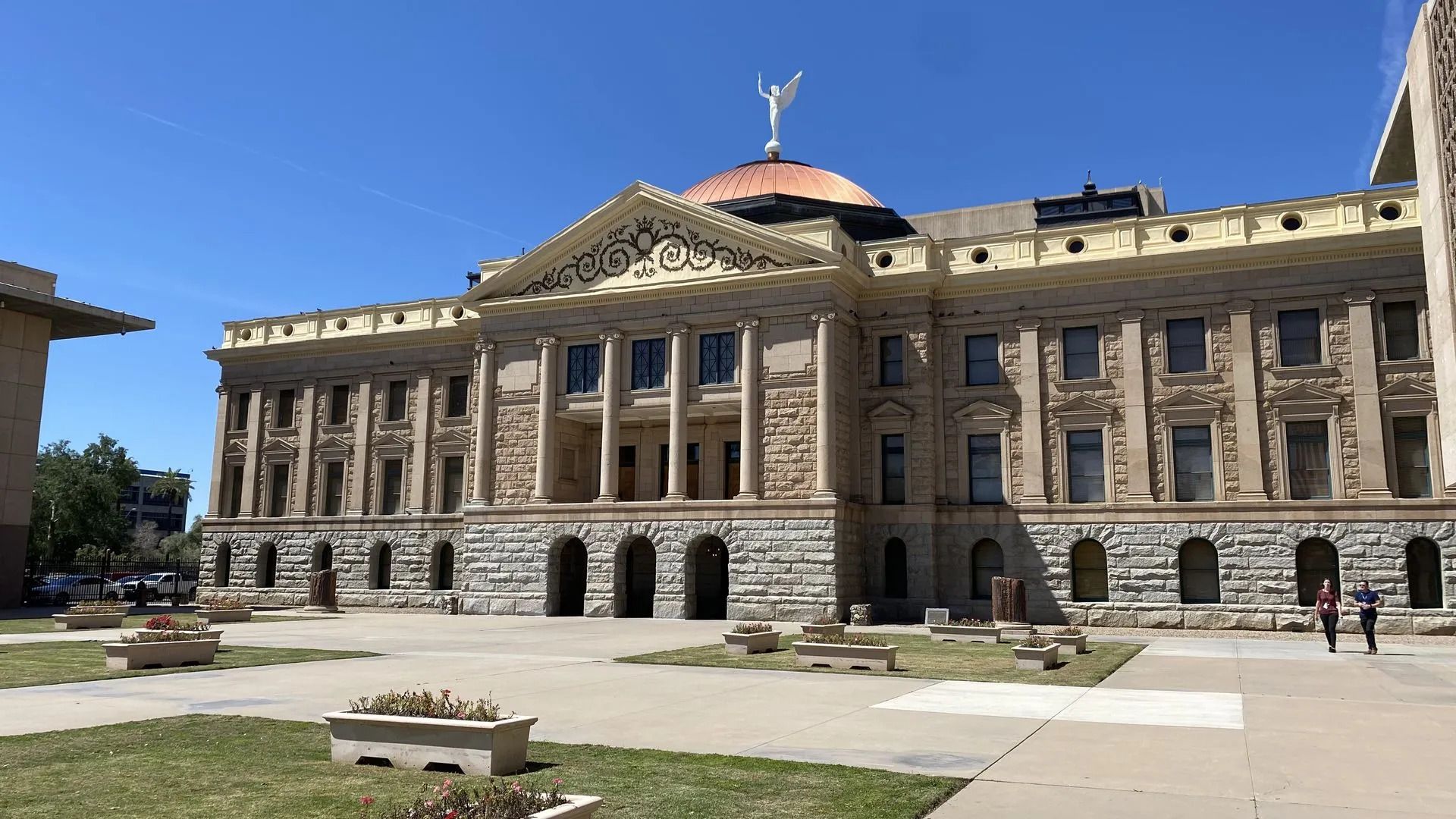
Photo: Jeremy Duda/Axios
The 2026 legislative session is likely to start with a battle between GOP lawmakers and Gov. Katie Hobbs over tax cuts.
Driving the news: Today is the first day of the session, and Hobbs will deliver her State of the State address at 2pm.
Why it matters: The speech establishes the governor's priorities for the year.
The intrigue: Hobbs, a Democrat, and the Republican-controlled Legislature have been at odds for the past three years, but November's election, in which the governor will seek a second term, could make things more contentious.
- In 2023 and 2025, Hobbs set new single-session veto records, a sign of how fraught her relationship with the Legislature has been.
State of play: Republicans want to fully conform the state's tax code to the federal cuts in last year's One Big, Beautiful Bill Act, which would cost about $440 million next fiscal year, and an estimated $1.1 billion over three years.
- Hobbs doesn't want to go that far and is pushing partial conformity, which she touts as her middle-class tax cut plan and would cost roughly half as much.
- They'll have to figure things out fast — the Arizona Department of Revenue will begin accepting state tax returns in late January, said Sen. J.D. Mesnard (R-Chandler), who's been working on conformity for months, and if individual taxpayers file before the issue is resolved, they'll risk having to re-file later this year.
What they're saying: Senate President Warren Petersen (R-Gilbert) said Republicans are focusing on affordability this session and will push to pass their tax bill, which he called one of the biggest cuts in Arizona history, in the first few days of session.
- "It might be the fastest a bill has ever landed on her desk," Petersen said during a panel discussion Friday at an Arizona Chamber of Commerce luncheon at the Phoenix Civic Center.
- Petersen also spoke of the need to make housing more affordable, saying building delays increase costs and the state has "basically outlawed starter homes."
The other side: Hobbs will push middle-class tax relief and affordability, along with new fees on data centers and short-term rentals in what could be her final legislative session.
The governor wants her tax cuts, not the full conformity favored by legislative Republicans, to be the first bill on her desk.
- She also plans to limit her cuts to those who take the standard deduction — her administration says that covers about 88% of Arizonans — along with exemptions for tips and overtime pay, and an additional deduction for seniors.
- The plan would cost between $220 million and $250 million, she said.
- Hobbs left the door open to additional Republican-backed cuts, saying that could be negotiated later as part of the broader budget.
- And she said Republicans will have to show how the state can pay for them without cutting vital services.
Zoom in: Hobbs' other priorities include:
- A new water fee on data centers, which would provide up to $6.5 million annually for conservation, and the elimination of an existing $38.5 million tax exemption.
- A $3.50 nightly fee on short-term rentals, which would go into an Arizona Affordability Fund to help lower-income people pay for utilities, with extra revenue going into the state's Housing Trust Fund.
- Creating a Housing Acceleration Fund, a public-private partnership that would use state bonding power to finance housing developments.
Yes, but: To increase taxes and fees, or eliminate any tax benefit, the Legislature has to muster a two-thirds vote, which is usually a tough sell to Republicans.
- That means Hobbs will need significant GOP support for her data center and short-term rental proposals.
- Rep. Neal Carter (R-San Tan Valley) already sponsored a bill to eliminate the data center exemption, and Hobbs told Axios she believes there's broad bipartisan support for her plan.
Budget: Arizona might face a lean budget year, which could spark fighting over budget and tax cuts between Hobbs and Republican lawmakers.
- Sen. John Kavanagh (R-Fountain Hills), who chairs the Senate Appropriations Committee, told Axios he expects to see a sizable but manageable budget deficit, which would include the costs of full tax conformity.
Proposition 123: Lawmakers will once again take up the issue of whether to put a successor to the education funding measure Proposition 123 on the November ballot.
- Prop. 123, which expired last year, provided a decade's worth of K–12 funding through additional land trust revenues after voters approved it in 2016.
- Plans to renew Prop. 123 fell by the wayside last year due to a dispute over a proposal favored by some Republicans to include protections for school choice programs like voucher-style Education Scholarship Accounts (ESA).
- Lawmakers don't need the governor's signature to refer measures to the ballot, meaning they can do it without input from Hobbs or legislative Democrats.