Netflix doc shows Pinal County inmates running their own jail unit

Add Axios as your preferred source to
see more of our stories on Google.
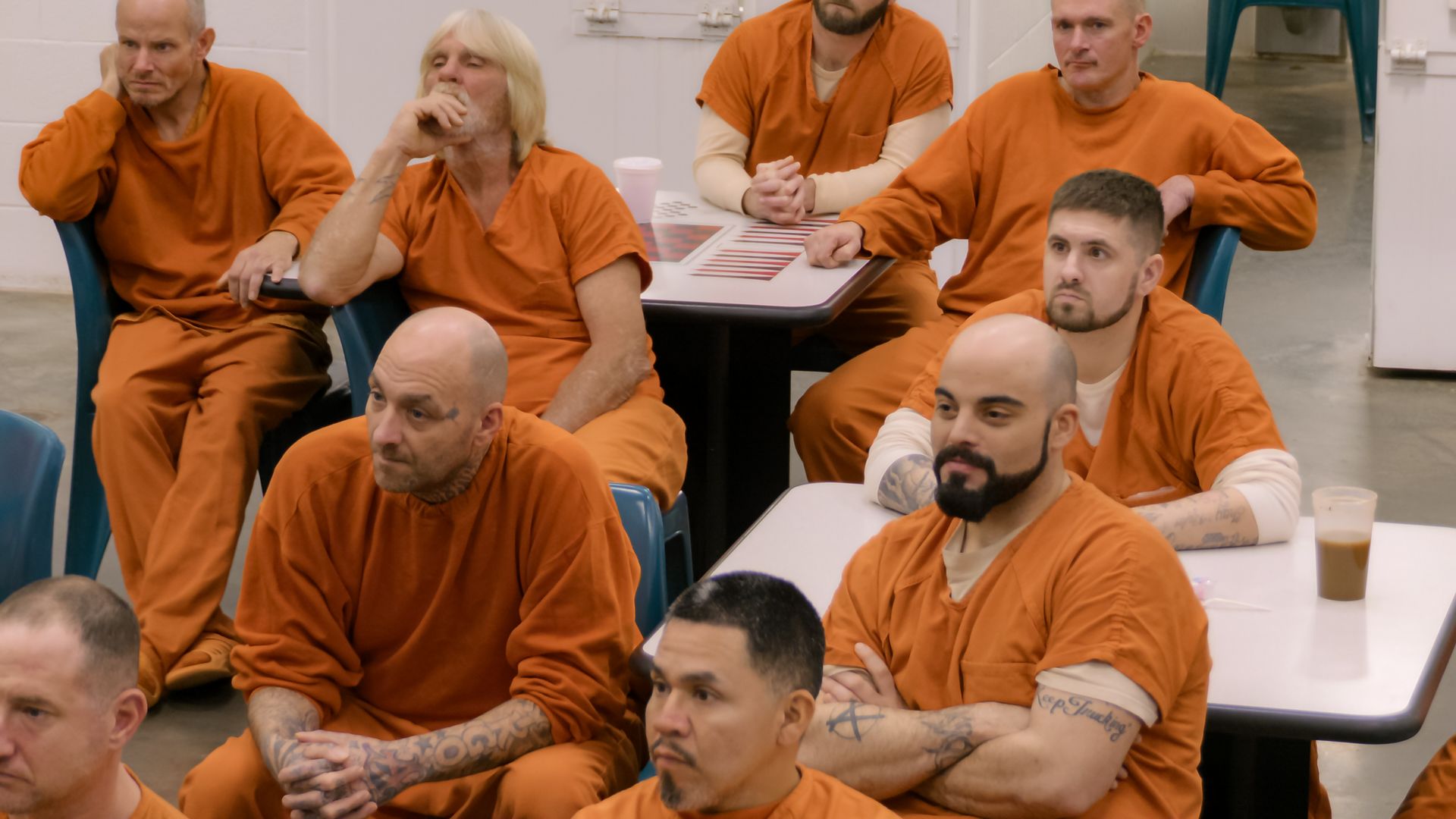
Photo: Courtesy of Netflix
Pinal County jail inmates learn to take more responsibility — and govern themselves — in the upcoming season of a Netflix docuseries.
Why it matters: The program helps inmates build skills they can use after they move on from the jail, Pinal County Sheriff Ross Teeple told Axios.
- "We're looking at individuals that want to learn the skills that they need to go back in society," Teeple said.
The big picture: Season 2 of "Unlocked: A Jail Experiment" was filmed over six weeks earlier this year inside the Pinal County Adult Detention Center.
State of play: The sheriff's office opened cell doors and removed on-site guards in the re-entry pod where the experiment takes place, shifting from "direct" to "indirect" supervision — meaning inmates were monitored only on camera.
- About 30 inmates participated at any given time, with some rotating in and out. A total of 53 inmates moved through the pod during the six-week stretch.
- Teeple noted that inmates spend an average of just 19 days in the detention center. "So we have 19 days, on average, to provide someone with the skill set that they need when they enter the next phase of their life," he said.
- Planning for the experiment began under former Sheriff Mark Lamb.
Zoom in: Inmates began taking collective responsibility for daily operations, Teeple said. They agreed on lights-out periods — kitchen workers, the sheriff noted, wake up at 3am — and designated people to handle tasks like collecting laundry and delivering meals.
- "Before, it was rigidly instituted. We're the ones that tell you: lockdown, you're going to bed at this time, wake up at this time, eat at this time. We allowed them to start making the decisions and they accepted more responsibility," Teeple said.
What they're saying: "You wanna be a part of this, you abide by the rules," one inmate says in a series trailer.
- "I gotta keep staying sober because we don't want to jeopardize the program," another says.
Context: Season 1 documented a similar experiment in Pulaski County, Arkansas.
The intrigue: Real-world experiments inevitably come with complications, Teeple said, and this one was no exception — though he declined to offer spoilers. The trailer shows physical fights, drugs and guards storming into the pod with shotguns that appear to fire smoke or gas canisters.
The bottom line: Teeple said the experiment proved successful enough that he continued a modified version after filming concluded.
- One inmate he was initially most skeptical about — "He will never make it. He lacks the maturity to make it through this," Teeple recalled thinking — ultimately became one of the standout participants.
What's next: With funding from a recent state law, the Pinal County Sheriff's Office is constructing a larger re-entry center.
What we're watching: The eight-episode series debuts on Jan. 7.