Immigration crackdown cuts child care and sidelines moms

Add Axios as your preferred source to
see more of our stories on Google.
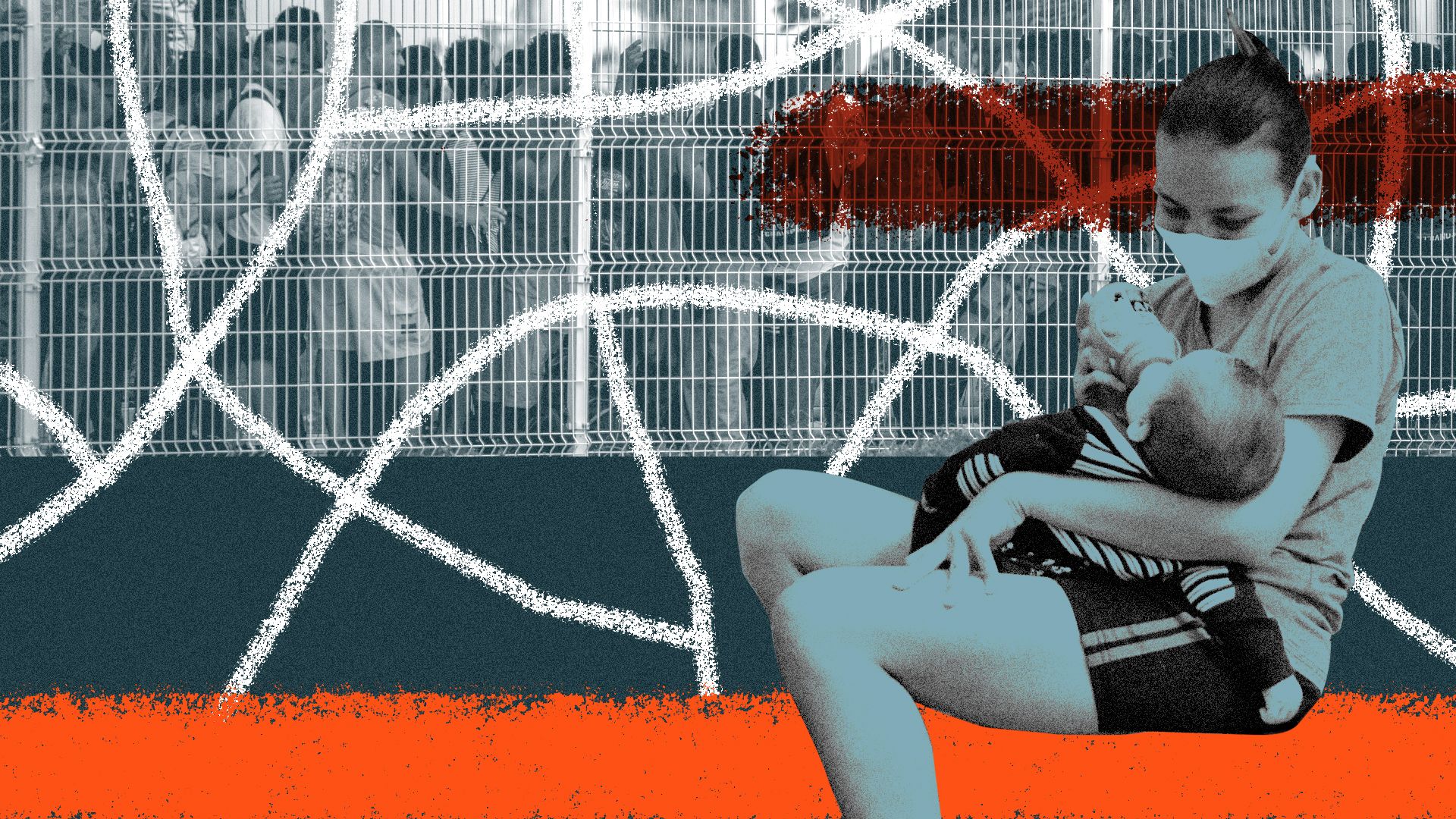
Photo illustration: Shoshana Gordon / Axios. Photos: Gerardo Vieyra / NurPhoto, Jair Cabrera Torres / picture alliance via Getty Images
Increased immigration enforcement under the Trump administration is upending the child care industry and pushing many American mothers out of the labor market, per a new data analysis.
Why it matters: The already-understaffed child care industry, in which 1 in 5 workers is an immigrant, is shrinking in response to deportation fears, the new report from the Better Life Lab at New America found.
- In turn, families have fewer care options, leading some mothers to pause their careers.
A stunning stat: Nationwide from January to July, about 39,000 foreign-born child care workers and 77,000 U.S.-born working mothers with preschool-aged children dropped out of the workforce amid the sharp increase in immigration enforcement, the analysis found.
The big picture: Researchers found that immigrant child care workers — particularly those with post–high school education — began exiting the workforce at a higher rate after President Trump in January scrapped policies that discouraged ICE activity at schools, churches and other "sensitive places."
- The number of U.S.-born child care workers also declined, especially among Hispanic-Americans, suggesting the "chilling effect" of ICE raids, report co-author and Arizona State University professor Chris Herbst said at a press briefing on Wednesday.
Between the lines: The employment drops were more severe at child care centers (as opposed to in-home care), where there are typically formal licensing and documentation requirements.
The intrigue: The number of working mothers with children ages 0 to 5 declined three percentage points from January to July, dropping to its lowest rate since 2021.
- The decline has been primarily driven by white mothers and those who are highly educated leaving the workforce.
- There's no shortage of theories as to why women are quitting their jobs (including return-to-office requirements and cultural priority shifts), but the New America report provides some of the first empirical evidence on how child care availability, driven by escalated immigration enforcement, is contributing to the drop-off, Herbst said.
What they're saying: "I don't think that we as a country have really started to reckon with the potential downsides of this kind of [immigration] policy," he said.
- Herbst said the Trump administration has sold mass deportations as a way to "unclog" the labor market and open job opportunities for citizens, but it's important to analyze the potential consequences.
What's next: Herbst noted that Trump's tax-and-spending law passed this year included significant funding for ICE to ramp up immigration enforcement.
- "I would anticipate in the months and years ahead that we will begin to have kind of a full reckoning of the sort of trade-offs associated with this kind of policy," he said.