HUD shift could push 1,400 Phoenix families into homelessness

Add Axios as your preferred source to
see more of our stories on Google.
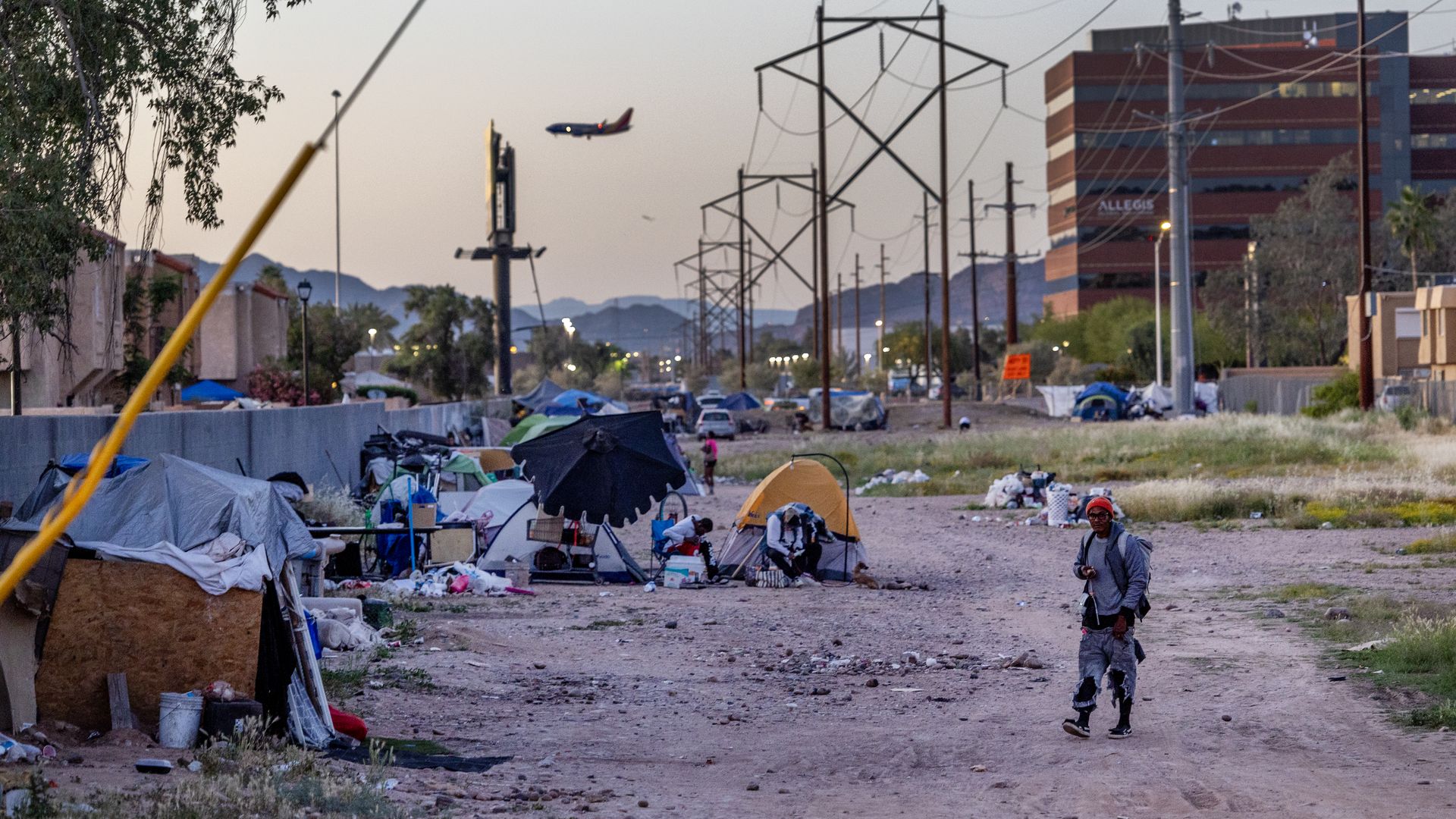
A homeless encampment near central Phoenix seen here in 2014. Photo: Gina Ferazzi/Los Angeles Times via Getty Images
A U.S. Housing and Urban Development funding shift — designed to refocus federal housing assistance on drug and mental health treatment — could leave nearly 1,400 Phoenix-area families homeless next year, advocates warn.
Why it matters: The drastic change announced late last week dismantles the decades-old Housing First model in favor of a hard-line approach that's grown popular in conservative circles.
The big picture: Homelessness has risen significantly in the Valley and nationwide in recent years — hitting a record high of more than 770,000 people in 2024 — raising questions about whether the federal government's multibillion-dollar annual investment is working.
Driving the news: Housing administrators, homeless advocates and Democratic politicians in Arizona are urging HUD to reconsider the shift, which they believe will result in mass evictions.
State of play: Of the nearly $4 billion HUD provides annually to regional homeless agencies, 30% can be used toward permanent supportive housing — often delivered via vouchers that unhoused people use to pay private landlords — under the rule change.
- The remainder is to be used for "transitional housing": One- or two-year programs designed to get unhoused people ready to return to independent living that require participants to attend drug treatment, work programs or mental health clinics.
Threat level: Nearly 90% of the HUD homeless funding Maricopa County receives now is used for permanent supportive housing, according to Mike Shore, CEO of HOM, the entity that administers the homeless voucher program statewide.
- HOM doles out about $41 million in rental payments in metro Phoenix annually, supporting nearly 2,000 households.
- Capping permanent supportive housing at 30% means only $12 million will be available for rent vouchers next year, leaving approximately 1,400 families in the lurch.
How it works: Voucher recipients (people once chronically homeless) pay 30% of their income toward rent while HUD covers the remainder.
- HUD will also finance supportive services including substance abuse treatment, life skills training and employment assistance — but these programs are optional.
- Rent assistance continues as long as voucher recipients meet the income requirement and want to participate.
The intrigue: Transitional housing used to be common in the U.S., but HUD phased out its support, ultimately canceling funding altogether in 2016 in favor of the Housing First model.
- Research compiled by Urban Institute found permanent supportive housing has achieved better outcomes than transitional programs, citing decreased time spent in jails, shelters and hospitals and improved likelihood of housing stability.
What they're saying: "Nobody says, 'Man, we should probably just get rid of firefighters because we still have fires,'" Shore said. "That's the same logic as blaming the homeless service system for homelessness continuing to increase."
- He said affordability is to blame: People are falling into homelessness faster than the system is lifting individuals out of it.
- HUD's new rules only exacerbate the crisis, he said.
What's next: HUD said it will allocate funding under the new rules beginning in May — but several of Arizona's permanent supportive housing grants will expire early next year, Shore warned.
- The Arizona Housing Coalition is asking the federal government to extend all existing grants by a year to allow communities to plan for the changes.
What we're watching: Landlords, who stand to lose billions in federal rental payments, could be an unlikely ally in this fight — and their position may be more sympathetic to the Trump administration, which hasn't been receptive to advocate concerns.