Phoenix offices could become low-cost dorm-style housing

Add Axios as your preferred source to
see more of our stories on Google.
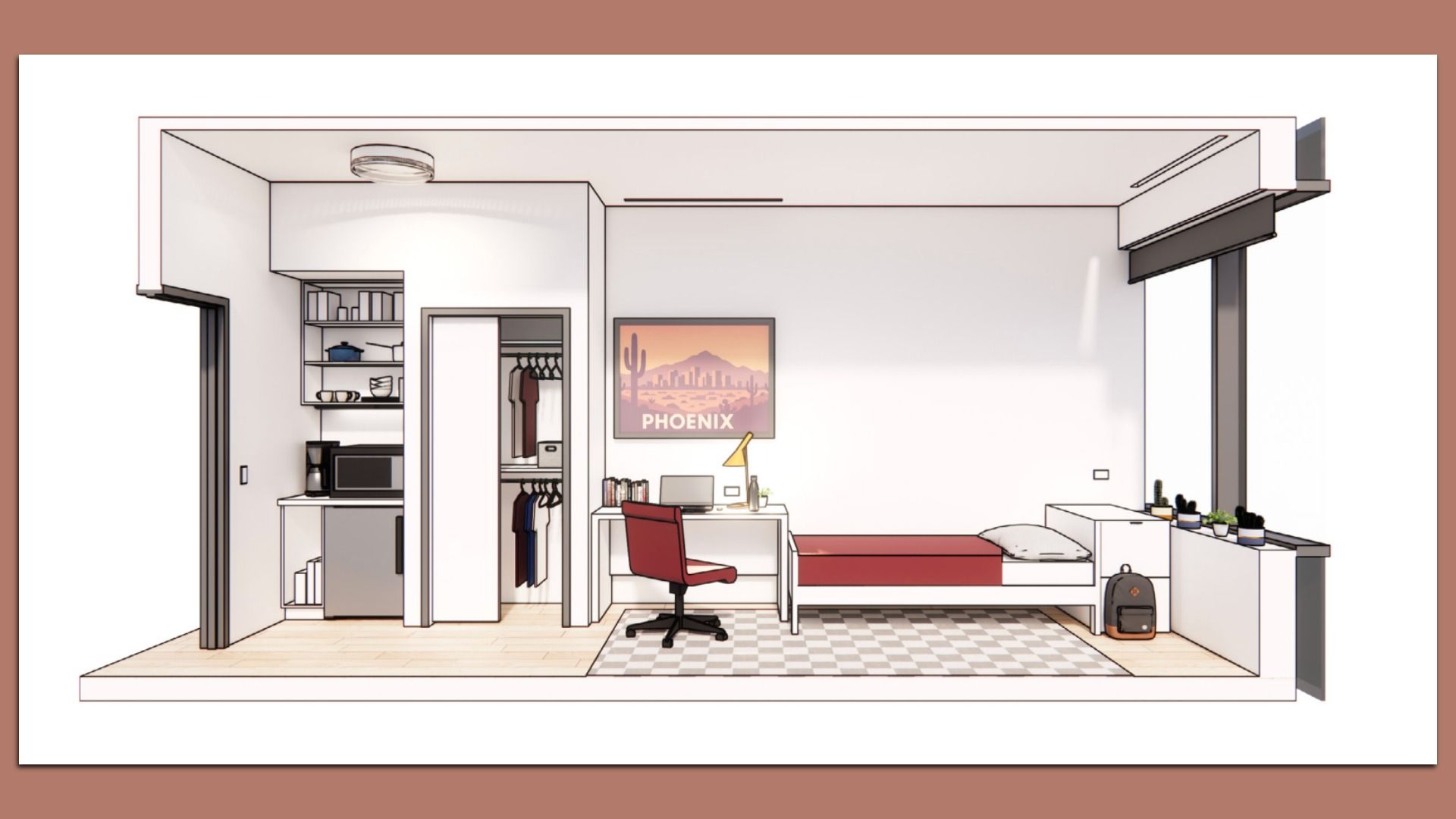
A rendering of a micro-apartment. Image: Courtesy of Gensler
Empty downtown Phoenix office buildings could be converted into affordable dormitory-style housing for a fraction of the cost of traditional apartments, according to a new report from the Pew Charitable Trust and architecture firm Gensler.
Why it matters: Phoenix's office vacancy rate sits higher than the national average at 23%, while the Valley continues to face a housing shortage that's driving up rents.
"[This is] a really interesting way to kill two birds with one stone," Gensler market and data analyst Terry Hogan told Axios.
How it works: The study examined the feasibility of creating "micro-apartments" in former office buildings:
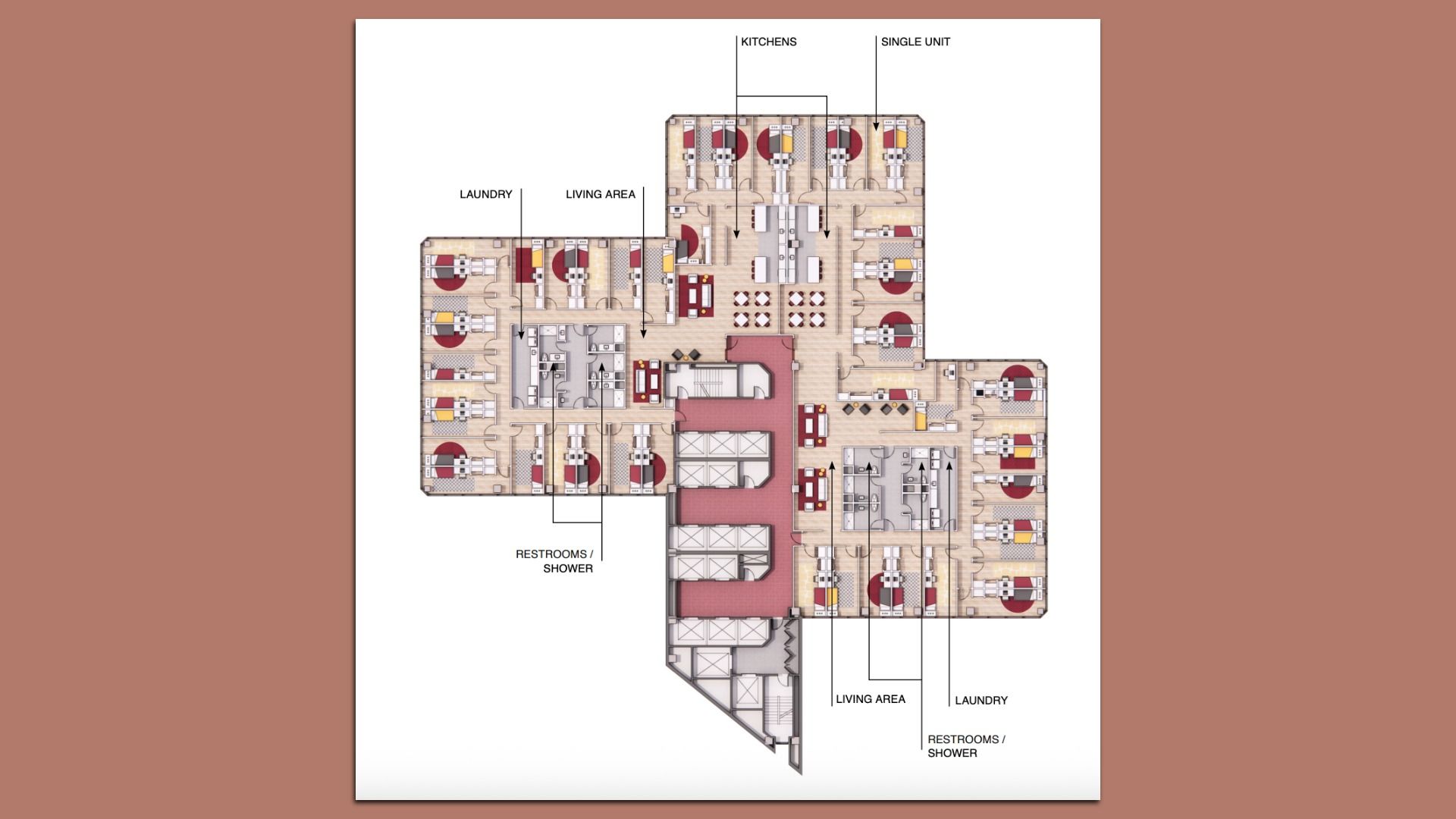
- Each floor would consist of 50 private rooms with locking doors, each furnished with an XL twin bed, desk and chair, nightstand, microwave and half-size refrigerator.
- Residents would share 10 bathrooms (each equipped with a toilet, shower and sink) and four kitchens in the center of each floor.
The intrigue: Office-to-residential conversions were a popular idea at the start of the COVID pandemic, when office vacancies began to climb and repurposing existing structures appeared less expensive than building from the ground up.
- Yes, but: Many developers found that conversions weren't the bargain they hoped for without plumbing for private bathrooms and kitchens.
- Tushar Kansal, a senior officer for Pew's housing policy initiative, said the proposed micro-apartment structure would cost about 30% less than a typical office-to-apartment conversion because the kitchens and bathrooms would be contained to the center of each floor, where necessary utilities already exist.
Flashback: Phoenix and other major metros had this type of low-cost, short-term communal housing called "single room occupancies," or SROs, throughout much of the 1900s. At the time, they looked like budget hotels and boarding houses.
- In the '70s, efforts to revitalize downtown eradicated this housing stock, which was often seen as unsafe or nuisance-ridden.
- The collapse of SROs led to a spike in unsheltered homelessness that continues today.
Between the lines: Hogan said this micro-apartment idea would capitalize on the good parts of SROs — namely, the low cost — but with modern amenities, daily cleanings and 24/7 security.
- The anticipated rent would be $850 per month — an unheard-of price throughout most of the Valley and especially downtown Phoenix.
- It would allow new graduates, service workers, retirees or short-term residents (like traveling nurses) to live close to employment centers and urban amenities without the high price tag.
- "There's a market out there for this type of product," Hogan said.
Zoom in: The study found that government subsidies would be needed to make this type of development work, but Hogan and Kansal noted that the city of Phoenix is already subsidizing affordable housing and this type of project would provide more bang for the buck.
- The dorm-style conversion would require an $85,000 subsidy per unit, compared to about $215,000 for a new-build studio apartment, per the report.
What's next: Hogan said Gensler hopes to find a partner to develop these models in Phoenix or other major metros facing similar affordability struggles.
The bottom line: "This is a way to bring a lot of homes online much more quickly … [and] much more affordable," Kansal said.