Arizona flash floods are relatively rare, but there's still a risk


Add Axios as your preferred source to
see more of our stories on Google.
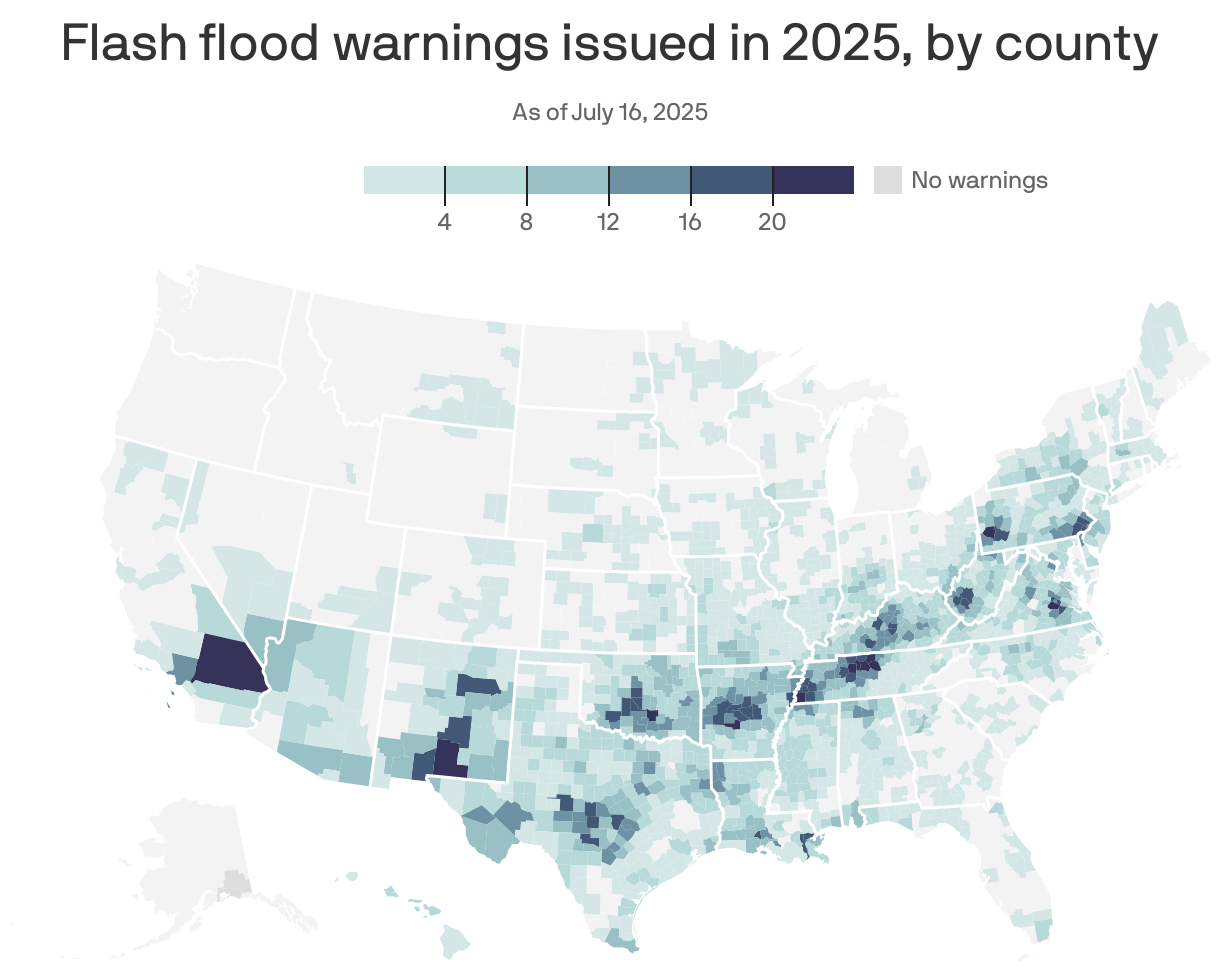
Storms sweeping through the U.S. this summer have dumped intense rain on cities nationwide, leaving towns flood-ravaged and forcing rescues.
Zoom in: While the risk of such floods in Arizona is relatively small, it's not nonexistent.
Why it matters: Recent above-average rainfall in parts of the U.S. means some slow-moving storms can drop lots of water relatively quickly.
- That rainfall, along with factors like topography, geology and drought, can lead to major, sometimes-fatal flash flooding events — as the deadly July 4 weekend in Texas' Hill Country illustrated.
Threat level: Flash floods in Arizona don't happen often but can occur under the right conditions, said Tom Frieders, a warning coordination meteorologist with the National Weather Service's Phoenix office.
- "Things can come together where we could get localized, very heavy rainfall that produces some significant flash flooding," he said. "So it's always something we need to be concerned with."
Zoom in: Rain like that generally occurs during monsoon season, at times when there are levels of moisture in the air that cause heavy rainfall, and usually when thunderstorms are slow-moving, often recirculating within the same area.
- It's unusual, but such conditions can bring several inches of rain in an hour.
- Terrain is also an important factor, Frieders said. Canyon areas can funnel water into one stream, creating a risk for anything in its path, he told Axios.
- And it doesn't take much rain to bring a foot of water over low-lying road crossings, which can be dangerous for anyone who attempts to drive through, he said.
State of play: The NWS has issued a record number of flash flood warnings nationally this year, but the number has been "on the lower side" for Phoenix, Frieders said.
- "This year our monsoon season has been a little bit tamer than usual," he said.
By the numbers: There had been 59 flash flood warnings in Arizona this year as of last Friday, per NWS data.
- Eighteen resulted in verified flash floods, Alicia Ryan, a meteorologist with the NWS in Phoenix, told Axios.
- Just because a flash flood wasn't verified doesn't mean one didn't occur, she noted.
Zoom out: NWS offices issued 3,160 flash flood warnings nationwide this year through July 16, according to a tracker at Iowa State University's Iowa Environmental Mesonet.
- That's the most for that period in any year since records began in 1986.
Context: Climate change "is supercharging the water cycle," sparking heavier precipitation extremes and related flood risks, according to Climate Central, a climate research group.
- Among 144 U.S. cities analyzed by the group in a report from earlier this year, 88% experienced an increase in hourly rainfall intensity between 1970 and 2024.