SNAP cuts could affect tens of thousands of Arizonans


Add Axios as your preferred source to
see more of our stories on Google.
Up to 73,000 Arizonans are at risk of losing at least some federal food assistance under the massive tax and spending bill President Trump signed last week, per estimates from the left-leaning Center on Policy and Budget Priorities.
Why it matters: The One Big Beautiful Bill Act marks a historic cut to the social safety net that Republicans claim weeds out waste, fraud and abuse. But experts say the restructuring of assistance programs could leave more people hungry.
The big picture: The bill imposes new work requirements on the Supplemental Nutrition Assistance Program (SNAP), the country's largest nutrition assistance program, often referred to as food stamps.
- It also forces states to shoulder more benefit costs, which were 100% federally funded, though states share administrative expenses.
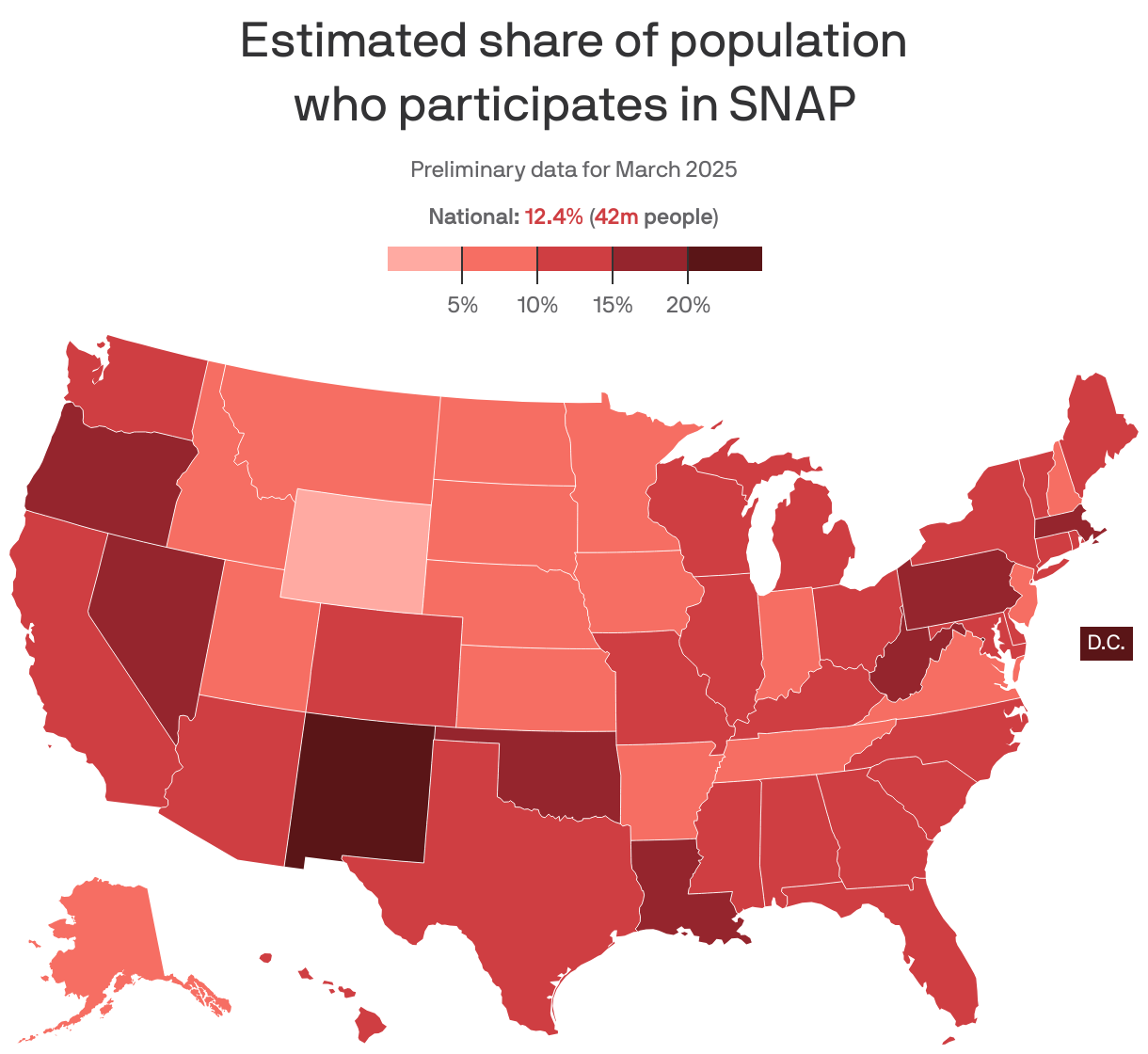
Zoom in: Nearly 897,000 Arizonans — 11.8% of the state's population — received SNAP benefits in March, USDA estimates.
How it works: To keep SNAP benefits, parents of children 14 or older will have to meet work requirements.
- Work requirements now also apply to able-bodied adults up to 64 years old, having previously only applied to those ages 18-54.
- The law also forces states with SNAP payment error rates of at least 6% to cover 5% to 15% of benefit costs starting in fiscal year 2028. Arizona's rate last year was a little under 9%, per the U.S. Department of Agriculture (USDA), which would require a 10% cost share from the state.
- And starting in fiscal year 2027, states' share of SNAP administrative costs increases from 50% to 75%.
Zoom out: More than 42 million Americans participated in SNAP as of March, per initial USDA data.
- According to a CBPP analysis of FY 2024 USDA data, over 62% of SNAP participants are families with children, and more than 38% are working families.
What they're saying: Arizona food banks already serve around 700,000 people monthly, and under the new SNAP policies, "Food insecurity will become even more common in our communities and the strain these individuals experience will be felt across the emergency food system," Arizona Food Bank Network president and CEO April Bradham said in a statement to Axios.