Inside TSMC's cultural shift in Arizona

Add Axios as your preferred source to
see more of our stories on Google.
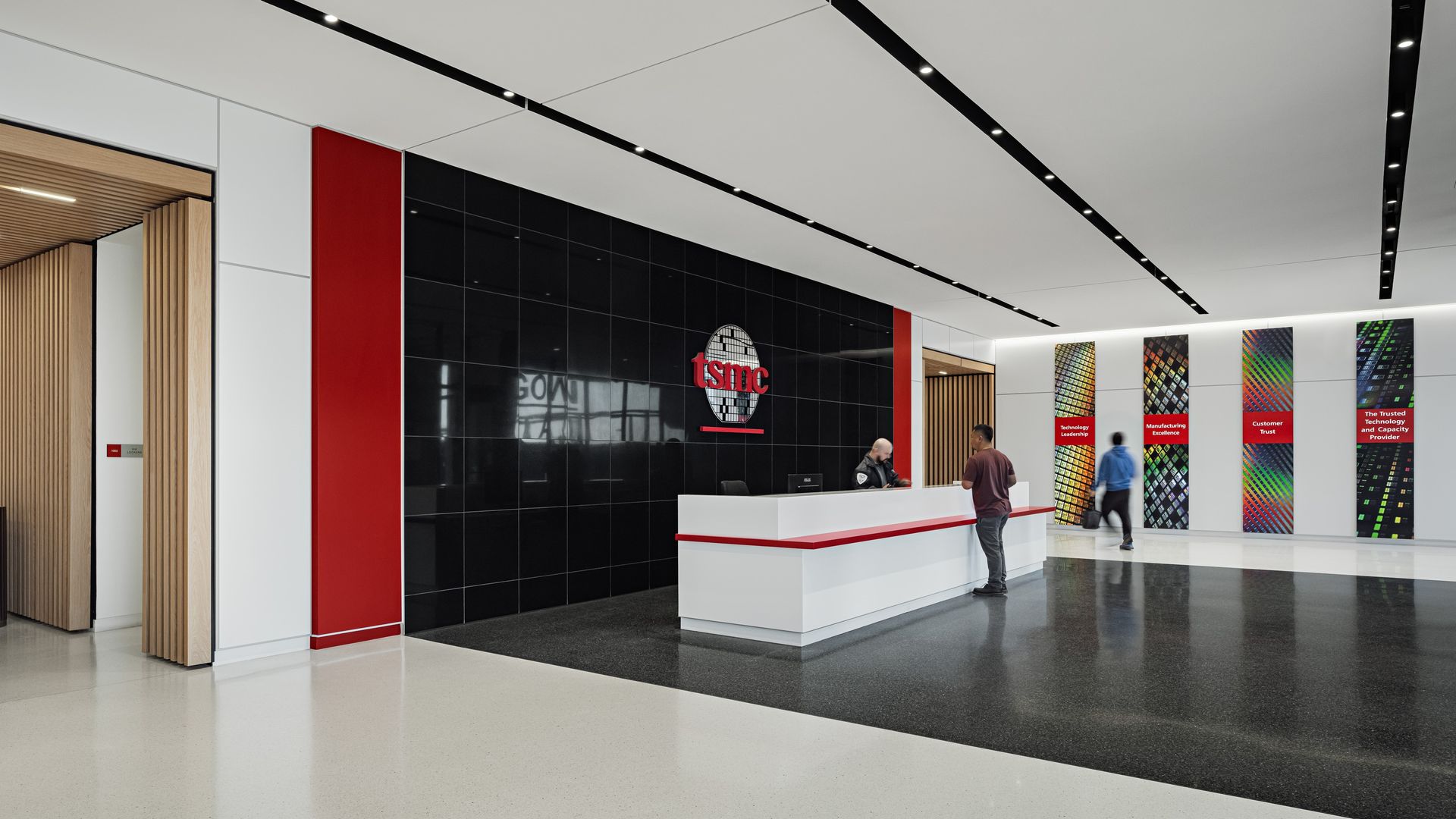
TSMC has Taiwanese and American employees. It's taken time to blend the cultures. Photo: Courtesy of Taiwan Semiconductor Manufactoring Co.
When its Phoenix campus is complete — expected to take over a decade — Taiwan Semiconductor Manufacturing Co. will be among the largest foreign-headquartered employers in the U.S.
Why it matters: Economic developers generally love this kind of foreign direct investment — it's an influx of spending and jobs that would have otherwise been made outside the U.S., but it also requires the blending of two distinct workplace cultures to be successful.
Catch up quick: As the first fab was readying for production, there were multiple reports of cultural clashes at the Phoenix facility and disagreements over work expectations.
- More than half of the existing 3,000 employees at TSMC Arizona are American hires. The remainder are Taiwanese, most of whom are on temporary assignments to provide short-term training to new employees.
- Thirteen former employees filed a lawsuit against the company last year alleging there was an "anti-American culture" at TSMC and that Asian and Taiwanese workers were given more opportunities than local employees, the New York Times reported.
The big picture: TSMC expects workers at all of its facilities to strive for perfection, stay humble and adopt a company-first mindset, TSMC Arizona president Rose Castanares told us.
- This intensity has helped make TSMC the world's leading semiconductor manufacturer, and customers expect the same quality regardless of where its chips are made, she said.
Reality check: It's not the right fit for everyone, Castanares conceded. But those who've adopted the mindset and pace have thrived at TSMC Arizona.
Zoom in: Jefferson Patz was one of the company's first hires in Arizona in 2021. He spent more than a year training in Taiwan before the first Phoenix fab opened, getting an intimate look at TSMC and Taiwan's culture.
The intrigue: One of the more interesting differences he's spotted is the disparate approaches to problem solving.
- American workers are more likely to question an end goal before getting into the nitty-gritty of how to achieve it.
- Taiwanese workers are almost always aligned on a goal and dive into solution brainstorming.
- Blending the two approaches has paid dividends and illustrates the power of merging customs, rather than insisting one way is better than the other.
The bottom line: Patz said that when the first waves of American workers came onboard, some were surprised by the intense workplace culture, but now most people applying for positions know it's a high-demand, high-reward job.
- "People who want to join a company like this are more open to being flexible," he said.