The monarch butterfly's long journey to Endangered Species Act protection

Add Axios as your preferred source to
see more of our stories on Google.
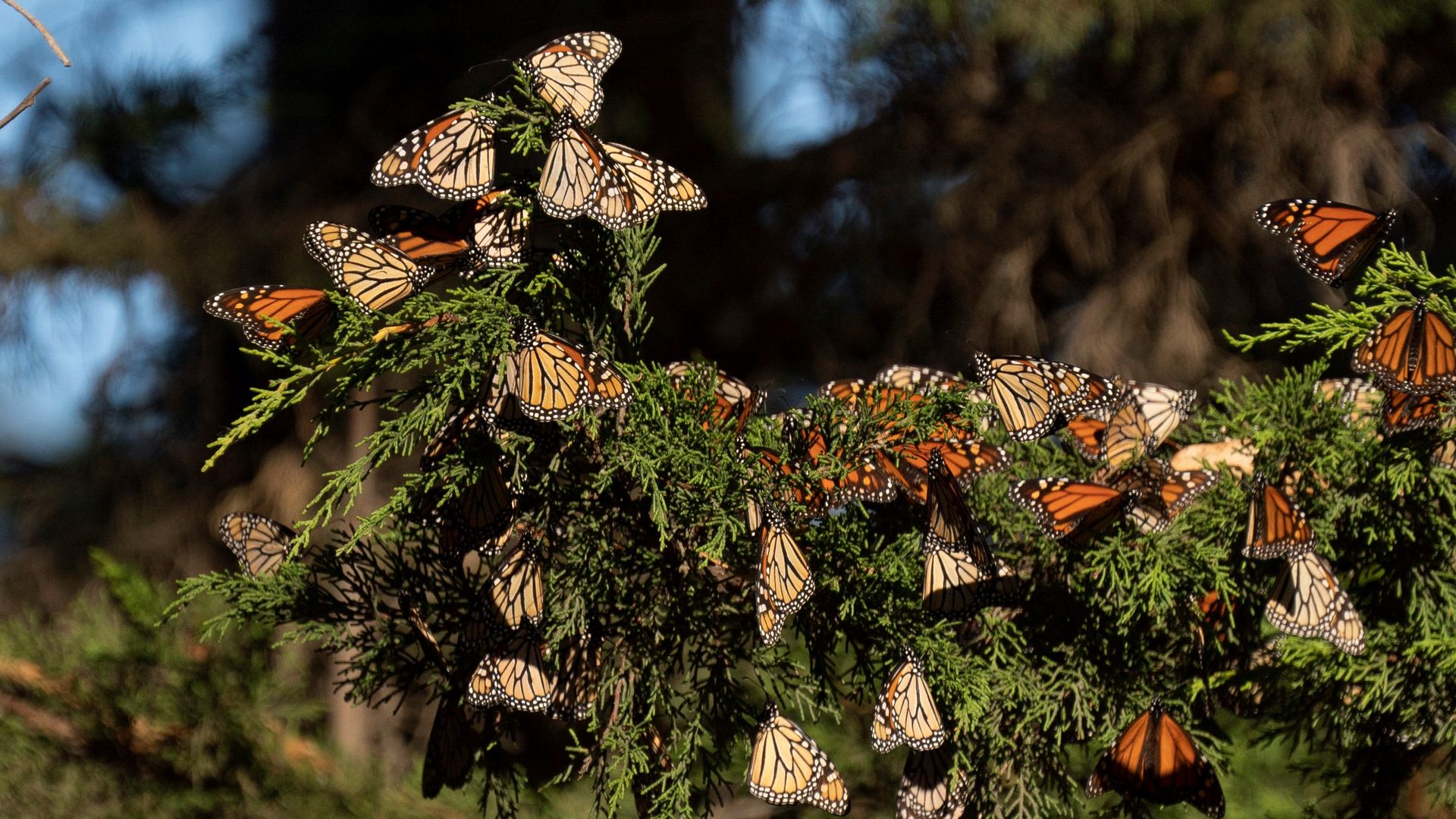
The U.S. government is considering listing the Monarch butterfly as a "threatened" species. Photo: Li Jianguo/Xinhua via Getty Images
The monarch butterfly's annual migratory journey from Canada to Mexico is a breeze compared to the federal government's lengthy process to protect the dwindling species.
Why it matters: The monarch — whose population has declined more than 80% since the 1990s — has waited more than 10 years for protection under the Endangered Species Act.
Driving the news: The U.S. Fish and Wildlife Service announced Tuesday it would reopen the public comment period on a proposal issued by the Biden administration to list the monarch as a "threatened" species with enhanced habitat protection.
- Members of the public now have until May 19 to weigh in.
Friction point: Although wildlife groups tell Axios it's not uncommon to allow the public more time to comment on complicated rules, Center for Biological Diversity senior scientist Tierra Curry said many in the conservation community are concerned the federal agency has ulterior motives for reopening the comment period.
- "This particular administration is anti-regulation and anti-science and pro-pesticide. That does raise suspicion about what is going to happen with the rule," Curry said.
Catch up quick: Wildlife groups first petitioned the Fish and Wildlife Service to list the monarch under the Endangered Species Act in 2014.
- The agency announced in 2020 that "threatened" status was merited but precluded by other higher priority plants and animals.
- The monarch was placed on a waitlist until last December when the agency formally proposed the butterfly's Endangered Species Act listing and unveiled a list of recommended conservation efforts. This began the initial public comment period that ended March 12.
Between the lines: Wendy Caldwell, executive director of the Monarch Joint Venture, told Axios that protecting the monarch is complicated because the species migrates across all 48 continental U.S. states and two international borders.
- The agriculture industry would also be impacted by pesticide regulations designed to protect monarch habitats, adding an extra wrinkle to federal government involvement, she said.
- Because of the scope of the proposed Endangered Species Act listing, Caldwell said she doesn't think it's a bad thing to have extra time for public comment.
- She also noted it should not extend the timeline for officially listing the species as "threatened," which is scheduled to occur by December.
What they're saying: The Fish and Wildlife Service said in a press release that it understands the complexity of the proposed rule and "is ensuring everyone has a chance to share information relevant to the conservation status of the species" by reopening public comment.
Zoom in: Everyday gardeners don't have to wait for the U.S. government's okay to start helping monarchs.
- Planting a pollinator garden with milkweed (the only plant the butterflies will lay eggs on) and nectar-producing plants (for eating) can provide a hospitable habitat for migrating monarchs.
Yes, but: Make sure you're planting the right milkweed and cutting it back in the fall to encourage the butterflies to continue their migration journey.
- Curry said to plant native — not tropical — milkweed. The tropical variety develops a parasite that can make butterflies sick and unable to reproduce.