There's a long road ahead for Arizona utilities' plans for more nuclear energy

Add Axios as your preferred source to
see more of our stories on Google.
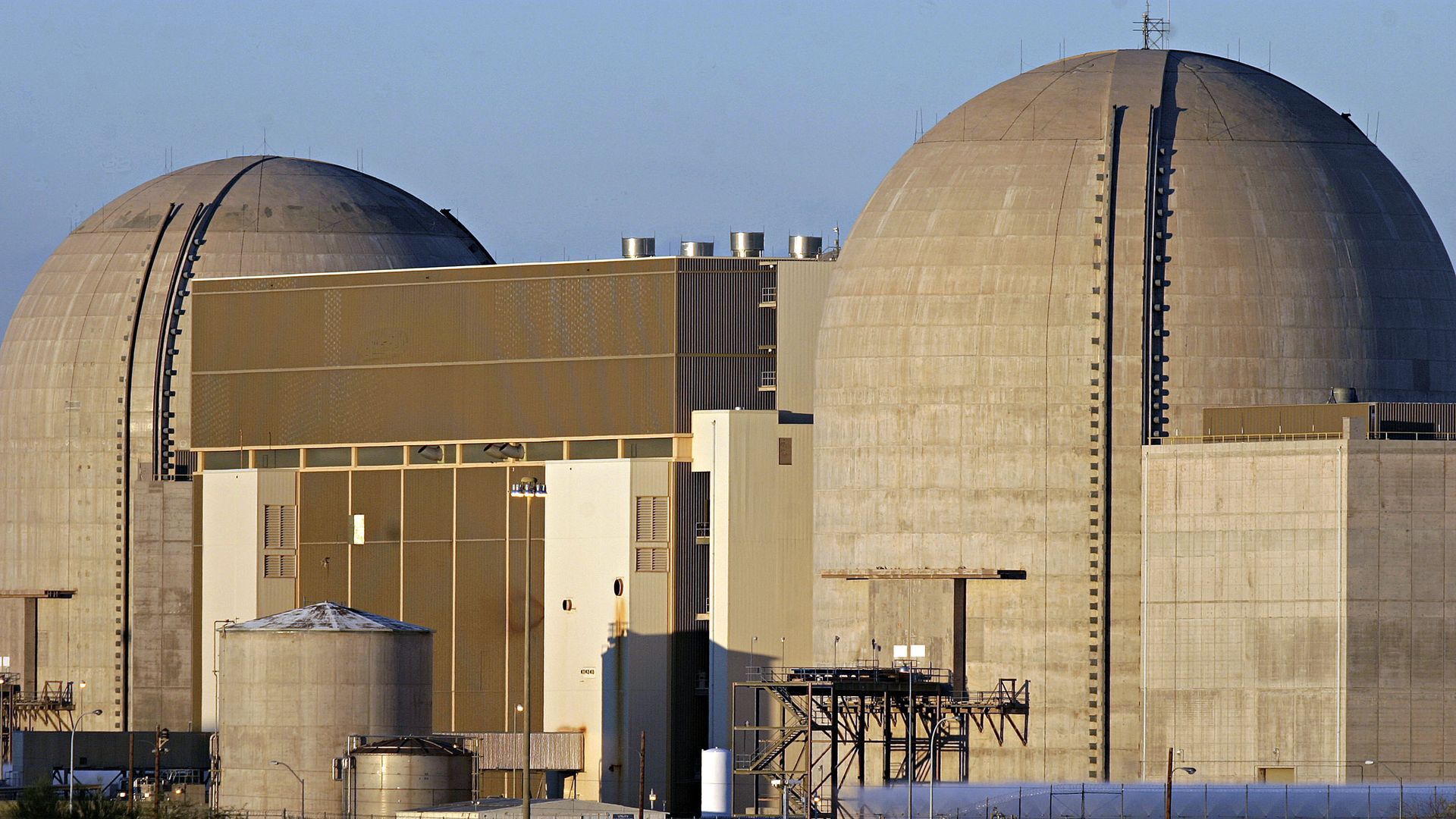
It would take many years and regulatory hurdles to build a new nuclear plant in Arizona, as APS, SRP and TEP are considering. Photo: Jeff Topping/Getty Images
Arizona's big three utilities are eyeing a new nuclear power plant, but it'll be a long and complicated process.
The big picture: Arizona Public Service, Salt River Project and Tucson Electric Power jointly announced last week they're exploring generating power from new nuclear sources by the early 2040s.
Yes, but: A lot has to happen to make this a reality, if it happens at all.
Why it matters: Arizona needs more power to continue the energy-intensive economic growth it's experienced in recent years, said Court Rich, an attorney with Rose Law Group who specializes in energy and utility issues.
Driving the news: The utilities applied for a grant from the U.S. Department of Energy for a preliminary site-selection process, which would include looking at retiring coal plants.
- If approved, it would support a three-year site-selection process and possible preparation of an early site permit application for the Nuclear Regulatory Commission (NRC).
- The NRC would also have to approve plant design, safety, environmental protection and more.
- The Corporation Commission last week opened a docket on nuclear issues in response to the announcement and plans to schedule a workshop in the coming months.
Between the lines: More nuclear generation could come either through large projects or small modular reactors that can generate up to 300 megawatts. By comparison, the Palo Verde Generating Station can generate 1,400 megawatts.
Zoom in: In addition to the "tremendous amount of federal oversight" the utilities will need approval from the Corporation Commission to build the plant, zoning from a municipal or county government, and water permitting from the Arizona Department of Environmental Quality, Rich noted.
- "To say it's a slow process is probably an understatement," he told Axios.
1 big price tag: Nuclear plants are expensive.
- Once the utilities get the money to build, ratepayers would have to cover the costs, former Corporation Commissioner Bob Burns told Axios, noting utilities are entitled to make a profit.
- APS spokesperson Mike Philipsen told Axios it's too early to address financing, which the companies wouldn't do "until we evaluate the effectiveness of a nuclear option."
- "I think private-sector financing is one of the options," said former APS lobbyist Marty Shultz, who retired in 2010 after 32 years with the company.
Flashback: The commission allowed utilities to prospectively increase customer rates to fund the construction of Palo Verde, starting in 1976.
The other side: A new nuclear plant would probably face litigation and other opposition from environmentalists, said Sandy Bahr, director of the Sierra Club's Grand Canyon Chapter.
- Although a nuclear plant has zero carbon emissions, she said there are concerns regarding disposal of nuclear waste, water use and uranium mining.
The intrigue: The Trump administration is pro-nuclear, but former Corporation Commissioner Justin Olson, now a member of the Arizona House, noted that such a long-term project could be subject to ideological changes from new administrations.