GOP lawmakers say voters chose conservatism

Add Axios as your preferred source to
see more of our stories on Google.
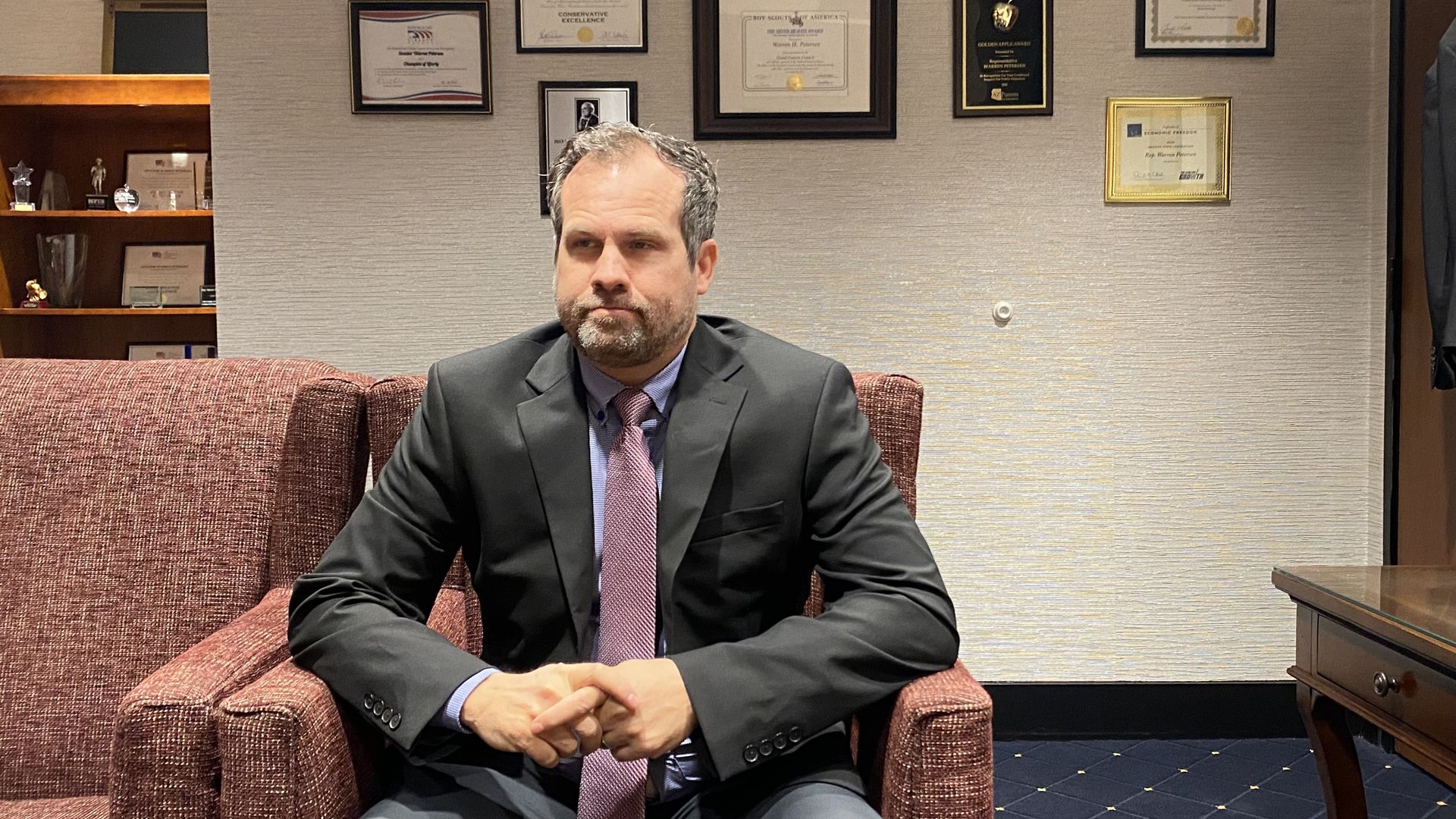
Arizona Senate President Warren Petersen (pictured) and House Speaker Steve Montenegro say voters showed they favor Republican policies when the increased GOP legislative majorities in November. Photo: Jeremy Duda/Axios
Republican House Speaker Steve Montenegro and Senate President Warren Petersen view last year's election as a signal that voters want more conservative governance, but they'll have to contend with Democratic Gov. Katie Hobbs.
The big picture: After two years of one-vote GOP majorities in both chambers, Republicans gained a seat in the Senate and two in the House.
- Voters rejected the status quo and "said we're going to go in the direction of the Republican vision," Montenegro told Axios.
- Petersen said we'll see bills that failed over the past years get to Hobbs' desk.
Yes, but: Hobbs hasn't been shy about vetoing conservative bills she disagrees with.
- Montenegro said Republicans told voters they'll strengthen border security, public safety, parental rights and school choice, and now they have to put those bills on Hobbs' desk, regardless of the likelihood they'll be signed.
- Petersen said he personally plans to sponsor legislation that has a good chance of getting Hobbs' signature, but other GOP senators may have other plans.
Zoom in: One of GOP lawmakers' top priorities is legislation to speed up Arizona's notoriously long vote-counting process, primarily by eliminating voters' ability to drop off early ballots without showing ID through Election Day.
- Hobbs, a former secretary of state, has said she'll oppose anything that makes it harder for Arizonans to vote, including anything that jeopardizes "the flexibility that we have with early voting."
- Nonetheless, Petersen was hopeful that Republicans can persuade the governor.
- Hobbs told Axios that anything making it harder for Arizonans to participate in elections is still a red line for her, including stopping ballot drop-offs the Friday before Election Day, but said there's room for discussion on "real policies that make things more efficient" and increased state resources for counties.
Between the lines: One thing lawmakers can do without the governor is refer measures to the ballot, giving Republicans the upper hand when it comes to reauthorizing Proposition 123, which expires in July.
- The measure, passed by voters in 2016, increased disbursements from the state's Permanent Land Endowment Trust Fund to boost spending on K-12 education.
- Republicans were unable to agree among themselves on Prop. 123 renewal last year, and disagreed with Democrats on whether it should boost pay only for teachers, or include non-teacher support staff.
- "We recognize that we represent all of Arizona so we want to get input from everybody. But absolutely I think they also recognize that we have the leverage, we have the majority and we can send it without her signature," Petersen said.
The other side: Republicans will have to include Hobbs if they want the special election needed to avoid a dropoff in Prop. 123 funding until a renewal measure can be approved in the 2026 general election.
- If they can agree early in the session, Petersen said a special election is possible.