Confronting snake bias: How to coexist with slithering creatures

Add Axios as your preferred source to
see more of our stories on Google.
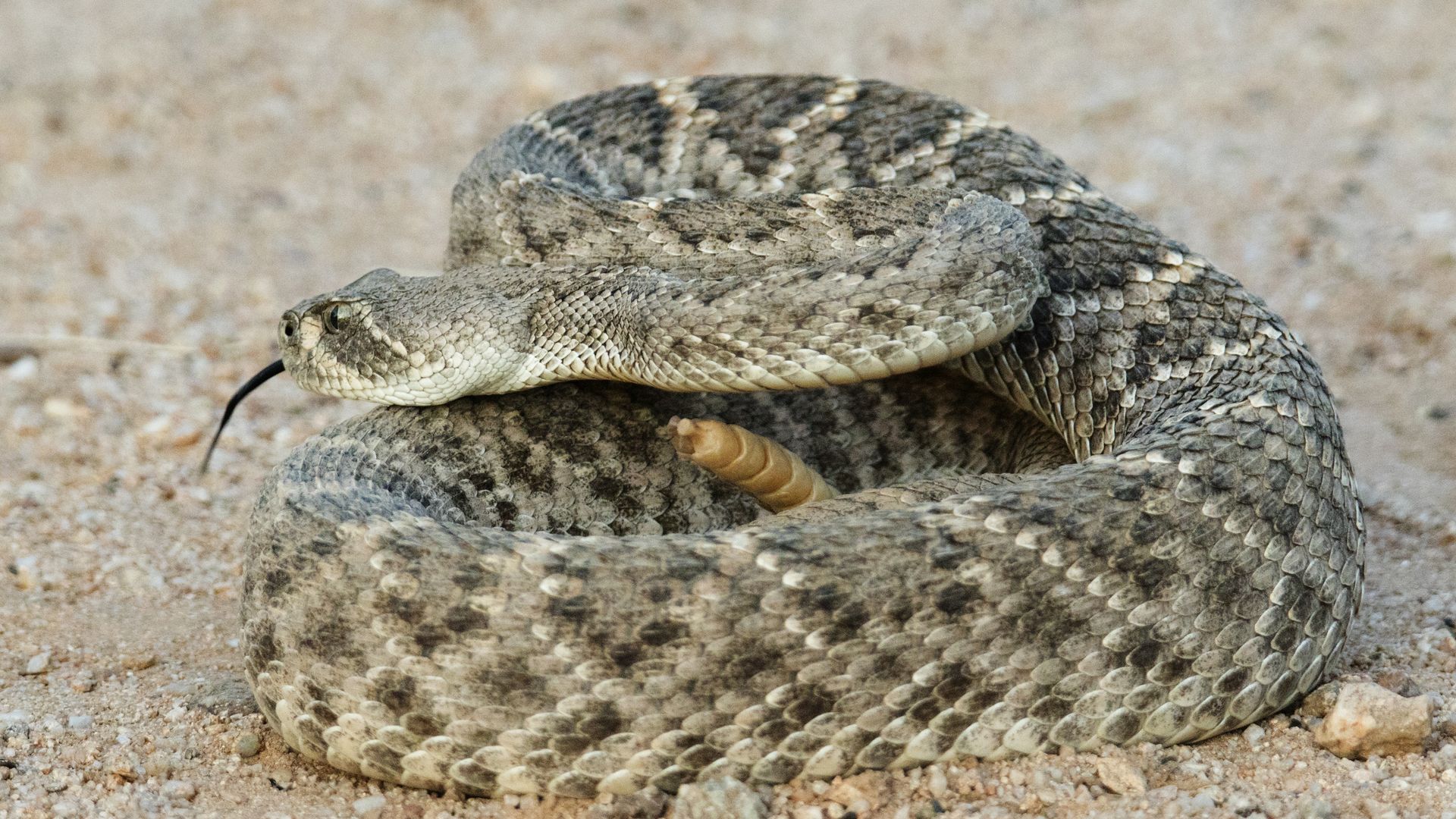
Western Diamondback Rattlesnakes are one of the most common venomous snakes in metro Phoenix. Photo: VWPics/Universal Images Group via Getty Images
Around the globe, when humans come into contact with snakes, the first instinct is often to kill them — regardless of the ecological impact.
Why it matters: Arizona is the natural habitat for dozens of snake species, and they play an important role in maintaining balance in the ecosystem by controlling rodent and insect populations.
- With neighborhoods in metro Phoenix built against desert preserves, many of us will come face to face with a slithering creature at some point.
The big picture: ASU professors Heather Bateman, a herpetologist (a zoologist who specializes in reptiles and amphibians), and Kelli Larson, a human-environment geographer, teamed up with local snake removal company Rattlesnake Solutions to survey how Arizona residents feel about snakes, especially when they're on their private property.
What they found: In comparing surveys of Rattlesnake Solution's clients and a general swath of Phoenix residents, the researchers found that people who paid to relocate snakes expressed more positive attitudes toward snakes, were less likely to think it's OK to kill them and sometimes viewed relocation as an act of stewardship.
- They found the most common reasons people sought relocation services were: they perceived the snake as a threat; they had a general fear of snakes; or they desired to move the snake to a more suitable desert habitat.
The intrigue: While protecting the snake may be the intent, relocation is not always what's best, Larson and Bateman told us.
- They hope to do more research on relocation impacts soon, but existing studies have shown snakes sometimes experience worse outcomes if they're moved a mile or more.
- In many cases, snakes move on quickly and it would be best to leave them alone — especially if they're non-venomous and pose no immediate danger.
What they're saying: "Part of why we're doing this research is because these interactions between people and wildlife are incredibly complex. People might be well-intentioned, but actually do something that has a negative outcome," Larson says.
Zoom in: Phoenix residents, especially those living near desert areas, come into contact with all kinds of potentially dangerous animals — coyotes, javelinas, etc. But we typically don't have the same remove or kill instinct we get with snakes.
- Larson and Bateman chalk this up to innate and learned biases against snakes and other creatures that don't look or act like us.
- "We really favor things with big eyes and that are fluffy, furry or feathered," Bateman says.
Between the lines: People who had positive experiences with snakes — holding them, experiencing them in nature, etc. — were less likely to think it was morally OK to kill them, Larson and Bateman found in their research.
- They believe providing people with more opportunities to encounter snakes in a controlled and positive environment can help foster better cohabitation.
- Bateman pointed to "Project RattleCam" — a livestream of rattlesnake dens in Colorado and California — as a great introduction.
The bottom line: People who don't want snakes on their property need to take steps to prevent them, Larson says.
- Lantana and other low-to-the-ground shrubs, along with cluttered lawn ornaments or trash, make perfect hiding spots for snakes.
- Rattlesnake Solutions also offers yard inspections and snake-proof fencing.
Editor's note: This story has been corrected to accurately attribute Heather Bateman and Kelli Larson's credentials and quotes. Bateman is the herpetologist and Larson is the human-environment geographer.