New Arizona border law in limbo while Texas case moves through the courts

Add Axios as your preferred source to
see more of our stories on Google.
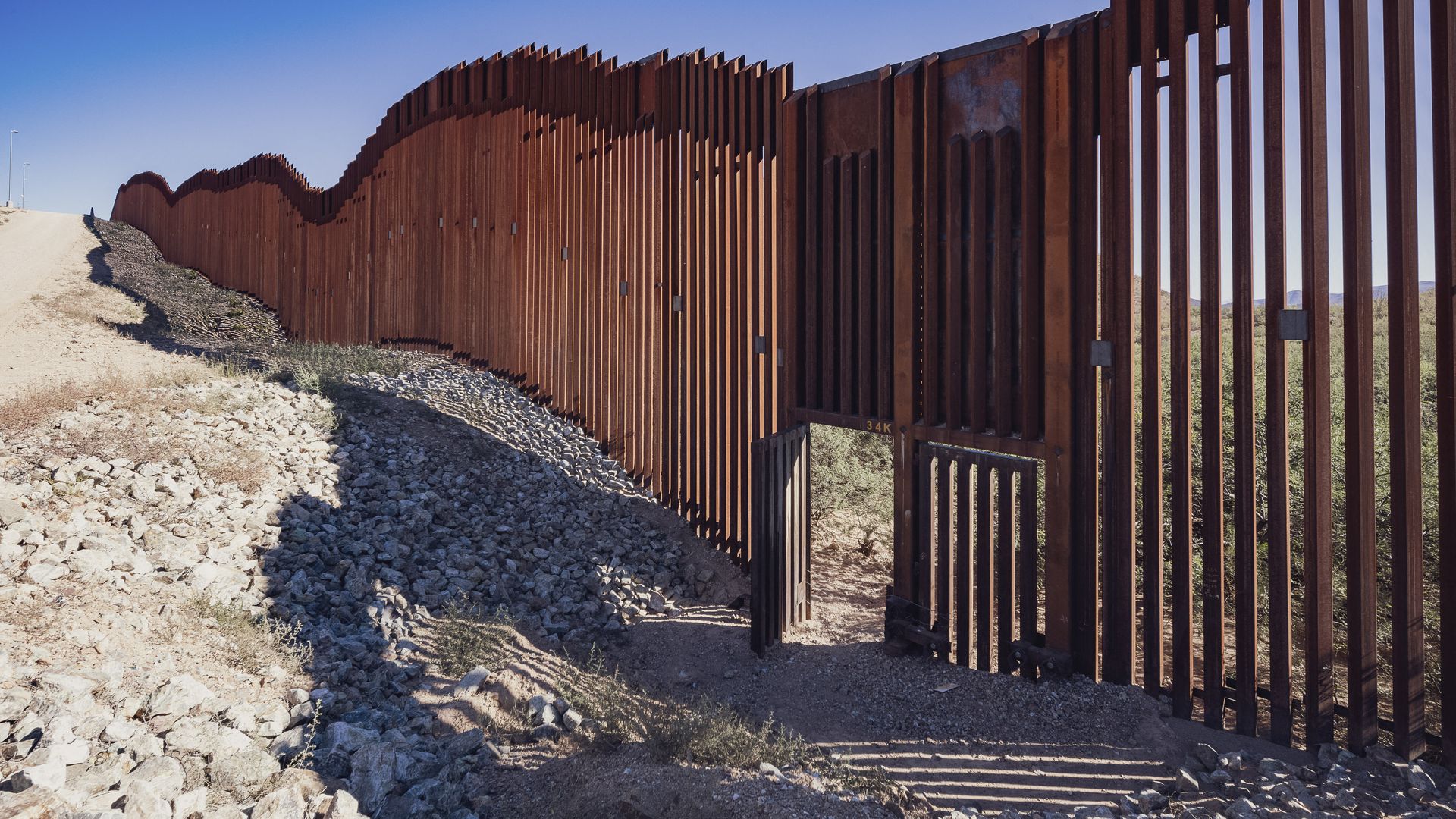
Proposition 314 makes it a state crime to illegally cross the U.S.-Mexico border in Arizona, but it can't be enforced unless a similar law in Texas or another state goes into effect. Photo: Oliver Touron/AFP via Getty Images
Voters overwhelmingly approved a law to make illegally crossing the U.S.-Mexico border into Arizona a state crime, but it could be a while before it actually goes into effect.
The big picture: Proposition 314, also known as the Secure the Border Act, passed with more than 60% of the vote in last week's election.
- Its core provision, modeled after a 2023 Texas law, makes it a state crime to enter Arizona from Mexico anywhere except an official port of entry.
- Prop. 314 also requires state and local governments to use federal systems to determine whether noncitizens are eligible to apply for public benefits.
- And it imposes stiff prison sentences for selling fentanyl that causes someone's death, unless the drug was manufactured in the U.S. or legally imported.
Yes, but: Unlike the sections on public benefits and fentanyl, the provision against illegal entry into the state doesn't go into effect automatically.
- Prop. 314 prohibits enforcement of that provision until Texas' SB 4 or a similar law in another state has been in effect for at least 60 consecutive days.
State of play: The U.S. Fifth Circuit Court of Appeals put the Texas law on hold in March pending the outcome of a legal challenge to SB 4.
- The appellate court heard arguments in the case in April, and a decision could come anytime.
- The losing side will almost certainly appeal to the U.S. Supreme Court, a process that could take years before a final conclusion.
- If the Fifth Circuit upholds the law, it could go into effect immediately. Or enforcement could still be stayed pending the outcome of a Supreme Court appeal.
Meanwhile, the American Civil Liberties Union of Arizona cited recent laws in Iowa and Oklahoma as potentially similar enough to trigger enforcement of Prop. 314's illegal entry provision.
The intrigue: It's unclear whether the Iowa or Oklahoma laws would be similar enough to allow Prop. 314's enforcement.
- The Oklahoma law makes it a misdemeanor to enter or live in the state without legal authorization to be in the U.S, and a felony for someone who's been deported or denied entry into the country.
- Iowa's law makes it a misdemeanor to enter the state if a person has been deported or denied admission to the U.S.
What they're saying: The Iowa and Oklahoma bills have "high-level similarities" to Prop. 314 in that they all address state enforcement of federal immigration law. But they have key distinctions, ACLU of Arizona immigrant rights attorney John Mitchell told Axios.
- "Prop. 314 and S.B. 4 both reflect Arizona and Texas's shared identity as border states, which Oklahoma and Iowa are not," he said.
- Andrew Wilder, a spokesperson for Arizona House Speaker Ben Toma, who led the charge to pass the measure, said it's unclear whether the Iowa or Oklahoma laws would trigger enforcement of Prop. 314.
- "It's a complicated situation, and a court would probably have to figure that out," he told Axios.
The bottom line: It could be years before the illegal entry provision of Prop. 314 becomes enforceable, if ever.
- ACLU of Arizona legal director Jared Keenan told Axios his organization will challenge the law in court if it goes into effect.